
Running a professional piercing studio means navigating complex legal requirements while maintaining efficient client intake processes. A properly structured body piercing consent form protects your business from liability disputes, ensures compliance with state regulations, and documents informed consent from every client. Whether you operate a dedicated piercing studio or offer body modification services alongside tattooing, understanding consent form requirements is critical for your business operations and legal protection.
Legal Requirements Vary by State Jurisdiction
State regulations for body piercing consent forms differ significantly across the United States. Your compliance obligations depend on your specific location and local health department rules.
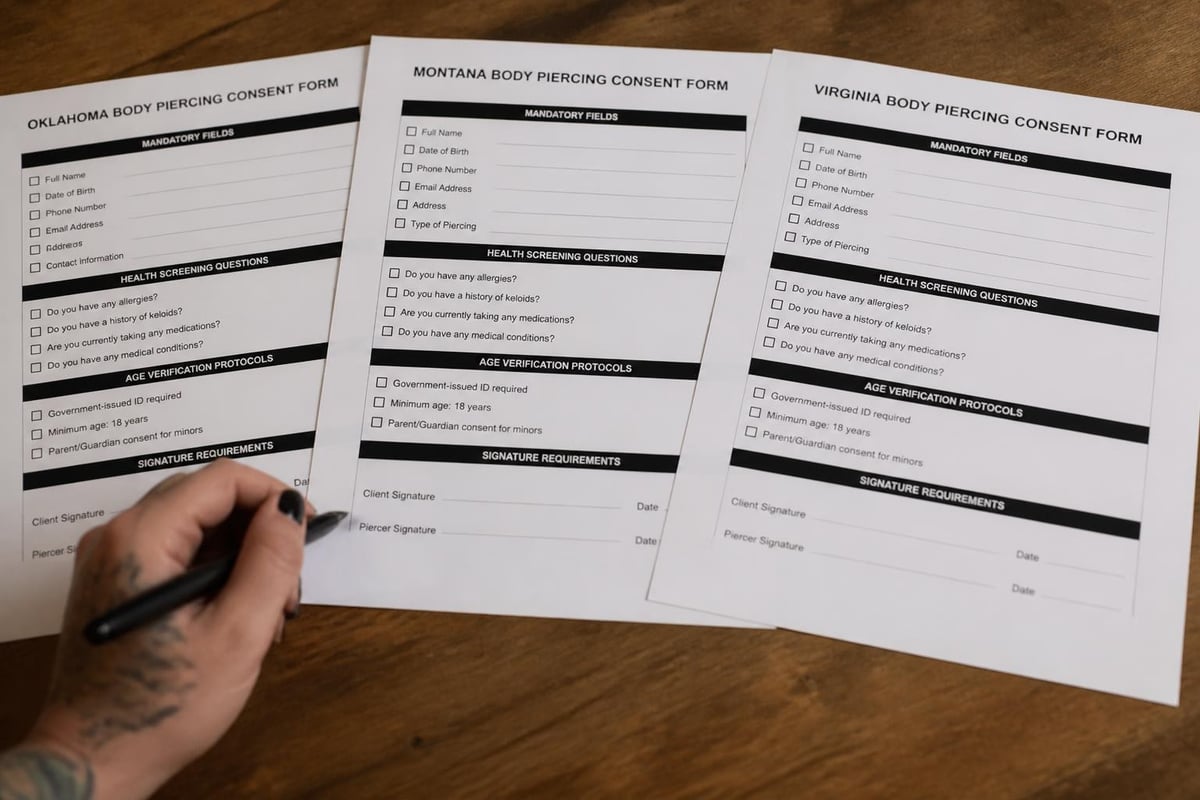
Oklahoma Administrative Requirements
Oklahoma's administrative code outlines specific consent form requirements for body piercing establishments. Studios must obtain written consent that includes detailed health screening questions and client acknowledgment of risks. The regulations specify mandatory information collection and documentation standards.
Montana's Consent Framework
Montana regulations establish distinct requirements for informed consent procedures. These rules detail the specific components that must appear on consent documentation and the process for obtaining valid client authorization before performing any piercing procedure.
Key compliance considerations for your studio:
- Review your state's administrative code through your health department
- Verify local county or municipal ordinances that may impose additional requirements
- Update forms annually to reflect regulatory changes
- Maintain documentation of form version updates and implementation dates
Virginia's body-piercing regulations emphasize age verification and comprehensive client disclosures. Understanding these jurisdiction-specific rules helps you design forms that meet all applicable legal standards.
Essential Components Every Form Must Include
A compliant body piercing consent form contains specific sections that document informed consent and protect your business during health inspections or legal disputes.
Client Identification and Age Verification
Your form must capture accurate client information and confirm age eligibility. Most states prohibit piercing minors without parental consent, with some procedures restricted entirely.
| Required Information | Purpose | Verification Method |
|---|---|---|
| Full legal name | Identity confirmation | Government-issued ID |
| Date of birth | Age verification | Photo ID cross-reference |
| Current address | Contact and jurisdiction | Utility bill or secondary ID |
| Emergency contact | Medical emergency response | Phone number verification |
| Parent/guardian info (minors) | Legal authority confirmation | ID matching signature |
Age verification protocols:
- Request government-issued photo identification
- Cross-reference birthdate against current date
- Photograph or scan ID for records retention
- For minors, verify parent/guardian relationship through matching last names or additional documentation
- Document verification method in client file
Many studios now include a free piercing consent form option that automatically calculates age from birthdate and flags minors requiring parental consent.
Medical History and Health Screening
Comprehensive health screening questions identify contraindications that could result in complications, infections, or liability claims against your studio.
Your body piercing consent form should screen for:
- Bleeding disorders or anticoagulant medication use
- Diabetes or immune system disorders
- Allergies to metals, latex, or antiseptic solutions
- Current infections or skin conditions near the piercing site
- Pregnancy or nursing status
- History of keloid scarring or poor wound healing
- Recent vaccinations or upcoming medical procedures
Document each client response in detail. A simple "yes/no" format provides legal protection, but follow-up questions about specific conditions demonstrate thorough informed consent procedures.
Risk Acknowledgment and Liability Protection
The risk acknowledgment section serves as your primary liability shield. Clients must understand potential complications before you perform any procedure.
Mandatory Risk Disclosures
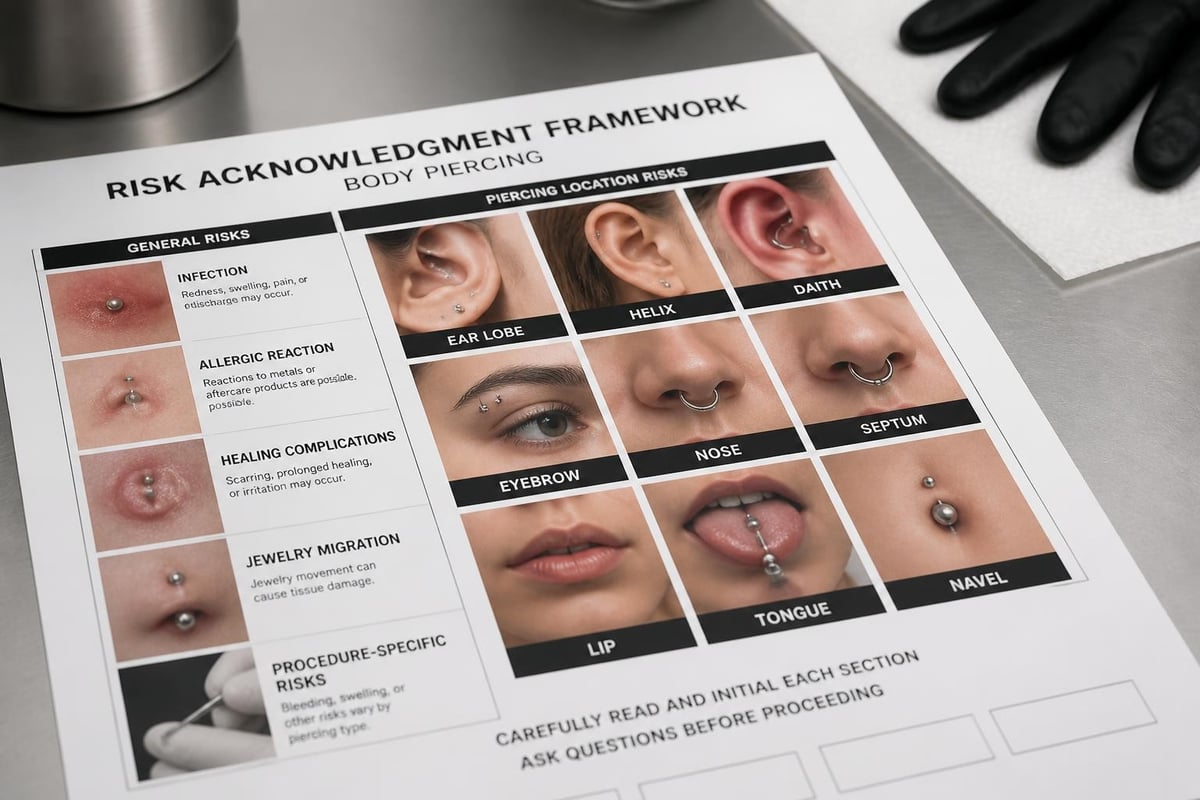
Your consent documentation must clearly outline possible adverse outcomes associated with body piercing procedures. These disclosures protect your studio when clients experience normal healing complications or fail to follow aftercare instructions.
Core risks to disclose:
- Infection risk despite sterile technique and proper aftercare
- Allergic reactions to jewelry metals or cleaning solutions
- Scarring, keloid formation, or permanent skin changes
- Migration or rejection of piercing jewelry
- Nerve damage or numbness near the piercing site
- Prolonged bleeding or hematoma formation
- Jewelry-related complications including swelling or embedding
Template language should state risks clearly without medical jargon. For example: "I understand that even with proper sterile technique, infections can occur if I do not follow recommended aftercare procedures."
Procedure-Specific Considerations
Different piercing locations carry unique risks that require specific disclosures on your body piercing consent form.
| Piercing Type | Specific Risks | Additional Disclosures |
|---|---|---|
| Oral (tongue, lip) | Tooth damage, speech changes | Eating restrictions, dental complications |
| Cartilage (ear, nose) | Extended healing, higher rejection | 6-12 month healing timeline |
| Genital | Sexual activity restrictions | Intimacy limitations, specialized aftercare |
| Surface piercings | High rejection rate | Temporary nature, scarring likelihood |
Aftercare Instructions and Client Responsibilities
Your consent form establishes the client's responsibility for post-procedure care. This section becomes critical evidence during disputes over healing complications or infection claims.
Documentation of Aftercare Protocol
Integrate detailed aftercare instructions directly into your body piercing consent form rather than providing them as a separate handout. This approach ensures clients cannot claim they never received care instructions.
Standard aftercare elements to include:
- Cleaning frequency and approved solution types
- Products to avoid (alcohol, hydrogen peroxide, ointments)
- Timeline for jewelry changes or removal restrictions
- Activities to limit during initial healing
- Signs of infection requiring medical attention
- Follow-up appointment scheduling requirements
Require clients to initial each aftercare section, confirming they read and understand their post-procedure responsibilities. This granular acknowledgment strengthens your position if a client claims inadequate instruction.
Liability Waiver Language
Your waiver section must balance legal protection with enforceability. Overly broad waivers may not hold up during litigation, while specific, reasonable releases typically withstand legal challenges.
Effective waiver language acknowledges that you provided sterile equipment, followed proper protocols, and disclosed risks, while the client accepts responsibility for healing outcomes influenced by their aftercare compliance and individual biology.
Many studios now use piercing consent forms for minors that include enhanced guardian acknowledgment of supervision responsibilities during the healing period.
Digital Solutions Eliminate Paper Form Problems
Traditional paper consent forms create operational headaches and compliance risks for piercing studios. Lost documents, illegible handwriting, and storage limitations plague businesses relying on physical paperwork.
Operational Challenges with Paper Forms
Paper-based consent processes introduce multiple failure points in your client intake workflow:
- Forms get damaged by moisture, blood, or improper storage
- Handwritten responses become illegible over time
- Filing systems consume valuable studio space
- Retrieving specific client records requires manual searching
- Duplicate forms for returning clients waste time and money
- Lost documents create compliance gaps during health inspections
Studios managing high client volume face particular difficulties maintaining organized paper archives. A busy piercing studio performing 20 procedures weekly generates over 1,000 consent forms annually, requiring extensive storage infrastructure.
Transitioning to Digital Consent Forms
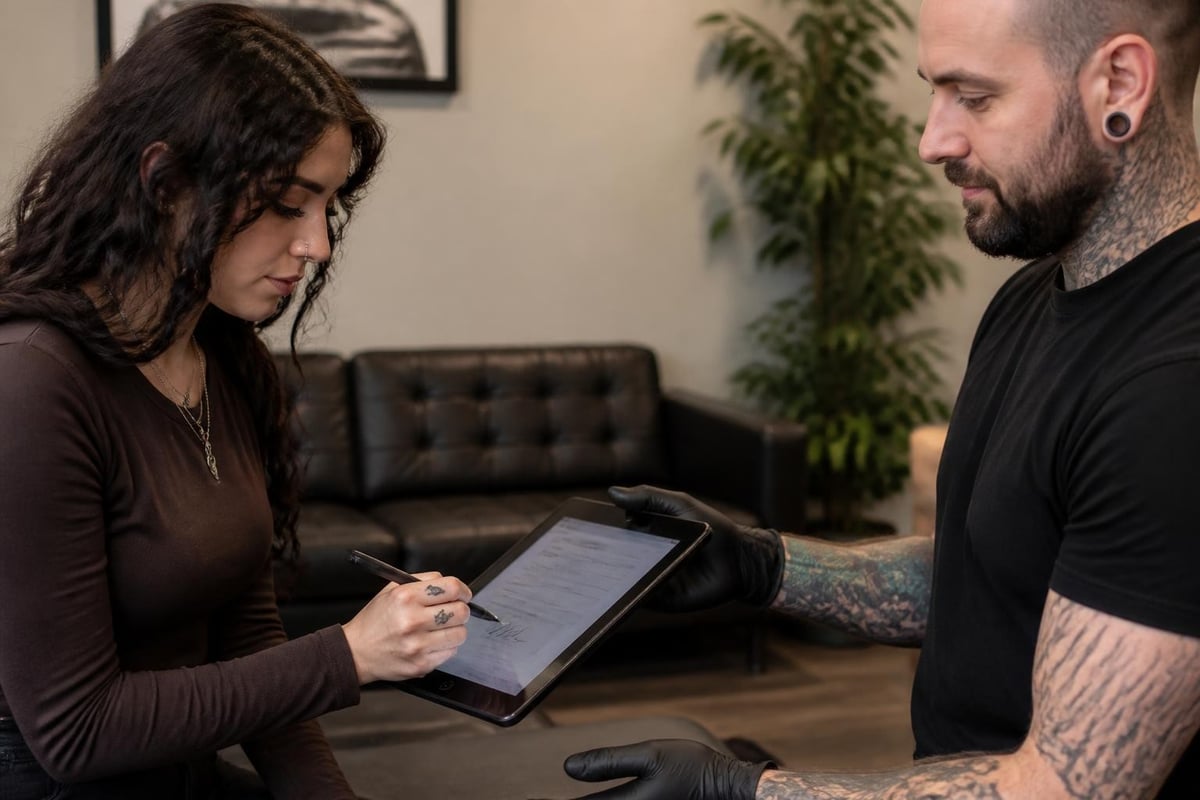
Modern piercing studios are adopting digital consent solutions that streamline client intake while improving compliance and record retention. InkWaiver provides digital consent forms specifically designed for body modification businesses, allowing clients to complete documentation on their phones before appointments.
Digital form advantages for your studio:
- Clients complete forms remotely before arriving, reducing wait times
- Cloud storage eliminates physical filing requirements
- Electronic signatures create legally binding documentation
- Automated compliance with data protection regulations
- Instant retrieval during health inspections or legal inquiries
- Version control ensures all clients use current form templates
The transition requires minimal setup time while delivering immediate operational benefits. Digital systems integrate with your existing booking workflow without disrupting daily operations.
Form Design Best Practices for Studio Operations
The structure and layout of your body piercing consent form directly impacts client completion rates, legal defensibility, and inspection compliance.
Readability and Client Comprehension
Legal documents filled with dense paragraphs and technical language create client confusion and potential enforceability issues. Courts may invalidate consent forms that clients could not reasonably understand.
Design principles for effective forms:
- Use 12-point or larger font size for body text
- Break long paragraphs into shorter sections with clear headings
- Define technical terms in plain language
- Organize content with numbered sections for easy reference
- Highlight critical acknowledgments with bold text or checkboxes
- Provide adequate space for signatures and dates
Consider literacy levels in your client base. The average American reads at an 8th-grade level, so consent language should match that comprehension standard rather than using legal jargon that requires professional interpretation.
Signature Capture and Authentication
Your form must clearly document who signed, when they signed, and their authority to provide consent. Ambiguous signature sections create problems during disputes.
Include these authentication elements:
- Printed name field below signature line
- Date and time stamp for signature
- Witness signature for high-risk procedures
- Parent/guardian signature section for minors with relationship specification
- Artist signature acknowledging they reviewed the completed form
For minors, require both the minor and parent/guardian to sign separate acknowledgment sections. This dual signature approach provides stronger legal protection than guardian consent alone.
Record Retention and Storage Requirements
Maintaining proper consent form archives protects your business during health inspections, insurance claims, and legal proceedings. State regulations specify minimum retention periods.
Compliance Storage Timelines
Most jurisdictions require piercing studios to retain client records for a minimum period following the procedure date. Verify your specific state requirements through your local health department.
| Jurisdiction Type | Typical Retention Period | Storage Requirements |
|---|---|---|
| State regulations | 3-7 years | Secure, confidential storage |
| HIPAA considerations | 6 years | Encrypted if electronic |
| Statute of limitations | Varies by state tort law | Accessible for legal discovery |
| Industry best practice | 10+ years | Duplicate backup systems |
Conservative record retention policies protect you beyond minimum legal requirements. Many liability claims emerge years after the original procedure, making extended retention prudent risk management.
Privacy and Security Protocols
Client consent forms contain protected health information subject to privacy regulations. Your storage system must prevent unauthorized access while allowing retrieval for legitimate business purposes.
Security measures for consent form storage:
- Physical forms in locked cabinets with limited key access
- Electronic records with password protection and encryption
- Access logs documenting who viewed specific client files
- Destruction protocols for expired records (shredding, secure deletion)
- Staff training on confidentiality obligations
- Written policies addressing data breach response
Studios handling forms digitally must implement GDPR or similar data protection compliance for clients in applicable jurisdictions. These regulations impose specific requirements for consent, access, and deletion rights.
Form Updates and Version Control Management
Your body piercing consent form requires regular updates to reflect regulatory changes, new procedure offerings, and evolving industry standards.
When to Revise Your Consent Documentation
Establish a review schedule ensuring your forms remain current and legally compliant. Outdated consent forms create liability exposure and may fail to satisfy health inspection requirements.
Triggers requiring immediate form updates:
- State or local regulation changes affecting consent requirements
- Introduction of new piercing procedures or jewelry types
- Updates to your aftercare protocols or product recommendations
- Legal advice suggesting enhanced liability language
- Client disputes revealing ambiguities in current form language
- Health department feedback during inspections
Implement version control by dating each form revision and maintaining an archive of previous versions. This documentation demonstrates your ongoing compliance efforts and explains historical client records using different form templates.
Staff Training on New Form Versions
When you update your body piercing consent form, ensure all artists and front desk staff understand the changes and their implications for client interactions.
Conduct brief training sessions covering:
- Specific changes from the previous version
- Rationale for new sections or modified language
- Questions clients may ask about updated content
- Transition timeline from old to new form version
- Procedures for handling appointments already scheduled
Document training completion for each staff member. This record proves your studio implemented compliance measures beyond simply updating paperwork.
Integrating Consent Forms into Booking Workflow
Efficient consent form completion improves client experience while ensuring documentation happens before you perform procedures.
Pre-Appointment Form Submission
Requiring clients to complete consent documentation before arriving at your studio streamlines operations and reduces wait times. This approach benefits both walk-ins and scheduled appointments.
Digital systems allow you to send form links when clients book appointments. They complete documentation at their convenience, and you review submissions before the appointment time. This workflow identifies issues requiring consultation before the client arrives at your studio.
Pre-appointment process advantages:
- Identify contraindications before blocking studio time
- Reduce lobby congestion and waiting periods
- Allow clients adequate time to read and consider risks
- Flag missing information for follow-up before the appointment
- Improve overall client satisfaction with streamlined service
For walk-in clients, provide tablets or encourage smartphone completion while they wait. This maintains documentation standards without requiring paper forms.
Integration with Client Management Systems
Your consent form workflow should connect seamlessly with appointment scheduling, client profiles, and procedure records. Fragmented systems create inefficiency and potential compliance gaps.
Modern studios link consent documentation directly to client profiles, automatically associating forms with specific procedures and dates. This integration ensures you never perform work without current, valid consent on file.
Review your current booking system's capabilities for consent form integration. Many scheduling platforms now offer native form builders or integrate with specialized consent management solutions designed for body modification businesses.
Common Compliance Mistakes to Avoid
Even experienced studio owners make consent form errors that create liability exposure or health inspection violations.
Insufficient Medical History Detail
Generic "Do you have any medical conditions?" questions fail to identify specific contraindications. Your body piercing consent form must ask targeted questions about bleeding disorders, medications, allergies, and immune conditions.
Avoid these common shortcomings:
- Yes/no health questions without follow-up detail fields
- Missing questions about current medications affecting healing
- Failure to ask about upcoming medical procedures
- No screening for recent vaccinations or immunosuppressive therapy
- Inadequate allergy screening beyond basic metal sensitivity
Detailed health screening demonstrates professional standards and helps you make informed decisions about procedure modifications or referrals.
Ambiguous Liability Language
Vague waiver sections that attempt to disclaim all liability may not hold up in court. Consent forms must balance realistic risk disclosure with reasonable liability protection.
Phrases like "the studio accepts no responsibility for any complications" are overly broad and likely unenforceable. Instead, specify that clients accept responsibility for complications resulting from their failure to follow aftercare instructions or disclose accurate health information.
Missing Signature Authentication
Forms lacking proper signature authentication create questions about who actually provided consent. This becomes critical for minor procedures or when signatures are disputed.
Always include printed name fields, dates, and witness signatures for enhanced verification. For minors, photograph the parent/guardian's ID alongside their signed consent form to prevent later claims that someone else signed.
Inadequate Record Organization
Storing consent forms haphazardly defeats their protective purpose. During health inspections or legal discovery, you must quickly locate specific client documentation.
Implement systematic filing by client last name or unique identifier. For paper systems, use alphabetical filing with year subdivisions. Digital systems should allow search by name, date, or procedure type.
Quality Assurance and Form Auditing
Regular audits of your consent form practices identify gaps before they become compliance violations or liability issues.
Monthly Documentation Review
Designate a staff member to review consent form completion monthly. This quality check ensures artists consistently obtain proper documentation and identify training needs.
Audit checklist items:
- Verify all forms contain complete client information
- Confirm all required sections have client initials or signatures
- Check that health screening questions include detailed responses
- Ensure parent/guardian signatures appear on minor consent forms
- Validate that form version matches current template
- Confirm electronic storage backup occurred
Document audit findings and corrective actions taken. This creates a compliance trail demonstrating your systematic approach to legal requirements.
Annual Regulatory Compliance Review
Schedule an annual review comparing your current body piercing consent form against updated state regulations and industry standards. Laws change, and your documentation must evolve accordingly.
Consult with an attorney familiar with body modification regulations in your jurisdiction. Legal review costs are minimal compared to defending against a consent-related lawsuit or health department violation.
Consider this annual review timing:
- January: Review previous year's consent-related issues or disputes
- February: Research any regulatory changes in your jurisdiction
- March: Consult with legal counsel on form updates
- April: Implement revised forms and conduct staff training
- Ongoing: Monitor industry publications for emerging compliance topics
Handling Special Circumstances and Exceptions
Certain client situations require modified consent procedures beyond your standard body piercing consent form protocols.
Language Barriers and Translation
Clients with limited English proficiency may not fully understand consent form content. Providing forms in multiple languages demonstrates good faith informed consent efforts.
Major studios in diverse areas maintain consent forms in Spanish, Mandarin, or other common languages in their client base. Translation services ensure accurate rendering of legal terms and risk disclosures.
If you cannot provide translated forms, use interpreter services to explain form content verbally. Document the interpretation process, interpreter identity, and client confirmation of understanding.
Clients with Disabilities
Clients with visual impairments, cognitive disabilities, or other limitations may need accommodation to provide informed consent. Federal disability laws require reasonable modifications to your standard procedures.
Accommodate various disabilities by:
- Reading consent forms aloud to visually impaired clients
- Providing extra time for clients with processing challenges
- Allowing support persons to assist with form completion
- Accepting alternative signature methods (verbal consent with witness, mark signature)
- Using plain language versions for cognitive accessibility
Document accommodation provided and obtain witness verification that the client understood the consent information despite disability-related limitations.
International Clients and Jurisdiction Questions
Clients from other countries may question which jurisdiction's consent requirements apply. Generally, the consent form must comply with regulations in the state where you perform the procedure, regardless of client residence.
However, international clients unfamiliar with US consent practices may need additional explanation. Take extra time to review form sections and answer questions. This patience prevents misunderstandings that could lead to disputes.
For clients planning to return home after the procedure, provide aftercare instructions that account for product availability in their country. Standard US aftercare products may not be accessible internationally.
Protecting your piercing studio requires comprehensive consent documentation that satisfies legal requirements while supporting efficient operations. A well-designed body piercing consent form establishes informed consent, documents health screening, and provides liability protection during health inspections or client disputes. Modern digital solutions eliminate the inefficiencies and compliance risks of paper-based consent processes while improving client experience through remote form completion. InkWaiver helps piercing studios transition to digital consent forms in just minutes, with cloud storage, electronic signatures, and full legal compliance built into the platform.