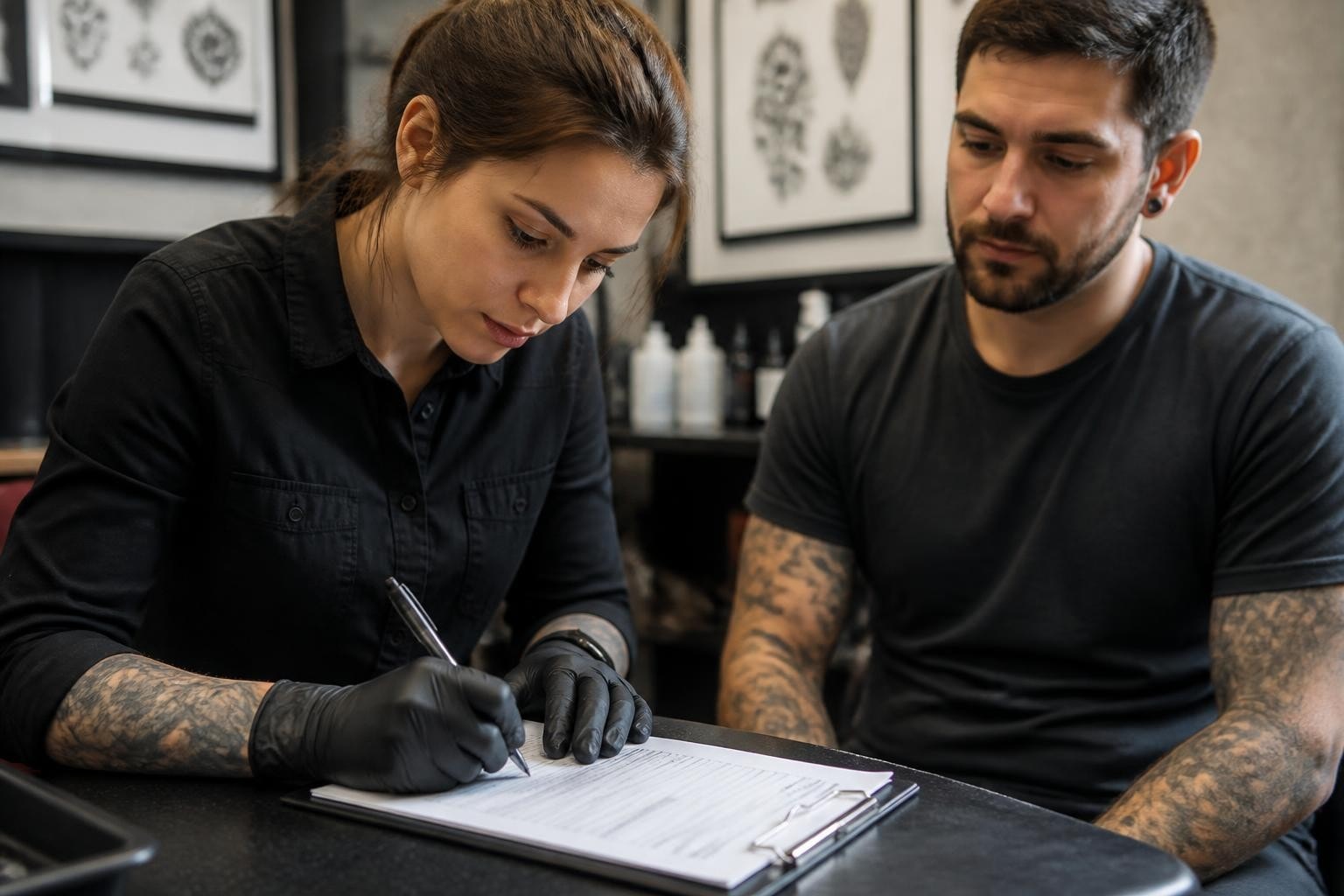
Running a tattoo studio in 2026 means managing a complex web of documentation that protects both your business and your clients. Every appointment requires proper consent, medical history verification, and liability acknowledgment before the first needle touches skin. The forms tattoo studios use have evolved from simple paper waivers into comprehensive legal documents that must meet state regulations, health department standards, and liability insurance requirements. Understanding the full scope of documentation requirements is essential for any shop owner or artist operating a professional business.
Essential Forms Every Tattoo Studio Must Maintain
Professional tattoo businesses require multiple documentation types to operate legally and protect against liability exposure. Each form serves a distinct purpose in your client intake workflow.
Standard Client Consent Documentation
The primary forms tattoo shops rely on include consent agreements, medical history questionnaires, aftercare acknowledgments, and photo release forms. Your standard client intake should capture full legal names, contact information, identification verification, and emergency contacts. Tattoo consent forms establish that clients understand the permanent nature of tattooing and accept associated risks.
Medical history forms protect you from liability when clients have conditions that could complicate healing or cause adverse reactions. These documents should ask about:
- Blood-borne diseases (HIV, hepatitis B and C)
- Diabetes and blood clotting disorders
- Skin conditions like eczema, psoriasis, or keloid scarring
- Current medications, especially blood thinners
- Allergies to latex, inks, or topical anesthetics
- Pregnancy or nursing status
- Recent vaccinations or medical procedures
Design approval forms create a paper trail showing clients confirmed the exact placement, size, and design before you began work. This single document prevents 90% of post-appointment disputes about design modifications or placement disagreements.

Minor Client Documentation Requirements
Working with clients under 18 requires additional layers of protection. Most jurisdictions mandate parental presence during the entire appointment, not just signature collection. Your tattoo consent form for minors must include government-issued ID verification for both the minor and the consenting parent or legal guardian.
State regulations vary significantly. Mississippi requires specific consent form elements including detailed health disclosures and retention periods. Some states prohibit tattooing minors entirely, regardless of parental consent. Others allow it only for specific purposes like medical tattooing or cultural practices.
Document the relationship between the minor and the adult providing consent. Step-parents, older siblings, and grandparents may not have legal authority depending on your jurisdiction. When in doubt, request court documentation of guardianship.
Legal Compliance and Jurisdiction-Specific Requirements
Forms tattoo studios use must meet local health department regulations, state licensing requirements, and federal privacy laws. Non-compliance creates liability exposure that can shut down your business.
US State-by-State Variation
No federal standard governs tattoo consent forms. Each state health department establishes its own requirements for content, retention periods, and documentation protocols. California mandates specific infection control disclosures. New York requires detailed explanations of sterilization procedures. Texas focuses on identification verification and age confirmation.
Health department inspections will examine your consent form library. Inspectors verify that forms are current, properly signed, and stored according to state retention requirements. Most states require 3-7 years of records retention, but some mandate permanent storage.
| State | Retention Period | Special Requirements |
|---|---|---|
| California | 3 years | Infection control disclosures |
| New York | 6 years | Sterilization procedure details |
| Texas | 5 years | Enhanced ID verification |
| Florida | 7 years | Bloodborne pathogen acknowledgment |
Your liability insurance carrier may impose additional documentation requirements beyond state minimums. Review your policy annually to ensure your forms cover all mandated disclosures.
GDPR and International Considerations
Studios serving international clients or operating in EU jurisdictions must comply with data protection regulations. GDPR requires explicit consent for data collection, clear privacy policies, and the right for clients to request data deletion. Your forms tattoo business uses must include privacy disclosures and data handling policies.
UK studios post-Brexit maintain similar standards under UK GDPR. Canadian provinces have individual privacy legislation that affects how you store and process client information. If you host guest spots internationally or have artists working across borders, coordinate compliance across all operating jurisdictions.
Digital Transformation of Tattoo Studio Forms
The shift from paper to digital documentation has accelerated rapidly since 2023. Modern tattoo shops now process most client intake digitally, improving efficiency and reducing administrative overhead.
Benefits of Digital Forms Systems
Digital forms eliminate the paper chaos that plagues traditional studios. Lost waivers, illegible handwriting, and missing pages disappear when clients complete intake on tablets or smartphones. Cloud storage ensures you can retrieve any client record instantly during health department inspections or liability disputes.
Understanding what constitutes a comprehensive tattoo consent form helps you transition to digital systems without losing critical legal protections. Digital platforms allow real-time form updates when regulations change, ensuring every client signs the current version rather than outdated paper stock sitting in your drawer.
Studios using digital systems report significant time savings. Instead of spending 10-15 minutes per client managing paperwork, intake reduces to 3-5 minutes. This efficiency improves your booking capacity, especially during busy weekend shifts when walk-ins and scheduled appointments overlap.

Implementation Workflow for Digital Systems
Transitioning to digital documentation requires thoughtful planning. Start by digitizing your existing forms tattoo studio currently uses. Review each form for compliance with current regulations before migration. Many shops discover their paper forms haven't been updated in years and contain outdated language or missing required disclosures.
Choose a platform that integrates with your booking system and payment processing. Standalone form solutions create duplicate data entry and increase error rates. The best systems allow clients to complete intake remotely before arriving at the studio, reducing lobby congestion and improving station turnover.
Train all artists and front desk staff on the new workflow. Digital systems only work when everyone consistently uses them. Establish protocols for clients who can't or won't complete digital forms. Maintain a tablet-based backup for walk-ins without smartphones.
Form Content Structure and Required Elements
The forms tattoo professionals use must contain specific legal language and disclosures to provide meaningful liability protection. Generic templates rarely meet all state requirements or cover studio-specific risks.
Core Legal Disclosures
Every consent form must clearly state that tattooing creates permanent body modification. Clients acknowledge understanding that complete removal may not be possible and that removal procedures carry their own risks. This basic disclosure prevents the majority of "I didn't know it was permanent" disputes.
Include explicit infection risk acknowledgments. Research on toxic metals in tattoo inks demonstrates that clients face potential health risks beyond infection. Your forms should disclose risks of allergic reactions, MRI complications with certain ink types, and long-term health effects that remain under study.
Aftercare compliance represents another critical disclosure area. Your form should state clearly that improper aftercare can cause infection, color loss, and scarring regardless of artist skill level. This shifts responsibility for healing outcomes to client behavior.
Design Confirmation and Modification Protocols
Design disputes generate significant liability exposure and damage your reputation. Strong forms tattoo artists implement include a detailed design approval section with:
- Written description of the design including size measurements
- Anatomical placement description (specific body location)
- Color palette confirmation
- Custom design vs. flash sheet notation
- Client signature confirming final design review
Photograph the design placement on the client's body before beginning work. Many studios now include photo documentation clauses in their consent forms, allowing them to photograph stencil placement and completed work for their records.
Establish clear modification policies. Your form should state whether design changes mid-session incur additional charges and what constitutes a reasonable adjustment versus a complete redesign.
Medical History Screening Best Practices
Thorough medical screening protects both your client's health and your liability exposure. The medical history section of your forms tattoo studio uses should be comprehensive but not intrusive.
Critical Health Conditions to Document
Focus your medical questionnaire on conditions that directly affect tattooing safety and healing. Diabetes increases infection risk and slows healing. Blood thinners cause excessive bleeding during the procedure. Immunosuppressive medications compromise the body's ability to heal and fight infection.
Recent cosmetic procedures matter more than most artists realize. Clients who received Botox, fillers, or laser treatments within the past 30 days may experience complications. Chemical peels and certain skincare treatments thin the skin and affect ink retention.
Ask about previous tattoo experiences. Clients who experienced severe swelling, prolonged healing, or allergic reactions to specific ink colors need special consideration. This history helps you adjust your approach or refer the client to a medical professional before proceeding.
Liability Limitations and Assumption of Risk
Your medical history form should include clear assumption of risk language. Clients acknowledge that they disclosed all relevant medical information and understand that withholding information increases their health risks. This disclosure is especially critical for clients who might hide conditions they fear will disqualify them from getting tattooed.
Include a specific clause about client responsibility for disclosed vs. undisclosed conditions. Your liability for complications differs significantly when a client honestly disclosed a condition versus when they concealed it.

Photo Release and Portfolio Usage Rights
Most artists want to photograph their work for portfolios, social media, and marketing materials. Proper photo release documentation prevents future disputes about image usage.
Standard Photo Release Elements
Your photo release section should specify exactly how you plan to use images. General releases covering "promotional purposes" create ambiguity. Instead, enumerate specific uses:
- Portfolio inclusion (physical and digital)
- Social media posting on business accounts
- Website galleries and case studies
- Promotional materials and advertisements
- Competition submissions and industry publications
Allow clients to grant partial releases. Some clients consent to portfolio use but decline social media posting. Others approve anonymous posting without facial features. Flexible release options increase compliance rates while still providing valuable marketing content.
Specify the duration of the release. Perpetual releases are standard in the industry, but some clients prefer time-limited permissions. Consider offering annual renewal options for clients concerned about long-term image usage.
Special Considerations for Sensitive Tattoos
Tattoos in intimate areas or covering scars, medical conditions, or trauma require extra sensitivity in photo documentation. Offer these clients anonymous photography options that show the tattoo work without identifying features.
Memorial tattoos and grief-related work often carry emotional weight that clients may not want publicized. Even when clients initially consent to photo releases, check in before posting particularly personal pieces. Building this trust strengthens client relationships and generates referrals.
Streamlining Multi-Artist Studio Documentation
Studios with multiple artists face unique documentation challenges. Consistency across all stations ensures every client receives the same legal protection regardless of which artist performs their work.
Standardized Form Libraries
Create a master form library that all artists use. Individual artists should never create their own consent forms or modify studio templates. This standardization prevents gaps in legal coverage when Artist A's custom form lacks disclosures that Artist B's form includes.
Version control becomes critical in multi-artist environments. When you update forms to reflect regulation changes, immediately retire old versions from all stations. Digital systems solve this problem automatically, but paper-based studios must physically collect and destroy outdated forms.
Guest artists present special complications. They should use your studio's forms, not their own, for any work performed on your premises. Your insurance coverage depends on consistent documentation across all artists working in your space.
Apprentice Supervision Documentation
When apprentices perform tattooing under supervision, your forms must clearly state the apprentice's role and the supervising artist's oversight. Clients deserve to know their tattoo artist's experience level before consenting to the procedure.
Your apprentice consent addendum should identify:
- The apprentice's name and license/permit status
- The supervising licensed artist
- The extent of supervision (direct observation vs. periodic check-ins)
- Client's acknowledgment of apprentice involvement
- Reduced pricing or other consideration for working with an apprentice
This transparency builds trust and protects you from claims that clients didn't know they were being tattooed by an unlicensed apprentice.
Form Storage, Retention, and Retrieval Systems
Proper documentation storage protects you during health department inspections, insurance claims, and liability disputes. The forms tattoo businesses maintain must remain accessible throughout the required retention period.
Physical Storage Requirements
Paper forms require climate-controlled storage away from moisture, direct sunlight, and potential water damage. Many studios use fireproof filing cabinets for active client records (current year plus previous 2-3 years) and off-site storage for archived records.
Organize files alphabetically by client last name or chronologically by appointment date. Either system works if you maintain it consistently. Index cards or digital spreadsheets tracking client names, dates, and file locations speed up retrieval during inspections.
Never store consent forms in publicly accessible areas. Client privacy laws prohibit leaving medical information where unauthorized individuals might view it. Even your waiting area is too public for active file storage.
Digital Storage and Cloud Solutions
Cloud-based storage solves many physical storage problems while creating new security considerations. Your digital storage system must encrypt client data both in transit and at rest. HIPAA-level security is appropriate even though tattoo studios aren't covered entities, because your forms contain health information.
Implement redundant backups across multiple geographic locations. Cloud providers typically handle this automatically, but verify your provider's backup protocols. You should be able to restore all client records even if your primary system fails completely.
Access controls prevent unauthorized viewing of client records. Limit digital file access to artists who need it for their work. Front desk staff may need read-only access for appointment verification, while artists require full access for client consultation.
For studios looking to modernize their documentation workflow, InkWaiver offers digital consent forms specifically designed for tattoo shops, allowing clients to complete all necessary paperwork on their smartphones before arriving at the studio. The system maintains legal compliance while eliminating the paper storage and retrieval challenges that plague traditional filing systems.
Common Form Mistakes That Create Liability
Even experienced studio owners make documentation errors that expose them to legal risks. Understanding these common mistakes helps you audit your current forms tattoo operation and identify vulnerabilities.
Outdated Forms and Missing Disclosures
The most frequent mistake is using forms created years ago without reviewing them against current regulations. Comprehensive guides to tattoo consent forms highlight how quickly requirements change. A form that was compliant in 2022 may be dangerously outdated in 2026.
Review your forms annually at minimum. Schedule this review for the same time each year, such as when you renew your business license or liability insurance. Many studios use January as their annual compliance check month.
Missing disclosures create the most severe liability exposure. If your form doesn't mention infection risks and a client develops an infection, your defense becomes much weaker. If you failed to ask about blood thinners and a client bleeds excessively, you bear responsibility for not screening properly.
Illegible Signatures and Incomplete Forms
Paper forms create verification challenges. Illegible signatures, missing dates, and unchecked boxes all weaken legal protection. Your front desk staff must verify form completion before artists begin work, not after the tattoo is finished.
Establish a clear protocol: no stencil application until all forms are complete and verified. This single rule prevents most incomplete documentation problems. Train every staff member to check forms systematically rather than assuming clients completed everything.
Digital forms eliminate illegibility through typed responses and forced-field completion. Clients cannot submit forms with blank required fields, ensuring you collect all necessary information before the appointment begins.
Industry-Specific Form Variations
Different tattoo specializations require customized documentation. The forms tattoo removal clinics use differ significantly from those needed for traditional tattooing. Similarly, cosmetic tattooing has unique requirements.
Cosmetic Tattooing Documentation Needs
Permanent makeup, microblading, and scalp micropigmentation require additional medical disclosures. These procedures occur on the face and scalp where complications are highly visible and can affect client employment and social life. Your forms should include specific disclosures about:
- Color changes during healing (especially for eyebrow work)
- Asymmetry expectations and touch-up policies
- Contraindications for facial procedures (active acne, rosacea, recent facial surgery)
- Numbing cream allergies and reactions
- Sun exposure and skincare product restrictions
Cosmetic procedures also benefit from detailed before-and-after photo documentation. Your photo release should cover comparison images that show the transformation rather than just the final result.
Cover-Up and Correction Work
Cover-up tattoos require additional documentation beyond standard forms. Photograph the existing tattoo from multiple angles before beginning work. Your form should include specific language that the cover-up may not completely hide the original tattoo and that some shadowing or texture may remain visible.
Laser removal prior to cover-up work creates documentation complications. If clients received removal services elsewhere, request records of treatment dates, laser types used, and any complications. This information helps you assess skin condition and set realistic expectations for cover-up results.
Building Compliant Form Templates
Creating your own forms from scratch or customizing templates requires careful attention to legal language and state-specific requirements. Resources like those from different tattoo form types provide starting points, but customization for your jurisdiction is essential.
Working with Legal Professionals
Invest in legal review of your forms by an attorney familiar with body art regulations in your state. Generic online templates rarely cover all state-specific requirements and may include unnecessary clauses that don't apply to your jurisdiction.
Budget $500-$1,500 for initial legal review and annual updates. This investment pays for itself by preventing a single lawsuit. Your liability insurance carrier may offer discounted rates when you can demonstrate legally reviewed, compliant documentation.
Ask your attorney to review not just the forms themselves but your entire intake workflow. How you present forms to clients, where signatures appear, and how you explain risks all affect legal enforceability.
Testing and Iteration
Before rolling out new forms studio-wide, test them with a small group of regular clients. Collect feedback about confusing language, unclear questions, or sections that feel redundant. Well-designed forms should be thorough without feeling overwhelming.
Time how long form completion takes. If clients consistently need more than 10-12 minutes for standard intake, your forms are too long or too complex. Streamline language and combine redundant sections.
Track which questions generate the most clarification requests. If clients repeatedly ask what a certain question means, rewrite it for clarity. Your goal is forms that clients can complete independently without staff assistance.
Proper documentation forms the foundation of a legally compliant, professionally run tattoo studio. From comprehensive medical screening to design approval protocols, every form serves a specific purpose in protecting your business and your clients. Modern digital systems streamline this documentation while ensuring consistent compliance across all artists and appointments. InkWaiver transforms paper-based chaos into organized digital workflows, allowing your clients to complete all necessary forms on their smartphones while maintaining full legal compliance. Start your 14-day free trial today and experience how digital documentation can simplify your studio operations while strengthening your legal protection.