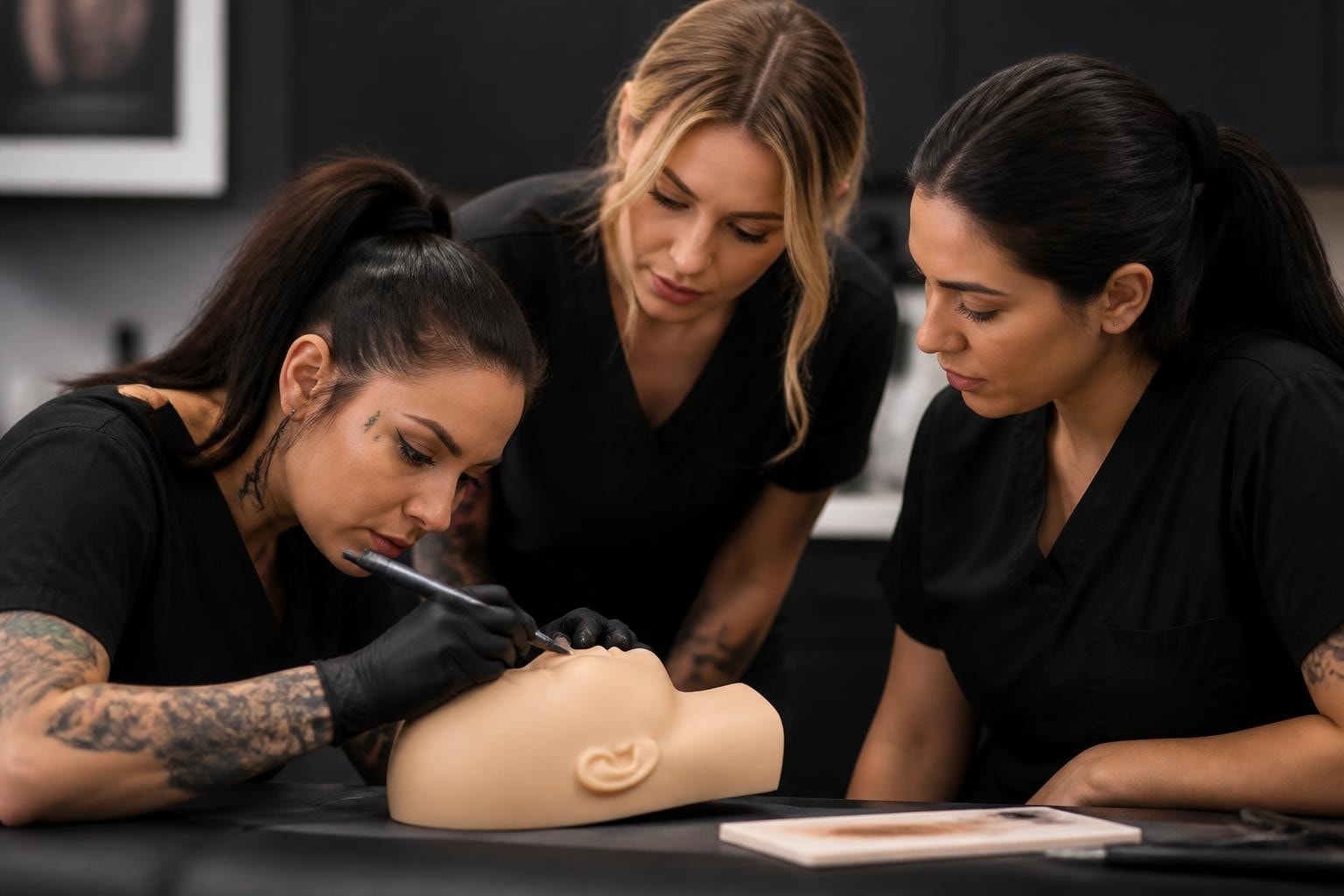
Permanent makeup represents a lucrative expansion opportunity for tattoo artists who want to diversify their service offerings and capture a different client demographic. The skills you've developed creating body art translate well to cosmetic tattooing, but the permanent makeup industry requires specialized training, different regulatory compliance, and distinct business considerations. Before you invest thousands of dollars and valuable time into permanent makeup classes, you need to understand what separates legitimate professional training from weekend certification mills, how PMU regulations differ from traditional tattooing, and whether this business pivot makes financial sense for your shop.
Understanding Permanent Makeup Training Requirements
Permanent makeup encompasses several distinct techniques: microblading, powder brows, ombré shading, eyeliner application, lip blush, and areola reconstruction. Each technique demands different needle configurations, pigment chemistry knowledge, and application methods than traditional tattooing.
Most states regulate permanent makeup under cosmetology boards rather than health departments that oversee tattoo shops. This creates a complex licensing landscape where your existing tattoo license may not automatically authorize you to perform cosmetic procedures.
State Licensing and Hour Requirements
Training hour requirements vary dramatically by jurisdiction:
| State Category | Hour Requirement | Licensing Authority | Additional Notes |
|---|---|---|---|
| Strict regulation states | 100-350 hours | Cosmetology Board | May require esthetician license first |
| Moderate regulation | 50-100 hours | Health Department | Bloodborne pathogen certification required |
| Minimal regulation | No minimum | Variable or none | Industry standards still apply |
Ohio, for example, requires completion of a state-accredited permanent makeup program with specific hour minimums. Illinois mandates courses approved by the Illinois Board of Higher Education before practitioners can legally operate.
Research your specific state requirements before enrolling in permanent makeup classes. Some states won't recognize out-of-state certifications or online-only training, which could render your investment worthless.

Types of Permanent Makeup Classes
The training market offers multiple formats, each with distinct advantages and limitations for working tattoo artists.
In-Person Intensive Programs
Traditional permanent makeup classes run 5-10 days with hands-on practice on live models. DAELA Academy and similar institutions structure these intensives to compress months of information into concentrated sessions.
Typical daily schedule:
- Morning: Theory, color matching, skin anatomy specific to facial procedures
- Afternoon: Machine operation, needle depth control, pain management
- Evening: Practice on synthetic skin, mannequin heads, or live models
These programs cost between $3,000 and $8,000 depending on techniques covered and whether pigments, machines, and supplies are included. You'll need to close your shop or arrange coverage for the training week, representing additional lost revenue.
Hybrid Training Models
SofTap's hybrid approach combines online modules with shorter in-person sessions. You complete anatomy, color theory, and safety protocols remotely, then attend 2-3 days of hands-on practice.
This format minimizes time away from your shop while maintaining the critical hands-on component that determines whether you can actually perform procedures competently.
Multi-Week Programs
More comprehensive permanent makeup classes spread 100+ hours across several weeks. Pigmenta USA's fundamentals program and Purebeau's advanced courses use this structure to allow practice time between sessions.
Advantages for tattoo shop owners:
- Continue operating your business between training sessions
- Process and practice techniques before advancing to next level
- Build confidence gradually rather than through information overload
- Network with other professionals over extended period
The extended timeline means you can't immediately capitalize on your investment, but the retention and skill development typically exceed intensive formats.
Evaluating Training Program Quality
Not all certifications carry equal weight. The permanent makeup industry lacks universal accreditation standards, allowing subpar programs to issue impressive-looking certificates that mean nothing to insurance companies or licensing boards.
Accreditation and Industry Recognition
Look for programs accredited by:
- American Academy of Micropigmentation (AAM): Industry gold standard for permanent makeup education
- Society of Permanent Cosmetic Professionals (SPCP): Maintains educational standards and ethics guidelines
- State cosmetology or health boards: Required in regulated jurisdictions
School of PMU and similar institutions emphasize their certified master artist instructors and documented apprenticeship requirements. This matters when you're staking your shop's reputation on new services.
Live Model Practice Requirements
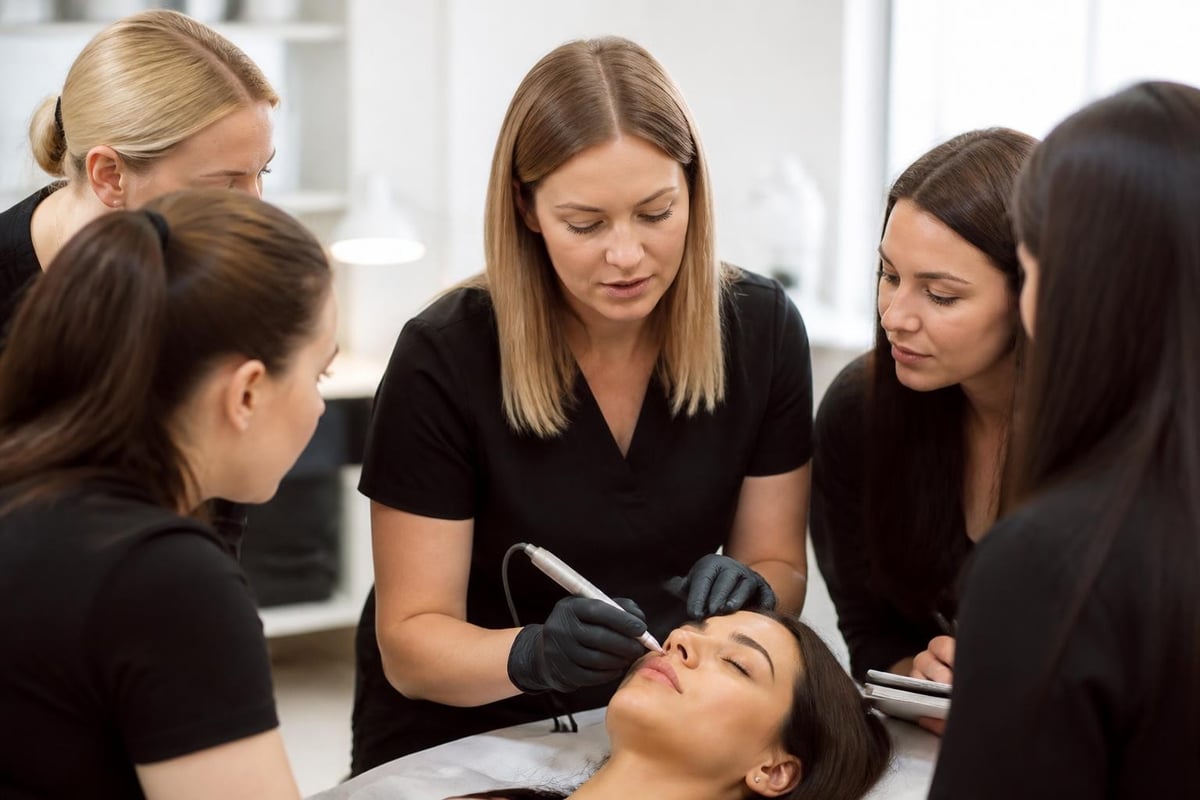
The most critical component of permanent makeup classes is supervised work on actual clients. Programs offering only synthetic skin practice prepare you inadequately for real-world variables: bleeding, pain management, skin texture differences, and client anxiety.
Minimum live model requirements:
- At least 3-5 models per technique you're learning
- Instructor observation and real-time correction during procedures
- Follow-up sessions to assess healing and pigment retention
- Documentation of complications and how to address them
Ask prospective programs how many live models you'll work on and whether those models are included in tuition or represent additional costs you'll need to cover.
Curriculum Components Beyond Basic Technique
Professional permanent makeup classes should address business operations, not just needle technique. You're adding a service line that requires different client communication, consent processes, and risk management than traditional tattooing.
Medical Considerations and Contraindications
Permanent makeup involves facial procedures where complications carry higher visibility and liability. Your training must cover:
- Autoimmune conditions that affect healing
- Medications that thin blood or compromise immunity
- Keloid scarring tendencies and ethnic skin considerations
- Pregnancy and nursing restrictions
- Recent Botox, fillers, or facial surgery
You'll need updated intake forms and consent documentation specific to cosmetic procedures. Managing client expectations around healing, color changes, and touch-up requirements differs significantly from body tattoo conversations. Tools like digital consent forms for permanent makeup help standardize this process and ensure you've documented all contraindications and client acknowledgments.

Color Theory for Facial Work
Pigment selection for permanent makeup involves different chemistry than body tattoo inks. Facial skin has different undertones, ages differently, and shows color changes more prominently.
Critical color concepts:
- How iron oxide pigments oxidize differently than body tattoo inks
- Neutralizing warm or cool undertones in aging skin
- Why eyebrow pigments shift to red or blue and how to prevent it
- Lip pigment selection based on natural lip color and desired outcome
Master Tattoo Institute's curriculum specifically addresses these permanent makeup-specific color challenges that don't apply to traditional tattooing.
Marketing and Client Acquisition
Your existing tattoo clientele likely won't overlap significantly with permanent makeup clients. These procedures attract different demographics: typically women ages 30-65 seeking convenience rather than artistic expression.
Marketing strategies covered in quality programs:
- Before/after photography that complies with medical advertising regulations
- Social media strategies for cosmetic services (different from tattoo promotion)
- Pricing structures that reflect procedure complexity and market positioning
- Building relationships with estheticians, dermatologists, and plastic surgeons for referrals
Cost Analysis and Return on Investment
Permanent makeup classes represent significant investment. Beyond tuition, you'll need specialized equipment, insurance modifications, and marketing budget to launch services effectively.
Complete Investment Breakdown
| Expense Category | Low End | High End | Notes |
|---|---|---|---|
| Training tuition | $2,500 | $10,000 | Depends on techniques and program length |
| PMU machines and handpieces | $800 | $3,000 | Digital machines cost more but offer better control |
| Pigment starter kit | $400 | $1,200 | Quality matters; cheap pigments fade unpredictably |
| Needles and cartridges | $200 | $500 | Initial supply; ongoing expense |
| Liability insurance addition | $300/year | $800/year | Separate from tattoo coverage |
| Marketing and photography | $500 | $2,000 | Professional before/afters essential |
| Total initial investment | $4,700 | $17,500 | Does not include lost revenue during training |
Revenue Potential
Permanent makeup procedures command premium pricing compared to small tattoos:
- Microblading or powder brows: $400-$800 per procedure, 2-3 hours
- Eyeliner (upper and lower): $350-$600, 1.5-2 hours
- Lip blush: $500-$900, 2-2.5 hours
- Touch-up sessions: $150-$300, 30-60 minutes
Most clients require a 6-8 week touch-up included in the initial price, plus annual refresh appointments at 50-75% of original pricing.
If you perform three brow procedures weekly at $600 each, you generate $7,200 monthly revenue from PMU alone. This recovers your complete training investment within 2-3 months under optimal conditions.
Selecting the Right Training Program
With hundreds of permanent makeup classes available, narrowing your options requires clear criteria aligned with your business goals and learning style.
Questions to Ask Before Enrolling
About the curriculum:
- How many hours of hands-on practice versus lecture?
- What techniques are included, and can I select specific procedures?
- Do you provide ongoing support after certification?
- What happens if I need additional practice time?
About credentials:
- What certifications or licenses do your instructors hold?
- Is your program recognized by my state licensing board?
- Do you provide documentation that satisfies insurance requirements?
- Can you connect me with graduates working in my area?
About business support:
- Do you cover client consultation and consent processes?
- What guidance do you provide on pricing and market positioning?
- Do you offer marketing materials or templates?
- Is there a community or network for ongoing education?
Mona Lisa's Permanent Makeup and established programs typically provide comprehensive answers to these questions upfront. Evasive responses or pressure to commit immediately signal potential quality issues.
Integrating PMU Services Into Your Tattoo Shop
Adding permanent makeup to your service menu requires operational changes beyond learning new techniques. You're introducing procedures with different timing, pricing, client expectations, and regulatory requirements.
Station Setup and Cross-Contamination Prevention
Permanent makeup procedures demand sterile field protocols exceeding typical tattoo setup. Facial work involves mucous membranes (lips, eyelid margin) where infection risk increases.
PMU-specific station requirements:
- Dedicated permanent makeup machine used only for facial procedures
- Separate pigment storage away from body tattoo inks
- Additional lighting for precision facial work
- Magnification tools for detailed application
- Client positioning that allows comfortable access to face
You cannot simply add PMU to your regular tattoo station. Health inspectors reviewing your permanent makeup operations expect dedicated space and equipment.
Scheduling and Time Management
Permanent makeup appointments run differently than walk-in tattoo culture. These clients book consultations, schedule procedures weeks in advance, and require precise timing.
Typical appointment flow:
- Initial consultation (30-45 minutes, often unpaid): Color matching, expectation setting, medical screening
- Procedure appointment (2-3 hours): Includes numbing time, mapping, application, photography
- Touch-up session (60-90 minutes, 6-8 weeks later): Adjustments and perfecting
- Annual refresh (60-90 minutes): Maintenance as pigment fades
This structured approach conflicts with same-day tattoo bookings and walk-in traffic. Many shops designate specific days or half-days for permanent makeup to maintain workflow efficiency.
Regulatory Compliance Documentation
Permanent makeup generates different paperwork requirements than traditional tattooing. Beyond standard consent forms, you'll document:
- Pre-procedure photographs from multiple angles
- Detailed medical history including medications and supplements
- Pigment batch numbers and expiration dates
- Post-procedure care instructions provided to client
- Follow-up healing check documentation
Some jurisdictions require permanent makeup records retention for 7-10 years versus 3-5 years for tattoos. Digital record-keeping systems designed for body modification businesses streamline this compliance burden and ensure you can produce documentation if disputes arise.
Advanced Specialization Opportunities
After completing foundational permanent makeup classes, specialized techniques offer differentiation in competitive markets.
Paramedical Tattooing
This subspecialty addresses medical needs rather than cosmetic enhancement:
- Areola reconstruction: For breast cancer survivors post-mastectomy
- Scar camouflage: Blending surgical or trauma scars with surrounding skin
- Vitiligo repigmentation: Matching pigment to unaffected skin areas
- Cleft lip scar minimization: Specialized technique requiring medical collaboration
Permanent Cosmetics Institute includes paramedical applications in their advanced curriculum. These procedures often qualify for insurance reimbursement and command premium pricing while serving clients with genuine medical needs.
Corrective and Cover-Up Work
Many permanent makeup clients seek correction of poorly executed previous work. Botched microblading, migrated eyeliner, and unnatural lip color represent growing market segments.
Corrective work requires advanced skills:
- Color correction theory specific to facial pigments
- Lightening or removal techniques safe for delicate facial skin
- Scar tissue tattooing where previous trauma exists
- Managing client expectations when complete correction isn't possible
These specialized services typically cost 1.5-2× standard procedure pricing and attract clients willing to invest in quality after bad experiences elsewhere.
Continuing Education and Skill Maintenance
Permanent makeup techniques, pigment formulations, and equipment evolve rapidly. Your initial certification represents baseline competency, not mastery.
Ongoing Training Requirements
Many states mandate continuing education hours for permanent makeup license renewal. Even where not required, annual refresher courses maintain your skills and introduce new techniques.
Recommended ongoing education:
- Annual technique updates from your original training provider
- Specialized workshops for specific procedures (ombré shading, nano brows)
- Color correction and advanced mapping courses
- Conferences like the Annual Symposium on Permanent Cosmetics
Budget $500-$1,500 annually for continuing education. This investment protects against skill degradation and keeps you competitive as techniques evolve.
Building a Portfolio for Marketing
Permanent makeup marketing depends heavily on demonstrating consistent, natural-looking results. Your first 20-30 procedures won't represent your best work, but you need compelling before/after images to attract paying clients.
Portfolio building strategies:
- Offer discounted rates to models willing to sign photo releases
- Create case studies showing immediate results and healed outcomes
- Document challenging cases (asymmetry correction, scar coverage)
- Maintain consistent photography lighting and angles for comparison
Professional permanent makeup classes often include photography training as part of curriculum, recognizing that your camera work sells future procedures as much as your needle work.
Expanding into permanent makeup represents a strategic business decision that requires substantial investment in specialized training, equipment, and operational changes. The right permanent makeup classes provide not just technique instruction but comprehensive business integration support that helps you serve a new client demographic while maintaining your existing tattoo operations. Once you've completed quality training and established your PMU service line, InkWaiver helps streamline the specialized consent and documentation requirements that permanent makeup demands, ensuring every client signs appropriate medical disclosures and you maintain compliant records that protect your business from liability exposure.