
Running a successful tattoo centre requires more than artistic talent. It demands operational excellence, regulatory compliance, health department readiness, and systems that keep clients moving smoothly through your shop while protecting your business from liability. Whether you're expanding from a solo operation to a multi-artist studio or refining an established shop's processes, understanding the complete operational framework separates profitable tattoo centres from those struggling with overhead costs and administrative chaos.
Licensing and Regulatory Compliance for Tattoo Centres
Every tattoo centre operates under strict health and safety regulations that vary significantly by jurisdiction. In the United States, regulations cascade from federal guidelines down through state and local requirements, creating a complex compliance landscape that shop owners must navigate carefully.
Federal and State Requirements
At the federal level, tattoo centres must comply with OSHA bloodborne pathogen standards, which mandate specific protocols for handling contaminated sharps, establishing cross-contamination protocols, and maintaining exposure control plans. These requirements apply regardless of your shop's size or location.
State regulations introduce additional layers. For example, Texas law requires specific personnel responsibilities including designated infection control officers and documented training programs for all artists. Some states mandate minimum square footage per artist station, specific autoclave testing frequencies, and detailed record-keeping for sterilization logs.
Key compliance areas include:
Artist licensing and continuing education requirements
Shop permits and annual inspections
Bloodborne pathogen training certification
Autoclave spore testing documentation
Client consent and medical history records
Sharps disposal contracts and waste management
Local Health Department Inspections
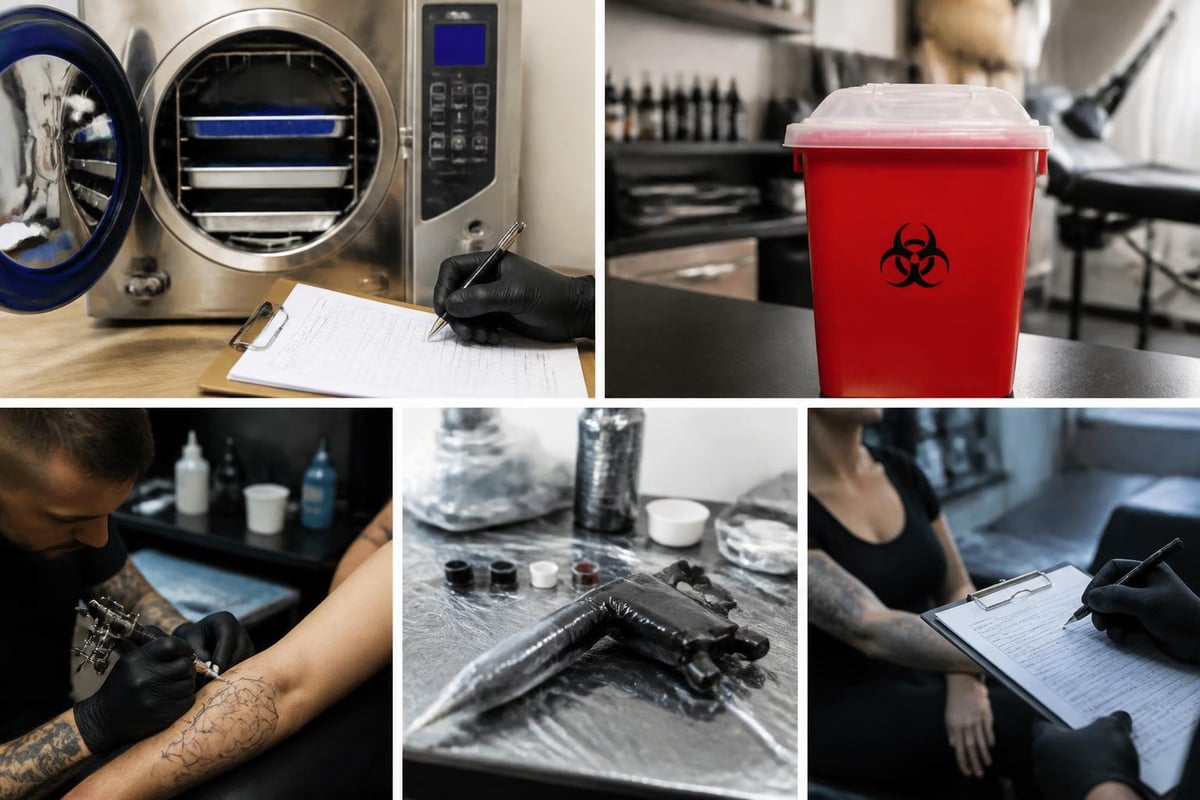
Health department inspections represent the most immediate compliance pressure for tattoo centres. Inspectors typically arrive unannounced and evaluate everything from your autoclave maintenance logs to how your artists handle needle disposal during active sessions.
Inspection Category | Common Violations | Prevention Strategy |
|---|---|---|
Sterilization | Missing spore test records | Weekly testing with logged results |
Sharps Disposal | Overfilled containers | Daily monitoring, scheduled pickups |
Cross-Contamination | Shared barrier film | Single-use supplies, documented protocols |
Client Records | Incomplete consent forms | Digital systems with required fields |
Artist Credentials | Expired licenses | 90-day renewal reminders |
Maintaining inspection-ready status requires daily diligence rather than pre-inspection scrambling. Designate one person to conduct weekly compliance audits using the same checklist your health department uses.
Client Flow and Intake Systems
Efficient client flow directly impacts your revenue per artist and overall client satisfaction. Bottlenecks in the intake process create waiting room congestion, delay session start times, and frustrate both walk-ins and appointment clients.
Optimizing the Booking-to-Session Pipeline
The client journey through tattoo centres typically follows this sequence: initial contact, consultation, deposit, appointment reminder, check-in, paperwork, artist prep, session, aftercare instruction, and payment. Each stage presents opportunities for delays or friction.
Most operational problems concentrate in the paperwork stage. Traditional paper consent forms slow check-in, get filled out incorrectly requiring artist intervention, and create storage nightmares for compliance purposes. Modern tattoo centres are eliminating this bottleneck by allowing clients to complete required forms before arriving at the shop.
Streamlined intake workflow:
Client books appointment and receives confirmation
Automated message sends consent forms to client's phone
Client completes medical history, consent, and photo release forms remotely
Shop receives notification of completed paperwork
Artist reviews forms before client arrival
Client checks in and proceeds directly to station
This approach reduces check-in time from 15-20 minutes to under 5 minutes, allowing artists to start sessions on schedule and maximizing billable hours.
Managing Walk-Ins and Appointments
The tattoo industry generates billions in annual revenue, with successful tattoo centres balancing appointment-based income with walk-in flexibility. The ratio depends on your market, artist specializations, and flash sheet offerings.
Establish clear protocols for walk-in assessment. Designate a point person to evaluate design complexity, estimate time requirements, and slot walk-ins between appointments or assign them to available artists. Document walk-in policies in your client communications to set expectations about wait times.
Health and Safety Protocols
Cross-contamination prevention forms the foundation of safe tattoo centre operations. Your protocols must account for every surface, tool, and artist movement during sessions.
Station Setup and Barrier Protocols
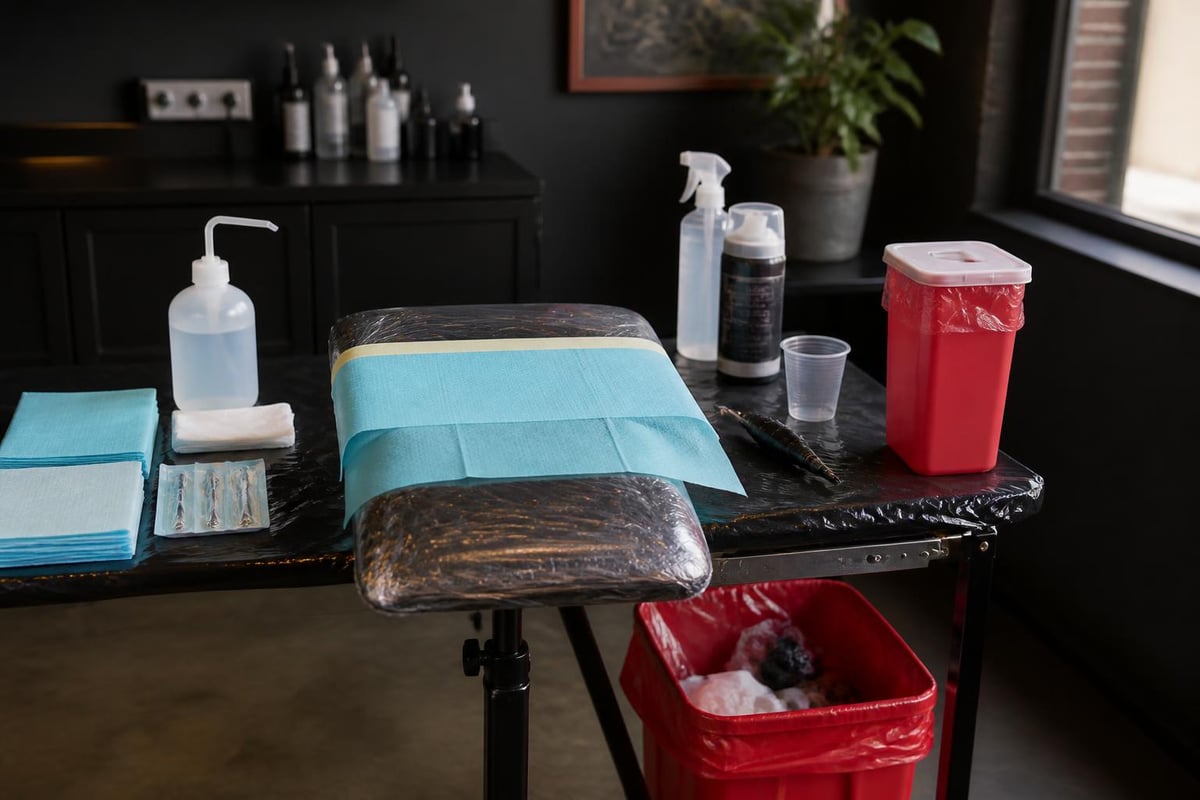
Proper station setup prevents contamination that could trigger health department violations or client infections. Each station requires:
Fresh barrier film on all surfaces the artist contacts during sessions
Sterile single-use needles and tubes opened in client view
Autoclave-sterilized reusable equipment with recent spore test confirmation
Dedicated sharps containers within arm's reach
Hand sanitizer and glove boxes positioned for easy access
Clean towels and aftercare supplies staged before client arrival
Artists must change gloves between different tasks, such as adjusting equipment settings, handling reference materials, or preparing ink caps. These seemingly minor transitions represent cross-contamination risks that inspectors specifically watch for during observations.
Autoclave Maintenance and Documentation
Autoclave failure represents a critical operational risk for tattoo centres. Beyond the immediate health hazard, equipment downtime can cancel sessions and damage your reputation.
Maintenance Task | Frequency | Documentation Required |
|---|---|---|
Spore Testing | Weekly | Lab results with pass/fail |
Chemical Indicators | Every cycle | Visual confirmation logged |
Door Seal Inspection | Monthly | Replacement dates recorded |
Pressure Calibration | Quarterly | Service technician certification |
Full Service | Annually | Manufacturer compliance certificate |
Keep a backup autoclave if you run multiple artists simultaneously. A single equipment failure shouldn't force you to cancel an entire day's appointments.
Legal Liability and Risk Management
Tattoo centres face unique liability exposures ranging from allergic reactions to design disputes to infections. Comprehensive risk management requires both preventive measures and documentation systems that protect you if disputes arise.
Consent Form Requirements by Jurisdiction
Consent forms serve dual purposes: informing clients about risks and creating legal documentation of their acknowledgment. Requirements vary significantly by jurisdiction, but most demand specific disclosures.
In the United States, state regulations like those in Texas specify minimum consent form elements including infection risks, aftercare instructions, and client health declarations. European tattoo centres operating under GDPR face additional requirements for data handling and client privacy.
Essential consent form elements:
Client identification and age verification
Medical history including allergies, medications, and conditions
Specific procedure description and placement
Infection risks and aftercare requirements
Acknowledgment of permanent nature
Photo release permissions for portfolio use
Refund and touch-up policies
Storing these forms creates another operational challenge. Paper forms require physical storage for minimum retention periods (typically 7-10 years), consume space, and become difficult to retrieve if needed for legal defense. Digital consent systems address these problems by storing encrypted, timestamped records in cloud systems that meet healthcare-level security standards. When discussing modernizing your shop operations, InkWaiver offers solutions specifically designed for tattoo centres that need legally compliant digital consent forms clients can complete on their phones.
Managing Client Disputes
Even with perfect consent documentation, client disputes occur. Common scenarios include dissatisfaction with final results, infections or allergic reactions, and disagreements about pricing or touch-up policies.
Document everything. Photograph the completed work before the client leaves. Send written aftercare instructions via email or text. If a client reports problems, document their description, your assessment, and your response. This documentation becomes crucial if disputes escalate to legal claims.
Financial Operations and Overhead Management
Controlling overhead while maintaining health department compliance standards challenges every tattoo centre owner. Revenue optimization requires understanding both artist productivity metrics and shop-wide operational costs.
Revenue Per Artist and Shop Capacity
Industry statistics show significant variation in artist earnings, influenced by geographic location, specialization, and experience levels. Shop owners must track individual artist revenue to identify productivity issues and optimize scheduling.
Calculate these key metrics monthly:
Average revenue per artist hour (total revenue divided by billable hours)
Station utilization rate (billable hours divided by available hours)
Walk-in conversion rate (consultations to completed sessions)
Appointment no-show and cancellation rates
Average ticket value per session type
Low utilization rates often indicate scheduling inefficiencies rather than demand problems. Review your booking system to identify gaps between appointments that could accommodate walk-ins or shorter flash pieces.
Overhead Cost Analysis
Fixed costs for tattoo centres include rent, utilities, insurance, autoclave maintenance, and waste disposal contracts. Variable costs scale with session volume, such as needles, ink, barrier supplies, and aftercare products.
Monthly overhead categories:
Expense Category | Typical % of Revenue | Cost Control Strategy |
|---|---|---|
Rent & Utilities | 15-25% | Negotiate multi-year lease terms |
Artist Compensation | 40-50% | Clear commission structure |
Supplies & Equipment | 8-12% | Bulk purchasing, vendor relationships |
Insurance | 3-5% | Annual policy comparison shopping |
Marketing | 5-8% | Focus on high-ROI channels |
Compliance & Admin | 5-10% | Streamline paperwork systems |
Reducing administrative overhead frees capital for revenue-generating investments. Time spent managing paper forms, filing storage, and manual record-keeping represents pure cost with no client value. Streamlining these processes through modern systems allows you to redirect resources toward artist development or marketing.
Technology Integration and Modern Workflows
Progressive tattoo centres integrate technology to reduce administrative burden and improve client experience without compromising the personal, artistic nature of tattooing.
Digital Appointment and Client Management
Appointment scheduling software designed for tattoo centres handles deposits, sends automated reminders, and reduces no-shows. Choose systems that integrate with your consent form process to create seamless client flow from booking to session completion.
Key features to prioritize:
SMS appointment reminders with confirmation links
Deposit collection at booking
Artist calendar synchronization
Client history and preference notes
Integration with consent form systems
Analytics on booking sources and conversion rates
Avoid over-complicating your tech stack. Each additional platform creates integration challenges and training overhead for your team.
Modern tattoo centre client journey: online booking, automated reminders, digital consent forms on mobile, session completion, and automated aftercare instructions
Portfolio and Social Media Management
Your portfolio drives client acquisition, but managing content across multiple platforms consumes significant time. Establish workflows that minimize redundant effort while maximizing reach.
Designate specific times for content creation rather than posting reactively throughout the day. Photograph completed work immediately after sessions using consistent lighting and backgrounds. Create a content calendar that showcases different artists and styles systematically.
Staff Management and Artist Development
Multi-artist tattoo centres require clear operational policies that balance creative autonomy with consistent client experience and regulatory compliance.
Establishing Shop Standards
Document your shop standards covering:
Station setup and breakdown procedures
Client communication protocols
Pricing structures and deposit policies
Cross-contamination prevention requirements
Guest artist policies and booth rental terms
Apprentice supervision responsibilities
Written standards prevent the "that's how I've always done it" conflicts that arise when artists trained in different shops bring varying practices to your centre.
Training and Continuing Education
Regulatory compliance training isn't optional. Bloodborne pathogen certification requires annual renewal in most jurisdictions, and health departments increasingly verify current certifications during inspections.
Beyond compliance training, invest in artistic skill development. Bring in guest artists for workshops, send your team to conventions, and create internal skill-sharing sessions where artists teach each other specialized techniques.
Marketing and Client Acquisition
Recent industry analysis shows growing competition among tattoo centres, making strategic marketing essential for maintaining client flow.
Building a Referral Network
Existing clients represent your highest-value marketing channel. Satisfied clients not only return for additional work but refer friends and family who trust their recommendations.
Create referral incentives that reward both the referring client and the new client. Discount structures work well: "$50 off your next session when a friend books their first appointment." Track referral sources in your client management system to identify your most effective advocates.
Managing Online Reputation
Online reviews disproportionately influence client decisions. Industry data confirms that most clients research shops online before booking, with reviews carrying significant weight.
Respond to all reviews, both positive and negative, professionally and promptly. Thank clients for positive feedback and address concerns in negative reviews by offering to discuss the issue privately. Potential clients evaluate your responses as much as the reviews themselves.
Quality Control and Client Satisfaction
Maintaining consistent quality across multiple artists while respecting their creative autonomy requires clear communication about client expectations and design boundaries.
Pre-Session Consultations
Thorough consultations prevent most client satisfaction issues. For custom work, require in-person consultations where the artist and client discuss:
Design concept, size, and placement
Reference images and inspiration sources
Timeline and session number estimates
Color palette and style approach
Budget and deposit requirements
Document consultation agreements with sketches or reference photos. This documentation protects both the artist and client if expectations diverge during execution.
Aftercare Education and Follow-Up
Client satisfaction extends beyond the session itself. Proper healing depends on correct aftercare, yet many clients ignore or misunderstand instructions.
Provide written aftercare instructions immediately after the session, preferably via text or email so clients can reference them during healing. Include your shop's contact information with explicit instructions to reach out immediately if they notice signs of infection or allergic reaction.
Schedule a follow-up check within two weeks of major pieces. A quick photo check via text helps identify healing issues early and demonstrates your commitment to client outcomes.
Inventory and Supply Chain Management
Efficient inventory management prevents both supply shortages that force session cancellations and excess stock that ties up capital in unused materials.
Essential Supply Categories
Organize inventory into these categories with different reorder triggers:
Critical supplies (needles, gloves, barrier film): Never run out, maintain 30-day surplus
Ink inventory: Stock based on artist preferences and color usage patterns
Aftercare products: Purchase in bulk for cost savings, high shelf stability
Cleaning and sterilization supplies: Track autoclave cleaning solution, indicator strips
Equipment maintenance parts: Replacement grommets, clip cord covers, machine parts
Vendor Relationships
Establish relationships with multiple suppliers for critical items. Supply chain disruptions happen, and having backup vendors prevents operational shutdowns.
Negotiate bulk pricing for high-volume items like gloves and barrier film. Coordinate orders with other local tattoo centres to increase collective purchasing power if your individual volume doesn't qualify for wholesale minimums.
Operating successful tattoo centres in 2026 requires balancing artistic quality with operational excellence, regulatory compliance, and modern business systems. The shop owners who thrive focus on streamlining administrative processes, maintaining inspection-ready compliance standards, and creating client experiences that drive referrals and repeat business. InkWaiver helps tattoo centres eliminate paper form bottlenecks with digital consent forms that clients complete on their phones before appointments, reducing check-in time while maintaining legally compliant documentation-try the 14-day free trial to experience how modern intake systems improve both client flow and compliance readiness.