
Every tattoo artist understands that a clean needle and steady hand are essential for quality work. What many overlook is that a properly executed tattoo waiver is equally critical for protecting your business. In 2026, regulatory scrutiny has increased across the United States, with health departments and insurance providers demanding comprehensive documentation. Whether you run a multi-artist studio or work as a solo artist at a guest spot, understanding waiver requirements isn't optional-it's fundamental to sustainable business operations.
Legal Requirements for Tattoo Waivers in 2026
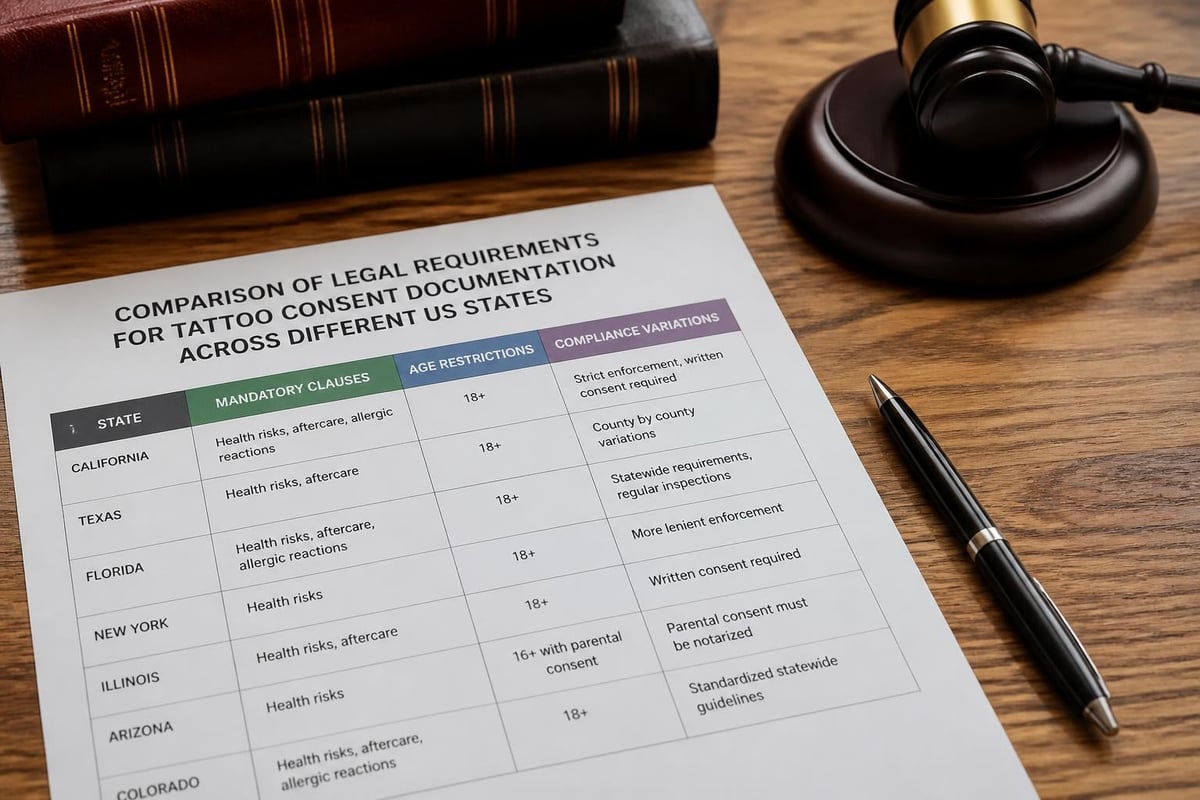
The legal framework surrounding tattoo waivers varies significantly by jurisdiction. In the United States, state-specific regulations mandate specific consent form elements that studios must collect before performing any procedure. Mississippi's code, for example, requires detailed client consent forms, health screenings, and aftercare acknowledgments-a template many states have adopted with modifications.
Federal vs State Requirements
No federal law uniformly governs tattoo consent forms, placing enforcement responsibility on state health departments. This creates challenges for artists who travel for conventions or maintain guest spots across state lines.
Key compliance areas across most jurisdictions:
- Age verification and parental consent procedures
- Health screening and medical history disclosure
- Procedure-specific risks and aftercare instructions
- Liability limitation and assumption of risk clauses
- Photo release and portfolio usage rights
California, New York, and Texas maintain particularly strict documentation standards. Florida requires notarized parental consent for minors, while Oregon mandates separate infection control acknowledgment forms. Artists operating in multiple states must maintain jurisdiction-specific waiver versions to avoid compliance gaps.
Essential Components of a Legally Sound Tattoo Waiver
A comprehensive tattoo waiver protects your studio from liability exposure while ensuring clients understand procedure risks. Missing even one critical element can invalidate your entire consent process during legal disputes.
Client Information and Verification
Every waiver must capture complete client identification. This section serves dual purposes: meeting age verification requirements and establishing contractual capacity.
| Information Type | Required Data | Legal Purpose |
|---|---|---|
| Personal Details | Full legal name, date of birth, address | Identity verification |
| Government ID | Driver's license or passport number | Age confirmation |
| Contact Information | Phone, email, emergency contact | Post-procedure communication |
| Guardian Details (if minor) | Parent/guardian signature with ID | Legal consent authority |
Studios must verify identification for all clients. For minors, separate consent forms for minors require additional guardian information and often notarization depending on state law.
Medical History and Health Disclosures
Health screening sections mitigate risk by identifying conditions that could complicate procedures or healing. Your waiver should explicitly ask about conditions affecting tattoo outcomes.
Critical health disclosure questions:
- Blood-borne diseases (HIV, hepatitis B/C)
- Bleeding disorders or anticoagulant medications
- Diabetes or immune system disorders
- Allergies to metals, latex, or topical anesthetics
- Current pregnancy or breastfeeding status
- Keloid scarring tendency
- Recent vaccinations or upcoming medical procedures
Document these disclosures thoroughly. If a client refuses to disclose medical information, include a waiver clause acknowledging their decision to proceed against medical advice. This protects your studio when clients withhold information that later affects healing or causes complications.
Assumption of Risk and Liability Limitation
This section forms your primary legal protection. Clients must acknowledge tattoo-specific risks before you begin work. Courts generally uphold these clauses when clearly written and properly executed.
The waiver should outline both common and rare complications:
- Immediate risks: Pain, bleeding, swelling, and normal inflammatory response
- Short-term risks: Infection, allergic reaction to ink or aftercare products, and scabbing
- Long-term risks: Color migration, fading, scarring, and dissatisfaction with artistic results
- External factors: MRI complications, employment discrimination, and social stigma
Include explicit language stating that tattoos are permanent and removal is costly, imperfect, and potentially more painful than application. Many client disputes arise from unrealistic expectations about coverups or removal-addressing this upfront reduces conflicts.
Digital vs Paper Waivers: Operational Considerations
The shift from paper to digital consent forms represents one of the most significant operational improvements available to studios in 2026. Understanding the trade-offs helps you make informed infrastructure decisions.
Paper Form Limitations
Traditional paper waivers create multiple operational burdens. Storage requirements alone present challenges-most states require 7-10 year retention periods for medical consent documents. A busy studio performing 20 tattoos weekly generates over 1,000 forms annually, requiring dedicated filing systems and climate-controlled storage to prevent degradation.
Paper form operational costs:
- Physical storage space (filing cabinets, archival boxes)
- Staff time for organization and retrieval
- Vulnerability to damage, loss, or theft
- Difficulty producing copies during disputes
- Manual data entry for client management systems
- Illegible handwriting causing information gaps
Additionally, paper forms create liability exposure. During health department inspections, missing or incomplete forms result in violations. When forms are damaged or lost, you lose critical liability protection. One water leak or filing error can compromise years of documentation.
Digital Waiver Advantages
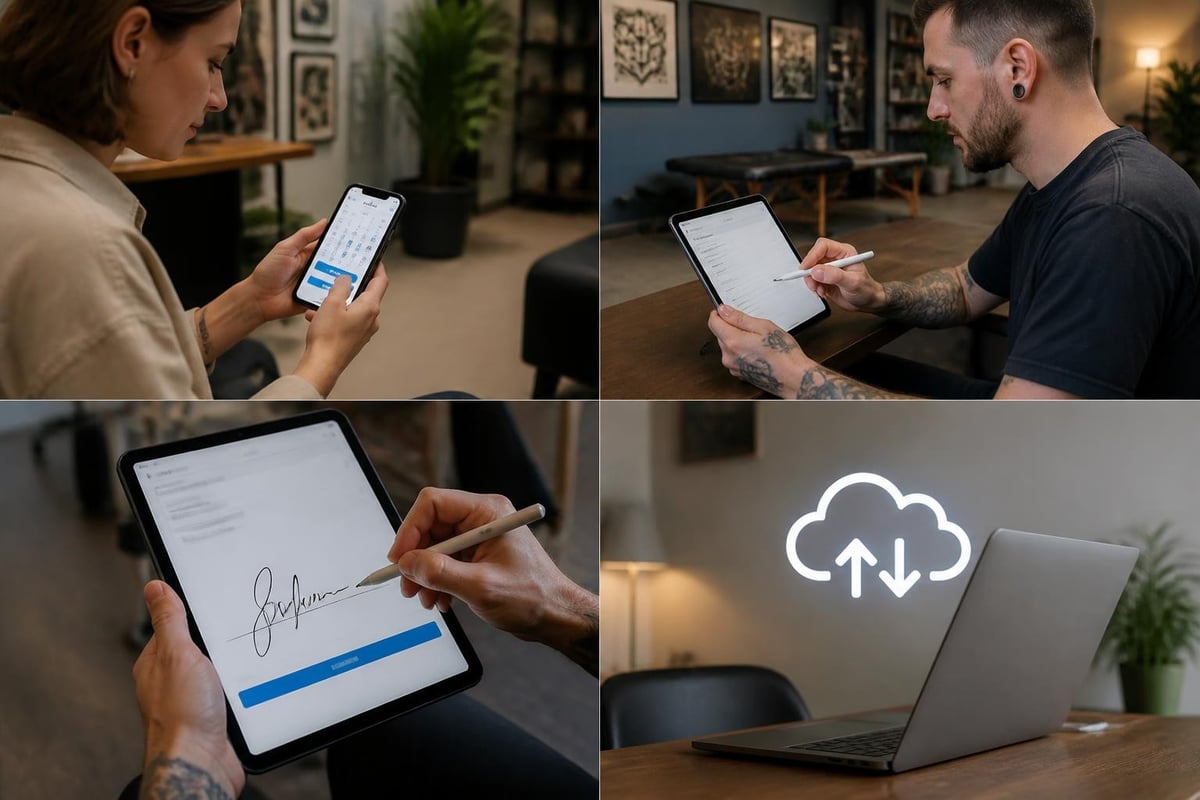
Modern digital consent platforms eliminate paper-based vulnerabilities while improving client experience. Clients complete forms on tablets or smartphones before their appointment, with data automatically stored in cloud-based systems meeting GDPR and HIPAA compliance standards.
Digital systems like InkWaiver allow clients to complete consent forms on their phones before arriving at your studio, streamlining check-in procedures and reducing waiting room congestion. The platform stores all documentation as legally valid PDFs with embedded e-signatures, ensuring you maintain compliant records without physical storage requirements.
| Feature | Paper Waivers | Digital Waivers |
|---|---|---|
| Completion Time | 10-15 minutes in-studio | 5-7 minutes pre-appointment |
| Storage Cost | $50-200/month (space + materials) | $20-50/month (software subscription) |
| Retrieval Speed | 5-30 minutes | Instant search/download |
| Legibility Issues | Common | Eliminated |
| Lost Form Risk | High | None (cloud backup) |
| Audit Trail | Manual timestamping | Automatic with IP tracking |
Digital forms also improve data quality. Validation rules prevent incomplete submissions-clients cannot skip required health questions or signature fields. This eliminates the common scenario where an artist discovers missing information mid-procedure.
Waiver Execution and Documentation Best Practices
Collecting a signature represents only one step in proper waiver execution. Your studio protocols should ensure every consent form meets legal standards and provides maximum liability protection.
Timing and Client Understanding
Never rush waiver completion. Clients must have adequate time to read, understand, and ask questions about consent terms. Courts may invalidate waivers signed under pressure or without reasonable opportunity for review.
Recommended timing protocol:
- Send digital forms 24-48 hours before scheduled appointments
- For walk-ins, allow 15-20 minutes for review and completion
- Provide translated versions for non-English speakers
- Ensure adequate lighting and comfortable seating during review
- Make artists available to answer questions before signing
Document the timing. Digital systems automatically timestamp when forms are sent and completed. For paper forms, note the time provided for review in your client file. This evidence demonstrates you provided reasonable opportunity for informed consent.
Witness and Verification Requirements
Some states require witnessed signatures for certain procedures or client categories. Even when not legally mandated, witness verification strengthens enforceability.
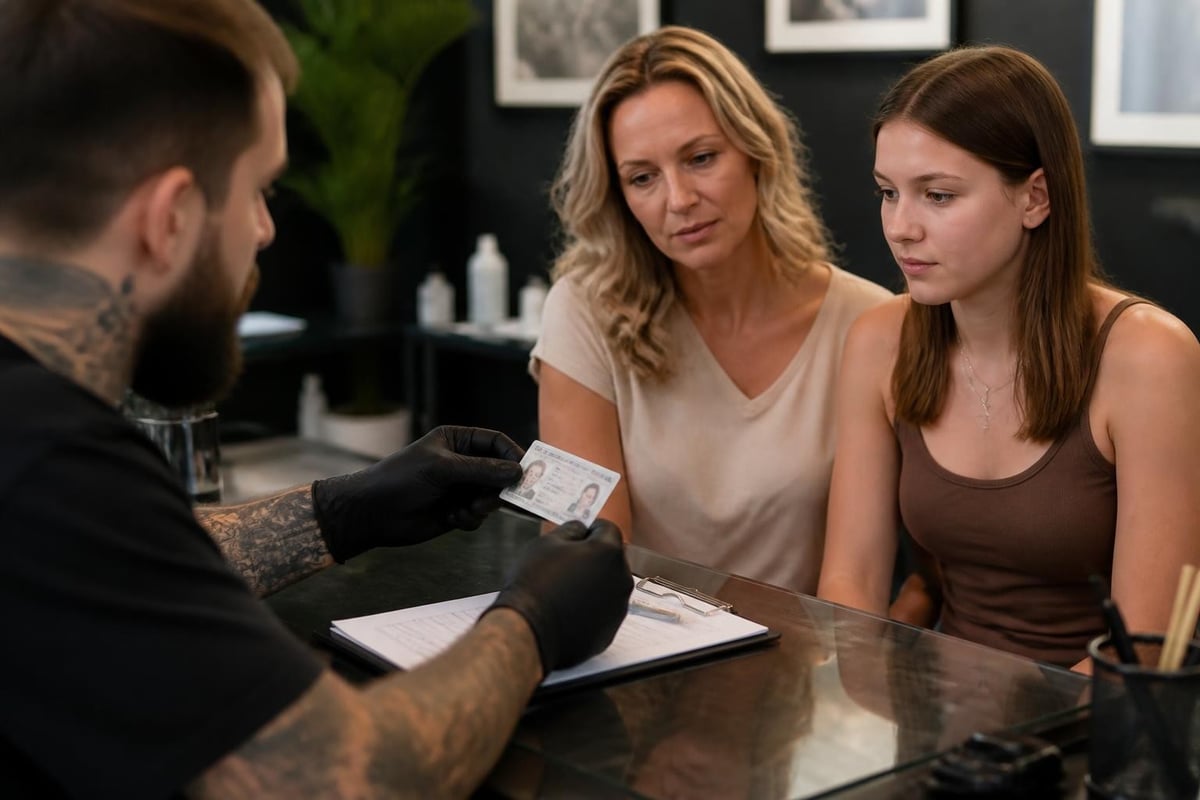
Your reception staff should verify that the person signing matches the identification provided. For minors, confirm the guardian relationship through government-issued identification. When parents or guardians cannot attend in person, follow your state's specific requirements for remote consent-many jurisdictions now require notarization for absent guardians.
Record Retention and Accessibility
Proper storage protects you during disputes, insurance claims, or health department audits. Establish clear retention policies aligned with your jurisdiction's requirements.
Most states mandate 7-10 year retention for medical consent documents, though some require permanent storage. When uncertain, retain records permanently-storage costs are minimal compared to liability exposure from missing documentation.
Retention best practices:
- Implement redundant backup systems (cloud primary + local secondary)
- Restrict access to authorized personnel only
- Create audit logs tracking who accesses client records
- Establish secure deletion protocols for expired records
- Test restoration procedures quarterly
- Encrypt sensitive health information
Index records by client name, date, and artist. During disputes, rapid retrieval demonstrates professionalism and organization. Health inspectors often request random sampling-producing requested records within minutes versus hours significantly improves inspection outcomes.
Special Considerations for Minor Consent
Working with clients under 18 requires additional legal protections. Age restrictions vary by state, with some prohibiting minors entirely and others allowing parental consent at 16 or 17.
Parental Consent Requirements
When your jurisdiction permits tattooing minors with parental consent, documentation standards increase substantially. Both the minor and legal guardian must sign consent forms, with the guardian acknowledging they understand procedure risks and authorize work on their child.
Verify guardian relationship through government identification. Stepparents, aunts, uncles, or older siblings typically lack legal authority to consent unless they hold formal guardianship documentation. Request court orders or guardianship papers when the authorizing adult is not a biological parent.
Enhanced minor consent requirements:
- Notarized signatures in many jurisdictions
- In-person guardian presence during consultation and procedure
- Additional health screening for developmental considerations
- Photo documentation of guardian identification
- Procedure-specific limitations (size, placement, content restrictions)
Some states maintain specific content restrictions for minors. Florida prohibits facial tattoos on clients under 21, while several states restrict neck, hand, or other highly visible placements. Research your local regulations thoroughly-violating minor-specific restrictions carries enhanced penalties.
Waiver Customization for Different Procedures
Standard tattoo waivers require modification for specialized services. Each procedure type carries unique risks requiring specific consent language.
Coverup and Scar Work
Coverup tattoos involve additional complexity-clients must acknowledge that complete concealment may be impossible depending on the underlying tattoo's characteristics. Address realistic expectations explicitly.
Include clauses covering:
- Multiple sessions may be required for adequate coverage
- Darker ink colors limit coverup options
- Scar tissue affects ink retention and healing
- Previous tattoo's ink may influence final color appearance
- Complete removal might be necessary before coverup work
For scar coverup work, medical history becomes even more critical. Keloid-prone clients face higher complication risks with scar work. Document their acknowledgment that scar tissue responds unpredictably to tattooing.
Guest Spot and Convention Work
Artists working guest spots or conventions need portable consent systems. Digital platforms excel here-you maintain consistent documentation standards regardless of location while accessing client records from any device.
When working temporary locations, verify that your waiver includes jurisdiction-specific requirements for that state. An artist licensed in California working a New York convention must comply with New York's consent form requirements, not their home state's standards.
Apprentice Supervised Work
When apprentices perform tattoos under supervision, waivers must clearly identify both the apprentice and supervising artist. Clients acknowledge the apprentice's training status and consent to receive work from a learning artist.
Specify the supervising artist's role and level of involvement. This protects both the apprentice and licensed artist by establishing clear expectations about supervision and responsibility.
Common Waiver Mistakes That Create Liability
Even experienced studio owners make documentation errors that compromise legal protection. Recognizing these patterns helps you avoid preventable exposure.
Incomplete Medical Disclosures
The most frequent waiver failure involves incomplete health screening sections. Clients skip questions, and staff fail to ensure comprehensive completion before work begins.
Implement hard stops-no client proceeds to the tattoo station until every required field contains a response. Digital forms with required field validation eliminate this vulnerability entirely. For paper forms, reception staff must verify completion before scheduling begins.
Vague Language and Unclear Terms
Legal protection requires specific, unambiguous consent language. Phrases like "some risks exist" or "complications are possible" lack the specificity courts require for informed consent.
Instead, enumerate specific risks: "Infection may occur despite proper sterile technique and aftercare compliance. Signs include fever, excessive redness spreading beyond the tattoo border, green or yellow discharge, and increasing pain after 48 hours."
The more specific your risk disclosures, the stronger your liability protection. Consult with an attorney familiar with your state's requirements to review consent language annually.
Missing Signature or Date Elements
Electronic signatures must meet legal standards for enforceability. The design and legal aspects of consent documentation require specific elements including timestamp verification, IP address logging, and audit trails demonstrating consent authenticity.
Ensure your waiver captures:
- Client's full legal signature (not initials)
- Date and time of signing
- Witness signature when required
- Artist acknowledgment of consent review
- Device and IP information for digital signatures
Never allow staff to sign on behalf of clients or backdate consent forms. These practices create fraud allegations that invalidate all liability protection.
Updating Waivers for Evolving Regulations
Regulatory environments shift continuously. States update consent requirements, and new risks emerge requiring disclosure modifications. Establish annual review cycles to maintain compliance.
Monitoring Regulatory Changes
Subscribe to health department bulletins and professional association updates from organizations like the Alliance of Professional Tattooists. Many states announce regulatory changes through these channels before formal implementation.
Track pending legislation in your jurisdiction. When new requirements approach, update your forms proactively rather than scrambling after implementation deadlines.
Version Control and Form Updates
When modifying consent forms, implement version control to track which clients signed which iteration. This becomes critical during legal disputes-you need to demonstrate the specific terms each client agreed to.
Date every waiver version and maintain archives of all previous iterations. Digital systems automatically version control, but paper form users must manually track versions through footer dating and systematic archiving.
Version update protocol:
- Review current waiver language quarterly
- Identify regulatory changes or new risk categories
- Draft updated language with legal consultation
- Implement version dating and archival system
- Train staff on changes before rollout
- Retire old versions completely within 30 days
Avoid running multiple waiver versions simultaneously unless absolutely necessary. This creates confusion and increases error risk.
Client Consent Revocation
Modern privacy regulations, including GDPR and California's CCPA, grant clients rights to revoke consent for data usage and photography. Your waiver should address consent revocation procedures explicitly.
Establish clear processes for clients to withdraw photo release permissions or request data deletion. Document these requests and implement them promptly-failure to honor revocation requests creates regulatory violations.
Insurance and Waiver Coordination
Professional liability insurance and consent waivers work together to protect your business. Understanding how insurers evaluate your documentation helps you maintain optimal coverage.
Insurer Documentation Requirements
Most tattoo liability policies require specific consent form elements. Review your policy's documentation requirements annually and cross-reference them against your current waiver.
Common insurer requirements include:
- Medical history disclosure with specific condition checklists
- Aftercare instruction acknowledgment
- Photo documentation of completed work
- Artist licensure verification
- Sterilization protocol confirmation
Failure to maintain insurer-required documentation may void coverage during claims. When updating waivers, send copies to your insurance provider for review and approval.
Claims and Documentation
During liability claims, your waiver forms the primary defense. Incomplete or improperly executed waivers weaken your position regardless of the claim's merit.
Insurance adjusters scrutinize consent forms for completeness, clarity, and proper execution. Missing signatures, undated forms, or vague language give insurers grounds to dispute coverage or negotiate reduced settlements.
Maintain impeccable documentation standards. The difference between full coverage and partial denial often hinges on waiver quality and execution protocols.
Implementing comprehensive tattoo waiver systems protects your studio from liability exposure while demonstrating professionalism to clients and inspectors. The shift from paper to digital consent forms eliminates storage burdens, improves compliance, and streamlines client intake workflows. InkWaiver helps tattoo studios modernize consent documentation with digital forms clients complete on their phones, automatic cloud storage, and legally compliant e-signatures-eliminating paper forms while strengthening your liability protection. Start your free 14-day trial today and transform your consent process in just two minutes.