
Running a professional tattoo studio means protecting your business while delivering exceptional work. A properly structured tattoo waiver form serves as your first line of legal defense and establishes clear communication with clients before needle touches skin. Beyond basic liability protection, these documents create a documented record of informed consent, health disclosures, and client acknowledgment of aftercare responsibilities. For shop owners managing multiple artists, walk-ins, and guest spots, having a legally compliant waiver system isn't optional in 2026.
Essential Components Every Tattoo Waiver Form Must Include
Your waiver documentation needs specific elements to hold up under legal scrutiny and satisfy health department requirements during inspections. Missing even one critical section can create liability exposure that paper-thin insurance policies won't cover.
Client Identification and Contact Information
Start with comprehensive client details: full legal name, date of birth, current address, phone number, and email. Require government-issued photo ID verification for every client, regardless of how old they appear. Document the ID type and number directly on the form. This creates an audit trail that protects you if age misrepresentation becomes an issue later.
Emergency contact information belongs in this section as well. Capture a secondary contact name, relationship, and phone number. During medical emergencies, you need immediate access to this data without searching through filing cabinets or scrolling phone contacts.
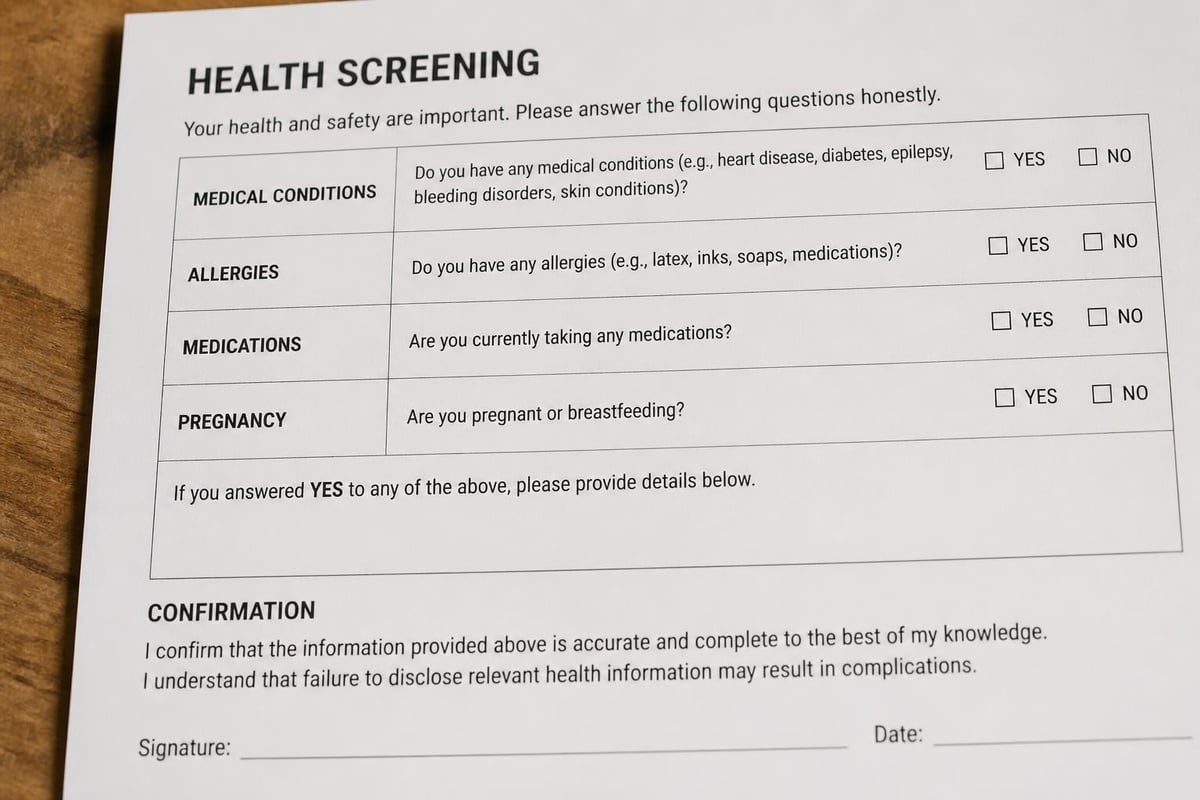
Health Screening and Medical Disclosure
This section separates professional operations from liability disasters waiting to happen. Your tattoo waiver form should explicitly ask about:
- Blood-borne diseases (HIV, hepatitis B, hepatitis C)
- Skin conditions (eczema, psoriasis, keloid scarring tendency)
- Allergies (latex, metal sensitivities, topical anesthetics, ink pigments)
- Current medications (blood thinners, immunosuppressants, antibiotics)
- Pregnancy or nursing status
- Recent cosmetic procedures
- Diabetes or compromised immune system
Create checkbox options with a signature line confirming accuracy. Include clear language stating that false information voids the waiver and releases your shop from liability. Informed consent for body art requires clients understand risks specific to their health conditions.
Risk Acknowledgment and Liability Release
This represents the core legal protection in your waiver. Draft clear, unambiguous language acknowledging that tattooing carries inherent risks including infection, allergic reactions, scarring, and dissatisfaction with artistic results. Specify that outcomes vary based on individual healing, skin type, and aftercare compliance.
Your liability release should address both negligence claims and artistic disputes. While consent forms have limitations in tattoo artist error cases, properly worded releases still provide substantial protection. Include language releasing your shop, individual artists, and affiliated businesses from claims arising from the procedure.
Address specific scenarios in separate clauses:
- Color variations from healing and skin tone interactions
- Line work spreading or blurring over time
- Touch-up requirements and associated costs
- Removal difficulty and permanent skin changes
- Emotional or psychological reactions to permanent body modification
Legal Compliance Across Different Jurisdictions
Waiver enforceability varies significantly by location. US regulations differ at federal, state, and local levels, while EU operations face GDPR requirements, and UK shops navigate post-Brexit frameworks.
United States Requirements
Most states allow liability waivers for tattoo services, but legal requirements for getting a tattoo vary considerably. California requires specific language about infection risks and sterilization procedures. Florida mandates disclosure of artist licensing information on consent forms. New York health codes specify minimum font sizes for waiver text.
Check your state's body art regulations and local health department codes. Many municipalities add requirements beyond state minimums, particularly regarding minor consent procedures and parental presence during sessions.
| State | Minimum Age | Parental Presence Required | Specific Waiver Language |
|---|---|---|---|
| California | 18 (no exceptions) | N/A | Infection risk disclosure required |
| Florida | 16 with parent | Yes, parent must stay | Artist license number on form |
| Texas | 18 (no exceptions) | N/A | Standard liability release |
| New York | 18 (no exceptions) | N/A | Minimum 10pt font size |
European Union and UK Considerations
GDPR compliance adds layers to waiver documentation in EU member states. Your forms must include explicit data processing consent, storage duration specifications, and client rights notifications. Explain exactly how you'll store personal information, who has access, and retention periods.
UK shops operating post-Brexit follow retained EU law with modifications. The Data Protection Act 2018 governs personal information handling. Include clear opt-in language for marketing communications separate from service consent.
Minor Consent Procedures
Shops accepting underage clients in jurisdictions where parental consent permits tattooing need specialized documentation. A tattoo consent form for minors requires guardian verification beyond standard adult waivers.
Capture parent or legal guardian identification separately. Require physical presence during consultation and procedure in most cases. Document the guardian relationship and verify through government ID. Some shops photograph the guardian, minor, and both IDs together as additional protection against fraudulent consent.
Digital vs. Paper Waiver Systems
The paper versus digital debate significantly impacts daily operations, storage requirements, and legal defensibility. Each approach carries distinct advantages and challenges for shop owners.
Paper Form Limitations
Traditional paper waivers create immediate operational friction. Clients arrive for walk-ins without appointments, and your front desk scrambles to locate blank forms. Artists working guest spots carry physical form stacks between shops. Storage requirements balloon as you accumulate years of signed documents.
Paper forms degrade over time. Ink fades, pages tear, coffee spills destroy entire batches. During legal disputes years after a session, illegible signatures and missing pages undermine your defense. Climate-controlled storage costs add up, and document retrieval during health inspections wastes valuable time.
Cross-contamination risks increase when clients handle clipboards and pens in your workspace. Even with sanitization protocols, shared writing instruments create unnecessary exposure points that modern operations can eliminate.
Digital Waiver Advantages
Electronic systems transform client intake from administrative burden to streamlined professional experience. Clients complete forms on personal devices before arriving, reducing lobby congestion and station downtime. Artists access complete client history instantly during consultations without searching file cabinets.
Digital signatures carry legal weight equivalent to handwritten signatures under the ESIGN Act of 2000 and state-level Uniform Electronic Transactions Acts. Cloud storage provides automatic backups, eliminating document loss risks. Searchable databases make health department compliance checks straightforward rather than all-day filing cabinet excavations.
Version control becomes manageable with digital systems. When regulations change or you update policy language, new clients automatically receive current forms while historical records preserve the exact waiver version each client signed. This documentation proves critical if disputes arise about what specific language a client agreed to years earlier.
For shops ready to eliminate paper-based inefficiencies, platforms like InkWaiver offer setup in minutes with legally compliant templates specifically designed for tattoo operations. Clients sign on their phones, and completed forms store securely in the cloud with automatic organization.

Drafting Custom Clauses for Your Shop's Operations
Generic templates provide starting points, but customization addresses your specific services, policies, and risk profile. Tailor language to reflect actual procedures and business practices.
Design Consultation and Approval Process
Document your revision policy explicitly. Specify how many concept iterations you include, timeline for design feedback, and charges for extensive changes after approval. Include language confirming the client viewed and approved final design placement and sizing before starting.
For custom work, require clients to acknowledge that:
- Design modifications after needle contact incur additional charges
- Placement changes mid-session may compromise artistic integrity
- Reference images inspire designs but exact replication isn't guaranteed
- Copyright for custom designs remains with the artist unless separately negotiated
Aftercare Instructions and Client Responsibilities
Your tattoo waiver form should integrate aftercare protocols as binding client obligations, not optional suggestions. Detail specific products, cleaning frequency, sun exposure restrictions, and swimming prohibitions during healing periods.
Include acknowledgment that failure to follow aftercare instructions voids any guarantee or touch-up policies. Specify that infections or healing complications from aftercare non-compliance release your shop from liability. This language proves essential when clients demand refunds for preventable healing issues.
Create separate acknowledgment checkboxes for critical aftercare elements:
- Client will wash hands before touching tattoo
- Client will avoid submerging tattoo in water for specified duration
- Client will not pick scabs or scratch healing skin
- Client will apply recommended ointment according to schedule
- Client understands sun exposure causes premature fading
Pricing, Deposits, and Refund Policies
Financial terms belong in your waiver documentation. State your hourly rate or project pricing, required deposit amount, and cancellation policies. Specify that deposits are non-refundable except under defined circumstances.
Address price adjustments for sessions running longer than estimated. Include language allowing rate increases for extensive client fidgeting, excessive breaks, or intoxication requiring session termination. Understanding tattoo contracts helps structure enforceable payment terms.
Special Considerations for Specific Services
Different procedures carry unique risks requiring specialized waiver language beyond standard tattoo documentation.
Cover-Up and Rework Sessions
Cover-up work over existing tattoos needs explicit acknowledgment that darker ink may be required, complete coverage isn't always achievable, and multiple sessions may be necessary. Clients often have unrealistic expectations about covering dark or dense existing work.
Include before photos as part of your waiver process, with client consent for documentation. Specify that results depend on existing tattoo characteristics beyond artist control.
Cosmetic Tattooing (PMU, Microblading)
Permanent makeup and microblading procedures require enhanced risk disclosures. Address facial swelling, bruising duration, and color changes during healing. Specify that final results appear after healing completes, typically 4-6 weeks post-procedure.
Include explicit language about color matching limitations, particularly for eyebrow work across different skin tones. Detail the number of touch-up sessions included and timeline restrictions for complimentary adjustments.
Laser Tattoo Removal
Removal services need completely separate waiver documentation addressing blistering, scarring, hyperpigmentation risks, and incomplete ink removal possibilities. Specify that complete removal isn't guaranteed regardless of session number.
Address pain management expectations and potential for adverse reactions to numbing agents. Include pre-treatment instructions about sun exposure and skin preparation.
Implementing Effective Waiver Workflows
Having legally sound forms means nothing if artists skip steps during rush periods or walk-ins. Build systematic workflows that make compliance the default path of least resistance.
Pre-Appointment Digital Submission
Send waiver links when clients book appointments. Set automated reminders 48 hours before sessions with form completion requirements. Configure your system to flag incomplete submissions, preventing clients from checking in until documentation is finished.
For walk-ins, provide tablets or direct clients to mobile-friendly forms while they wait. Position this as professional protocol, not bureaucratic hassle. Most clients expect thorough documentation from reputable shops.
Artist Checklist Integration
Create station-specific checklists that include waiver verification before setup begins. Train apprentices that incomplete documentation stops work completely, regardless of client impatience or schedule pressure.
Integrate waiver review into your consultation process. Spend two minutes confirming health disclosures, reviewing aftercare responsibilities, and ensuring clients understand what they're signing. This brief investment prevents misunderstandings that consume hours resolving later.
Storage and Retrieval Systems
Organize digital files by client name, session date, and artist for multi-access searching. Tag files with procedure type for quick retrieval during health inspections when inspectors request specific documentation categories.
Implement automatic backup systems with redundant storage locations. Cloud services provide geographic distribution that protects against local disasters. Schedule quarterly backup verification to confirm files remain accessible and uncorrupted.
For paper systems still in use, establish consistent filing by date with client name cross-reference indexing. Store in fireproof cabinets in climate-controlled areas. Scan older documents for digital backup before degradation makes them illegible.

Common Waiver Mistakes That Create Liability Exposure
Even experienced shop owners make documentation errors that undermine legal protection. Avoid these frequent problems that surface during disputes or inspections.
Vague or Ambiguous Language
Generic phrases like "client assumes all risks" lack specific risk enumeration that courts expect. Tattoo parlor liability defenses require detailed risk disclosure, not blanket statements.
Replace vague language with specific risks: "Client acknowledges tattooing may cause infection requiring medical treatment, allergic reactions to ink pigments, permanent scarring, and keloid formation in susceptible individuals."
Missing Update Dates and Version Control
Undated forms create confusion about which policy version applied during historical sessions. Always include form revision dates and version numbers. When updating language, preserve previous versions in archived files rather than overwriting.
Document when policy changes take effect. Grandfather existing appointments under previous terms if significant policy shifts occur between booking and session dates.
Inadequate Minor Protections
Accepting minors without ironclad guardian verification invites regulatory nightmares. Never rely on verbal age confirmation. Always verify government ID for both minor and guardian, confirm guardian legal status, and require physical presence throughout the procedure.
Some shops photograph all parties together with IDs visible for additional documentation. While this seems excessive, it provides definitive proof during investigations of fraudulent consent claims.
Overlooking Health Code Alignment
Your waiver language should mirror health department requirements specific to your jurisdiction. Review local body art ordinances annually and update forms to incorporate any new mandatory disclosures.
During inspections, health officers verify that your documentation meets current standards. Outdated forms trigger violations even if they were compliant when originally drafted.
Integrating Waivers with Overall Shop Policies
Your waiver documentation should align with appointment policies, social media guidelines, and client relationship management practices for consistent professional operations.
Photography and Social Media Rights
Include separate opt-in language for using session photos and finished work in marketing materials. Specify platforms where images may appear (Instagram, portfolio website, promotional materials) and duration of usage rights.
Allow clients to restrict face visibility while permitting tattoo-only shots. Some clients enthusiastically share their work while others value privacy for employment or personal reasons.
Cancellation and Rescheduling Terms
Integrate your booking policies directly into waiver documentation. State cancellation notice requirements, rescheduling limitations, and deposit forfeiture conditions. This consolidation ensures clients can't claim ignorance of policies buried in separate documents.
Specify artist compensation for last-minute cancellations that prevent rebooking time slots. Detail charges for no-shows and requirements for rescheduling after missed appointments.
Touch-Up and Warranty Policies
Define exactly what constitutes normal healing versus work requiring correction. Specify the timeframe for complimentary touch-ups (commonly 30-90 days) and what voids this warranty.
Exclude touch-ups for healing issues caused by aftercare non-compliance, sun damage, or weight fluctuations affecting skin. Require photo documentation of concerns before scheduling correction sessions.
Training Staff on Waiver Administration
Front desk staff and apprentice artists need systematic training on form administration to maintain consistent compliance across all client interactions.
New Hire Onboarding Checklist
Waiver Administration Training Components:
- Form walkthrough explaining each section's legal purpose
- ID verification protocols and fake ID red flags
- Health disclosure questioning techniques
- Digital system navigation and troubleshooting
- Paper backup procedures for technology failures
- Storage filing system organization
- Retrieval procedures for existing clients
- Privacy protection and HIPAA considerations
Role-play common scenarios: clients rushing to skip sections, health disclosure questions requiring clarification, and minor consent verification procedures. Practice polite insistence on complete documentation despite client impatience.
Ongoing Compliance Audits
Conduct quarterly waiver audits reviewing random samples from each artist's clients. Check for complete signatures, health disclosure thoroughness, and proper storage filing. Address deficiencies through additional training rather than punitive measures that encourage corner-cutting.
Implement peer review systems where senior artists verify apprentice documentation practices. This mentorship approach builds quality culture while distributing compliance responsibility across your team.
Protecting your tattoo business starts with comprehensive, legally compliant waiver documentation that captures informed consent while creating defensible records for health inspections and potential disputes. Whether you're running a solo operation or managing multiple artists, implementing systematic waiver workflows eliminates administrative chaos while reducing liability exposure. InkWaiver transforms this essential compliance requirement into a streamlined digital process that takes just two minutes to set up, allowing clients to complete forms on their phones before appointments while you maintain cloud-stored records that satisfy regulatory requirements and support your professional operations.