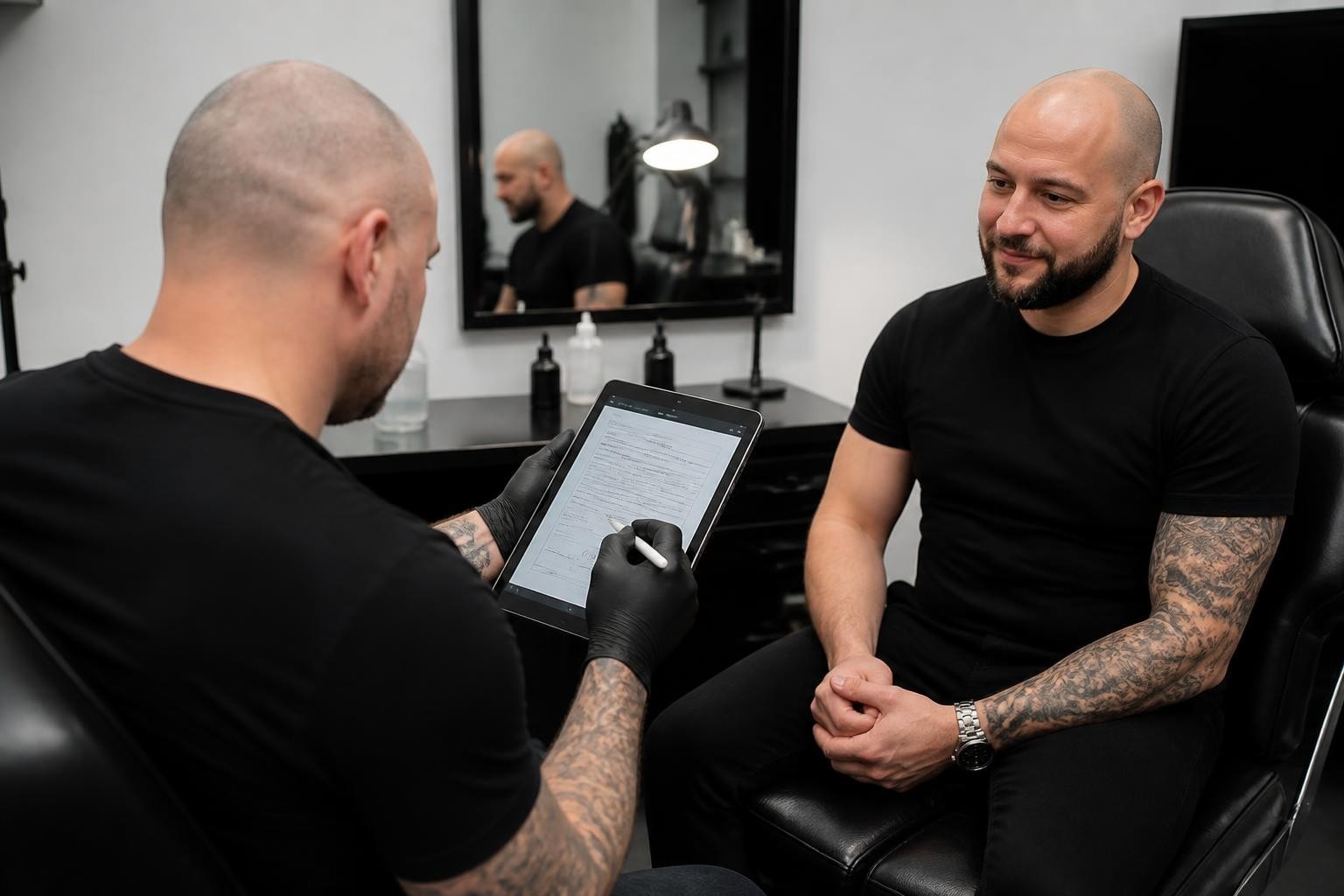
Head tattooing for hair loss, professionally known as scalp micropigmentation, represents a growing revenue opportunity for tattoo shops willing to expand their service offerings. This specialized procedure creates the appearance of hair follicles by depositing pigment into the scalp, helping clients with thinning hair, receding hairlines, or complete baldness achieve a fuller appearance. For tattoo artists with steady hands and attention to detail, adding this service requires specific equipment, training, and most importantly, proper documentation to protect your business from liability exposure.
Understanding Scalp Micropigmentation as a Business Service
Scalp micropigmentation differs significantly from traditional tattooing in application technique, pigment depth, and client expectations. While body tattoos penetrate the dermis at varying depths, scalp micropigmentation requires extremely shallow application in the upper dermal layer to create realistic hair follicle impressions.
The procedure typically requires multiple sessions spaced two to four weeks apart. Clients return for touch-ups every four to eight years depending on skin type, sun exposure, and lifestyle factors. This creates recurring revenue streams that traditional tattoo work cannot match.
Service Differentiation and Market Positioning
Your shop must decide whether to market head tattooing for hair loss as a separate service line or integrate it into your existing offerings. Consider these positioning strategies:
- Standalone specialty service with dedicated booking slots and premium pricing
- Add-on service for existing clients experiencing hair loss
- Referral partnership with dermatologists, hair transplant surgeons, and barbershops
- Gender-specific marketing targeting male pattern baldness or female thinning hair
Market research indicates that men aged 35-55 represent the primary demographic, though female clients seeking hairline definition or scar coverage comprise a growing segment. Price sensitivity varies significantly, with clients viewing the procedure as either cosmetic enhancement or medical necessity depending on their hair loss severity.
Equipment and Station Setup Requirements
Adding scalp micropigmentation to your shop requires specialized equipment beyond standard tattoo stations. The initial investment ranges from $3,000 to $8,000 depending on equipment quality and whether you purchase new or certified pre-owned machines.
| Equipment Category | Standard Tattoo | Scalp Micropigmentation | Cost Difference |
|---|---|---|---|
| Machine Type | Coil or rotary | Rotary with specialized cartridges | $500-$1,200 |
| Needle Configuration | Various groupings | Single-point or 3-point clusters | $200-$400/box |
| Pigment Type | Traditional ink | Specialized scalp pigments | $300-$600 |
| Magnification | Optional | Required (loupes or lamp) | $150-$800 |
Essential Equipment Checklist
Your scalp micropigmentation station must include these components:
- Specialized rotary machine with adjustable stroke length and speed control
- Single-use cartridge needles in configurations ranging from single-point to three-point clusters
- Carbon-based pigments specifically formulated for scalp application (avoid standard tattoo inks)
- Magnification equipment such as surgical loupes or adjustable magnifying lamps
- Ergonomic client chair with adjustable height and headrest positioning
- LED lighting system providing shadow-free illumination across the entire scalp
- Scalp cleaning supplies including alcohol wipes, antibacterial wash, and disposable razors
Cross-contamination protocols become even more critical with scalp work due to increased bacteria presence in hair follicles and sebaceous glands. Implement strict barrier film protocols for all surfaces, use single-use cartridges exclusively, and maintain autoclave logs for all reusable equipment.
Training and Certification Considerations
No state currently requires specific licensing for scalp micropigmentation beyond standard tattoo licensing, but this legal landscape continues evolving. Several states including California and Texas have proposed legislation to regulate the procedure separately from traditional tattooing.
Professional Development Path
Most experienced tattoo artists require 40-80 hours of specialized training to achieve consistent results with head tattooing for hair loss. Training options include:
- Manufacturer certification programs offered by equipment suppliers (typically 2-3 days, $1,500-$3,000)
- Advanced workshops with established scalp micropigmentation specialists (3-5 days, $3,000-$5,000)
- Apprenticeship arrangements with shops already offering the service (duration and cost vary)
- Online coursework combined with hands-on practice on synthetic scalp models ($500-$1,500)
Budget at least three months for skill development before accepting paying clients. Practice on synthetic scalp models replicates skin tension and curvature while allowing you to perfect dot size, spacing, and density without liability exposure. Understanding proper consent documentation becomes essential as you transition to live models.
Legal Documentation and Consent Requirements
Scalp micropigmentation carries unique liability risks that standard tattoo consent forms do not adequately address. Clients may dispute results based on unrealistic expectations about hair density, color matching, or longevity. Your consent documentation must specifically address these concerns.
Critical Consent Form Elements
Your head tattooing for hair loss consent forms must include these components beyond standard tattoo waiver language:
Medical history screening documenting conditions that contraindicate the procedure:
- Active scalp psoriasis, eczema, or dermatitis
- Keloid scarring tendency
- Blood clotting disorders or anticoagulant medications
- Recent hair transplant surgery (minimum 12-month waiting period)
- Autoimmune conditions affecting healing
Realistic expectation statements that clients must initial:
- Results simulate shaved head appearance, not actual hair growth
- Pigment will fade 40-60% over 4-8 years requiring touch-ups
- Color may shift slightly as pigment settles
- Multiple sessions (typically 2-4) are required for complete coverage
- Sun exposure accelerates fading
Photography authorization permitting before/after documentation for your records and potential marketing use. Many jurisdictions require separate authorization beyond general consent.
Digital consent management eliminates disputes about what clients signed and when. When implementing permanent makeup consent forms similar to those used for microblading and PMU services, ensure your system captures client signatures, timestamps each form, and stores encrypted copies compliant with HIPAA and GDPR requirements where applicable.

Pricing Strategy and Revenue Modeling
Head tattooing for hair loss commands premium pricing compared to traditional tattoo work due to the specialized skill required and multi-session commitment. National averages range from $1,500 to $4,000 for complete coverage, though pricing varies significantly by geographic market and shop positioning.
Session-Based Pricing Models
Most shops structure pricing around the total treatment rather than hourly rates:
| Coverage Area | Sessions Required | Price Range | Time Investment |
|---|---|---|---|
| Hairline definition only | 1-2 sessions | $800-$1,500 | 4-6 hours total |
| Partial scalp coverage | 2-3 sessions | $1,500-$2,500 | 8-12 hours total |
| Full scalp coverage | 3-4 sessions | $2,500-$4,000 | 12-20 hours total |
| Scar camouflage (small) | 1-2 sessions | $500-$1,200 | 2-4 hours total |
Package pricing encourages client commitment and reduces scheduling friction. Offering a complete treatment package at a slight discount compared to individual session pricing (approximately 10-15% savings) improves cash flow and reduces no-show rates for subsequent appointments.
Additional Revenue Streams
Beyond initial treatments, consider these supplementary income sources:
- Annual touch-up packages priced at 30-40% of original treatment cost
- Scar coverage services for clients with transplant scars or injury marks
- Consultation fees ($50-$150) applied toward treatment if client proceeds
- Aftercare product sales including specialized scalp cleansers and sunscreens
- Referral incentives providing existing clients $100-$200 credit for successful referrals
Calculate your break-even point by dividing equipment investment and training costs by expected profit per treatment. Most shops recoup their initial investment within 15-25 complete scalp treatments.
Client Consultation and Assessment Protocol
Effective consultations separate successful scalp micropigmentation services from those that generate client disputes and negative reviews. The procedure itself requires precision, but client management determines business success.
Structured Consultation Process
Implement this step-by-step consultation workflow:
- Initial contact screening via phone or email to determine candidate suitability
- In-person assessment examining scalp condition, hair color, and skin tone
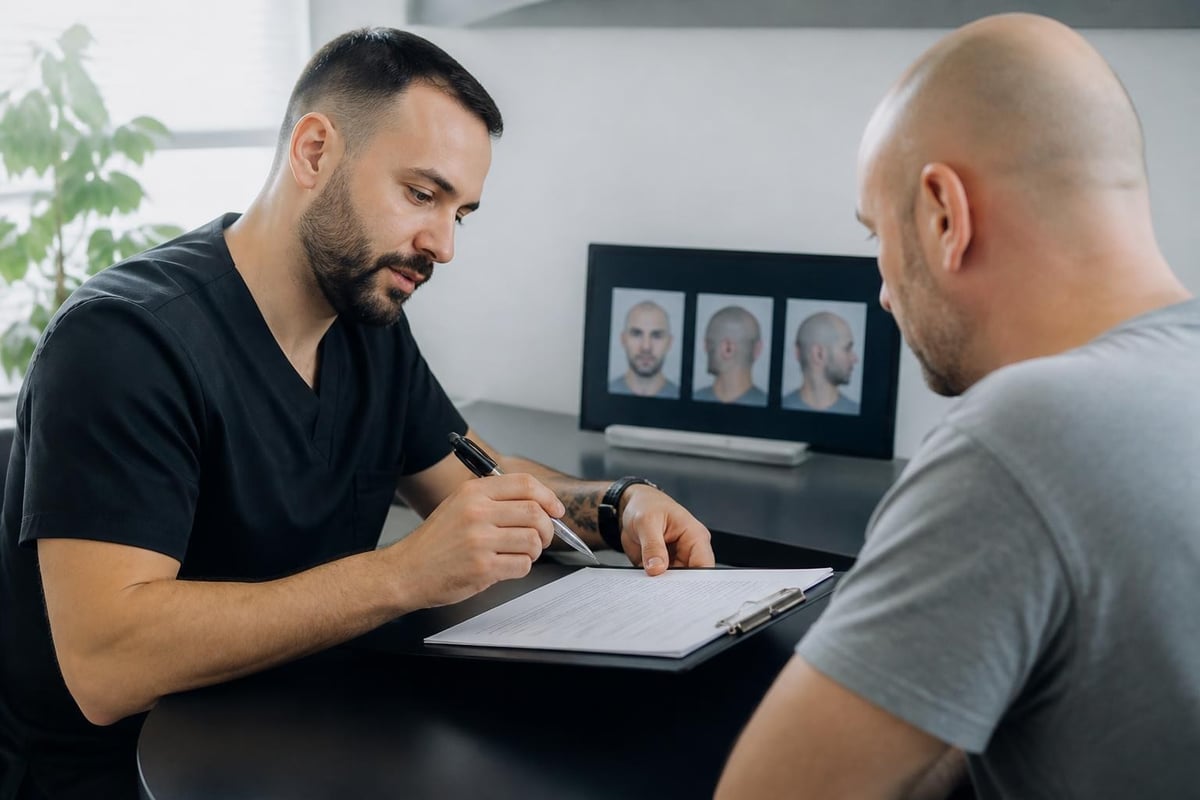
- Digital photography from multiple angles under consistent lighting conditions
- Treatment planning discussing coverage area, density, and session scheduling
- Realistic outcome presentation showing before/after examples of similar cases
- Pricing transparency providing written quotes with payment schedule
- Consent form completion using digital forms that clients review and sign electronically
Photography deserves particular attention. Take consistent images from front, both sides, top, and back of the scalp using the same lighting setup and background. These images protect against disputes about results and provide documentation for health department inspections if questions arise about your work.
During assessment, some clients prove unsuitable for the procedure. Active scalp conditions, unrealistic expectations, or psychological concerns about appearance require professional judgment about whether to proceed. Declining unsuitable clients protects your reputation more than accepting their money.

Health Department Compliance and Inspection Preparedness
Adding scalp micropigmentation to your service menu triggers additional health department scrutiny in many jurisdictions. The procedure's medical appearance causes inspectors to apply stricter standards than they might for traditional tattoo work.
Jurisdiction-Specific Regulations
United States: Most states regulate scalp micropigmentation under existing tattoo and body art statutes. However, states including California, Texas, and New York have proposed separate licensing categories. Contact your state health department and county licensing office to confirm current requirements before offering services.
European Union: GDPR compliance adds documentation requirements beyond health regulations. Client consent forms must explicitly authorize data collection, specify retention periods, and provide opt-out mechanisms. Many EU countries classify the procedure as cosmetic tattooing requiring separate certification from standard tattoo licensing.
United Kingdom: Local councils regulate tattooing under the Local Government (Miscellaneous Provisions) Act 1982. Most councils require separate registration for each premises and practitioner. The procedure falls under special procedures licensing in many jurisdictions.
Inspection Documentation Requirements
Maintain these records in immediately accessible format:
- Equipment sterilization logs documenting autoclave cycles with biological indicator results
- Pigment inventory tracking showing batch numbers, expiration dates, and supplier information
- Client consent forms with health screening questionnaires and signed acknowledgments
- Sharps disposal contracts and pickup documentation from licensed medical waste haulers
- Continuing education certificates demonstrating current knowledge of infection control protocols
Digital consent management systems provide inspection-ready documentation instantly. Rather than searching through filing cabinets during inspections, you can pull up any client record within seconds, demonstrating professional operation and reducing inspection duration.
Marketing and Client Acquisition Strategies
Most scalp micropigmentation clients arrive through targeted marketing rather than walk-in traffic. The decision involves significant research and consideration, requiring different acquisition strategies than traditional tattoo services.
Digital Marketing Approaches
Search engine optimization focusing on local keywords drives qualified leads:
- "scalp micropigmentation [city name]"
- "hair loss tattoo [region]"
- "SMP specialist near me"
- "permanent hair follicle tattoo"
Create dedicated service pages with before/after galleries, detailed procedure explanations, and FAQ sections addressing common concerns. Video testimonials from satisfied clients build trust more effectively than written reviews alone.
Referral partnerships with complementary professionals accelerate growth:
- Hair transplant surgeons who can recommend SMP for scar coverage
- Dermatologists treating patients with permanent hair loss conditions
- Barbershops and hair salons encountering clients seeking solutions
- Men's grooming centers and medical spas
Offer referring partners a finder's fee or reciprocal referral arrangement. Some shops provide free or discounted services to the partner themselves, creating a genuine testimonial and deepening the relationship.
Traditional Marketing Tactics
Despite digital dominance, traditional marketing remains effective for head tattooing for hair loss services:
- Print advertising in men's lifestyle magazines and local business publications
- Event sponsorships at men's health expos, wellness fairs, and cancer survivor support events
- Educational seminars hosted at your shop or partner medical offices
- Direct mail campaigns targeting demographics experiencing hair loss (age 35+)
Community involvement builds reputation. Offering discounted services to cancer survivors experiencing permanent hair loss from chemotherapy generates goodwill and word-of-mouth referrals while creating meaningful impact.
Operational Efficiency and Client Management
Scalp micropigmentation requires different scheduling approaches than traditional tattoo work. The multi-session nature and longer time commitments between appointments necessitate robust booking systems and client communication protocols.
Scheduling Best Practices
Block scalp micropigmentation appointments separately from regular tattoo bookings:
- Initial session: 3-4 hours including consultation and first application
- Subsequent sessions: 2-3 hours for density building and refinement
- Touch-up appointments: 1-2 hours for minor adjustments
Schedule sessions 14-21 days apart to allow complete healing and pigment settling. Booking too closely creates uneven results and increases complication risks. Some shops maintain a dedicated day each week for SMP services only, preventing scheduling conflicts with walk-in tattoo clients.
Automated client communication reduces no-shows and improves preparation compliance. Send reminders at 7 days, 3 days, and 24 hours before appointments. Include aftercare instructions for the preceding session and preparation requirements for the upcoming visit.
Aftercare Products and Client Education
Proper aftercare determines result quality and client satisfaction. Unlike traditional tattoos where aftercare primarily prevents infection, scalp micropigmentation aftercare directly impacts pigment retention and appearance longevity.
Aftercare Protocol Development
Create written aftercare instructions covering these phases:
Immediate post-procedure (Days 1-7):
- Avoid water contact for 4 days following each session
- Apply prescribed moisturizer twice daily
- Sleep with head elevated on clean pillowcase
- Avoid sun exposure, sweating, and strenuous exercise
Healing period (Days 8-14):
- Resume normal washing with gentle, fragrance-free cleanser
- Continue moisturizer application once daily
- Wear SPF 30+ sunscreen when outdoors
- Avoid chemical hair treatments or dyes
Long-term maintenance:
- Daily sunscreen application to prevent premature fading
- Gentle exfoliation to maintain even pigment appearance
- Annual or biannual touch-ups to refresh density
Retail aftercare products provide additional revenue while ensuring clients use appropriate products. Partner with medical-grade skincare suppliers or develop your own branded product line. Most shops mark up aftercare products 50-100% over wholesale cost.
Risk Management and Insurance Considerations
Head tattooing for hair loss carries liability exposure beyond standard tattoo services due to client expectations about medical outcomes and appearance restoration. Review your professional liability insurance policy to confirm coverage for scalp micropigmentation or obtain a rider specifically addressing the procedure.
Common Dispute Scenarios
Document your work thoroughly to protect against these frequent dispute types:
- Color mismatch complaints where clients claim pigment doesn't match existing hair
- Uneven density allegations suggesting inconsistent dot placement or spacing
- Premature fading claims within the first year following treatment
- Scarring or skin texture changes attributed to the procedure
- Allergic reactions to pigments despite patch testing
Comprehensive consent forms signed before each session provide your primary defense. When utilizing digital consent management systems designed specifically for tattoo and permanent makeup services, you ensure legally compliant documentation that withstands scrutiny in disputes while streamlining your client intake process.
Require clients to initial specific sections addressing these exact concerns. Generic tattoo consent forms lack the specificity needed for scalp micropigmentation liability protection.
Professional Standards and Quality Control
Establish internal quality standards preventing most disputes before they occur:
- Mandatory patch testing 48 hours before first session to identify allergic reactions
- Session photography documenting progress after each appointment
- Client approval signatures on session completion forms confirming satisfaction
- Standardized technique protocols ensuring consistent results across multiple practitioners
- Ongoing education requirements maintaining current knowledge of best practices
Some shops require a waiting period between consultation and first session, ensuring clients make informed decisions without pressure. A 7-14 day cooling-off period reduces regret-based disputes and improves overall client satisfaction.
Head tattooing for hair loss represents a profitable service expansion for tattoo shops with the equipment, training, and documentation systems to deliver consistent results. Proper consent management protects your business while creating a professional client experience that builds trust and generates referrals. If you're ready to streamline your scalp micropigmentation practice with legally compliant digital consent forms that clients can complete on their phones, explore how InkWaiver eliminates paperwork hassles and reduces liability exposure in just 2 minutes of setup.