
Running a piercing studio in 2026 means navigating a complex landscape of health regulations, liability concerns, and documentation requirements. Every client who walks through your door represents both a business opportunity and a potential legal risk. A properly executed piercing consent form serves as your primary defense against liability claims, regulatory violations, and client disputes. Understanding what makes a consent form legally compliant isn't optional-it's essential to protecting your business, your license, and your livelihood.
Legal Framework for Piercing Consent Documentation
The legal requirements for a piercing consent form vary significantly across jurisdictions, making compliance a moving target for multi-location studios. Federal regulations provide minimal guidance, leaving states and municipalities to establish their own standards.
Oregon's administrative rules for informed consent exemplify the detailed approach many states take, requiring specific procedure definitions, comprehensive risk disclosures, and documented aftercare instructions. Meanwhile, South Dakota's body piercing regulations mandate signed consent with special provisions for clients with medical conditions.
State-by-State Variations You Must Know
Each state maintains distinct requirements that directly impact your documentation practices. Understanding these variations prevents costly compliance failures during health department inspections.
Common regulatory elements across jurisdictions include:
- Client identification and contact information
- Procedure-specific risk disclosures
- Aftercare instruction acknowledgment
- Medical condition screening questions
- Refusal of service clauses for contraindications
Montana's consent form requirements specify that forms must document potential complications, while Mississippi regulations emphasize aftercare responsibilities. Studios operating across state lines face the challenge of maintaining compliant forms for each jurisdiction.

Minor Client Documentation Requirements
Piercing minors requires additional layers of consent documentation that many studios find challenging to manage. State laws regarding minors getting piercings vary dramatically, with some states allowing certain piercings at 16 with parental consent while others prohibit all body modifications for minors.
Your piercing consent form for minors must include parental or guardian signatures, government-issued identification verification, and often notarization. The guardian must be present during the procedure in most jurisdictions. Failing to properly document parental consent creates significant liability exposure, particularly if complications arise.
Essential Components of Legally Compliant Forms
A piercing consent form functions as both a legal contract and an educational document. Informed consent in body art requires more than a signature-it demands documented proof that clients understood the risks, procedures, and aftercare requirements before the modification began.
Client Information and Verification Section
This foundational section establishes the client's identity and provides crucial contact information for follow-up communications or emergency situations.
| Required Field | Purpose | Compliance Note |
|---|---|---|
| Full Legal Name | Identity verification | Match government ID |
| Date of Birth | Age verification | Critical for minor protocols |
| Physical Address | Service jurisdiction | Determines applicable laws |
| Phone and Email | Communication channels | Required for appointment confirmations |
| Emergency Contact | Medical emergency protocol | Recommended best practice |
Document the type and number of identification presented. Many health departments require copies of client identification to be retained with consent forms for inspection purposes.
Medical History and Risk Assessment
Cross-contamination protocols and bloodborne pathogen safety depend on knowing relevant client health conditions. Your piercing consent form must screen for conditions that increase complication risks.
Critical health screening questions:
- Blood clotting disorders or anticoagulant medications
- Diabetes or immune system disorders
- Keloid scarring history or skin sensitivities
- Allergies to metals, latex, or antiseptic solutions
- Current pregnancy or breastfeeding status
- Recent vaccinations or scheduled medical procedures
Include a clause allowing practitioners to refuse service based on medical contraindications. This protects both the client's health and your liability exposure when risk factors make the procedure inadvisable.
Procedure Description and Risk Disclosure
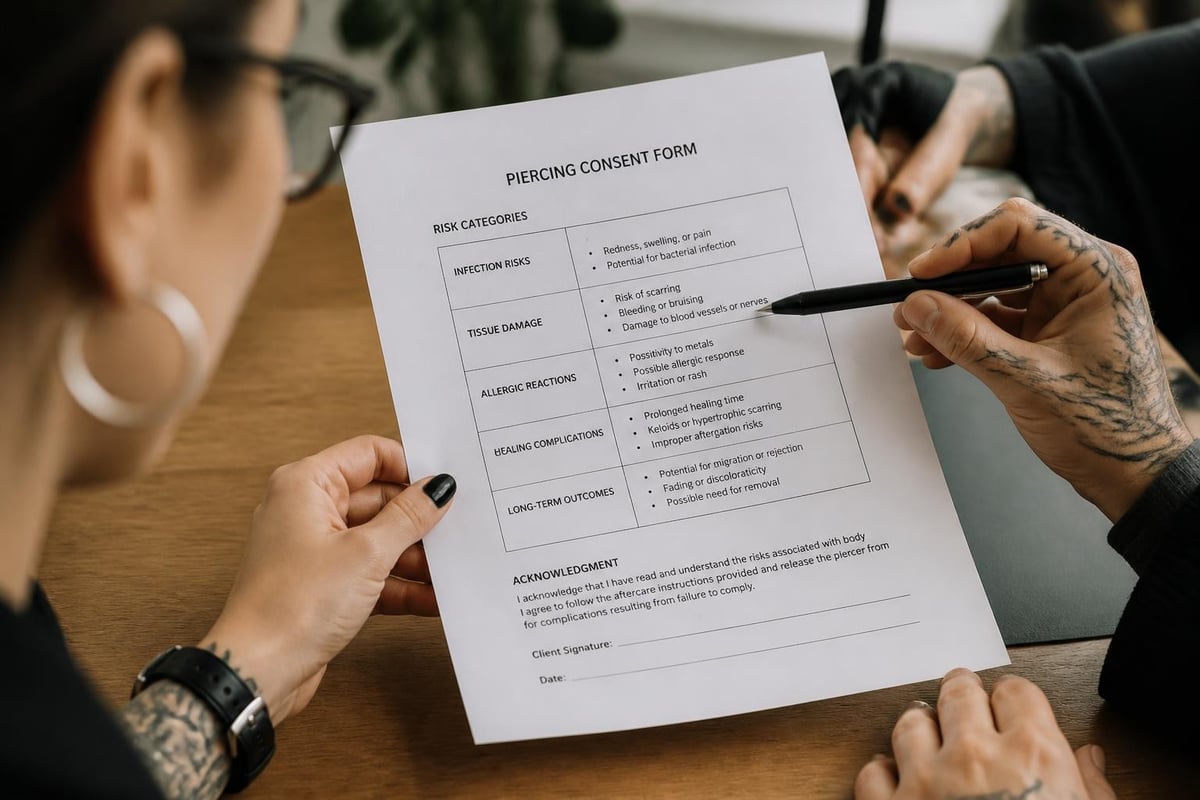
Informed consent requires clients to understand exactly what procedure they're authorizing. Generic language fails to meet regulatory standards in most jurisdictions.
Describe the specific piercing location using anatomical terminology. Detail the equipment used, the sterilization process, and the approximate procedure timeline. South Carolina's informed consent regulations emphasize that risk information must be specific and comprehensive.
Common risks requiring explicit disclosure include infection, scarring, rejection, migration, nerve damage, allergic reactions, and keloid formation. Document both temporary complications like swelling and bruising alongside permanent risks such as scarring or disfigurement.
Aftercare Instructions and Client Responsibilities
The aftercare section of your piercing consent form shifts responsibility for healing outcomes to the client while providing clear guidance for optimal results. This dual purpose makes it one of the most legally significant portions of the document.
Detailed Aftercare Protocol Documentation
Aftercare instructions must be specific, actionable, and appropriate for the piercing location. Generic guidance creates liability when clients claim they weren't properly informed about care requirements.
Comprehensive aftercare documentation should specify:
- Cleaning solution types and application frequency
- Activities to avoid during healing periods
- Signs of infection requiring medical attention
- Timeline for jewelry changes or downsizing
- Touch restrictions and sleeping position modifications
Include healing timeframes appropriate to the piercing type. Cartilage piercings require different care protocols and healing periods compared to lobe or facial piercings. Document recommended follow-up appointments for jewelry changes or assessment.
Liability Limitation Through Client Acknowledgment
Well-drafted acknowledgment clauses establish that clients received comprehensive information and accepted responsibility for following aftercare protocols. This becomes critical evidence if complications lead to disputes.
Your form should include explicit statements that clients acknowledge:
- They received verbal and written aftercare instructions
- They understand healing complications can occur even with proper care
- They agree to contact the studio immediately if problems develop
- They will not hold the studio liable for complications resulting from improper aftercare
- They understand the importance of returning for scheduled follow-up appointments
Digital Transformation of Consent Documentation
Paper-based consent forms create operational inefficiencies and compliance risks that impact your bottom line. Lost forms, illegible handwriting, missing signatures, and damaged documents all create problems during health department inspections or legal disputes.
Modern piercing studios are transitioning to digital consent management systems that streamline the client intake process while ensuring compliance. InkWaiver provides digital consent forms specifically designed for piercing studios, allowing clients to complete forms on their phones before appointments. The system stores signed documents in the cloud, ensuring they're never lost or damaged.
Operational Benefits of Digital Consent Management
Digital forms eliminate the chaos of paper management while improving the client experience. Clients appreciate the convenience of completing paperwork before arriving at the studio, reducing wait times and allowing piercers to focus on the procedure rather than administrative tasks.
Key operational improvements include:
- Automatic form versioning when regulations change
- Searchable client databases for quick record retrieval
- Integrated photo storage for before/after documentation
- Automated appointment reminders with form completion requests
- Instant access during health department inspections
The two-minute setup process means even solo practitioners can implement professional consent management without technical expertise. Cloud storage ensures compliance with data retention requirements while protecting against physical damage or loss.
Minor Guardian Consent and Age Verification Protocols
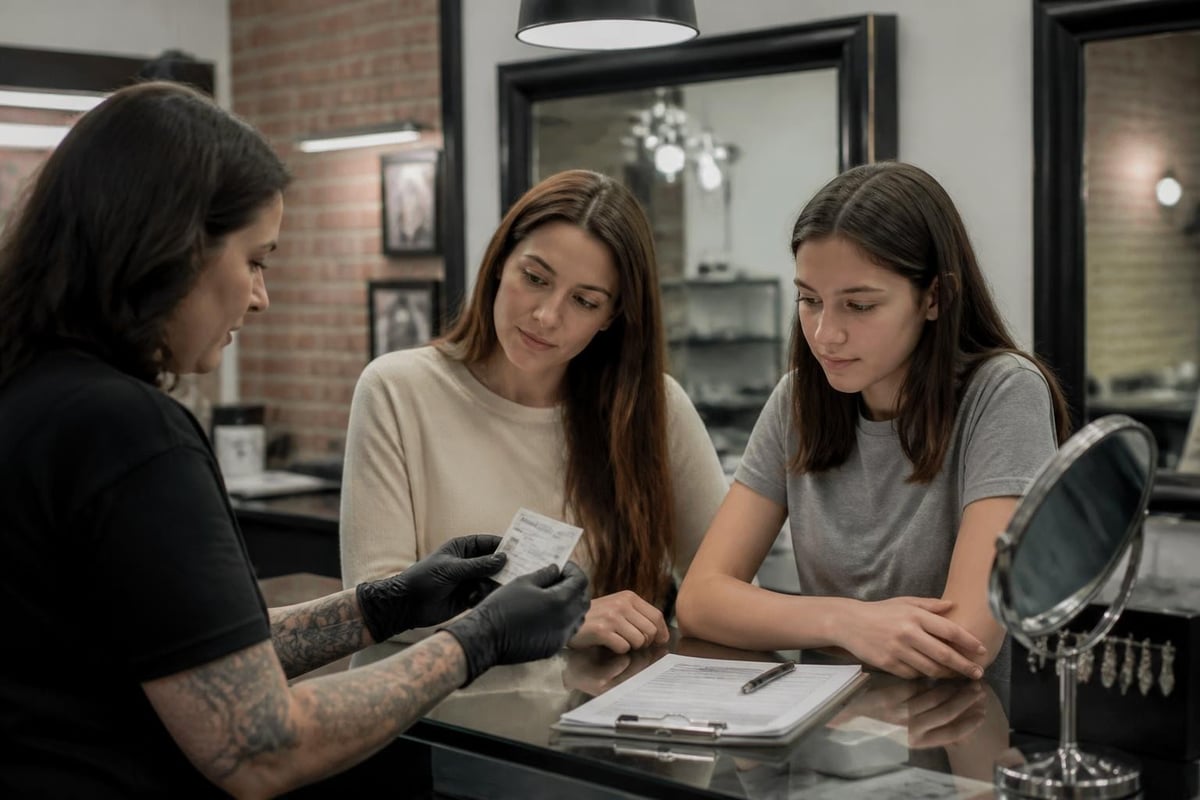
Piercing minors introduces heightened liability concerns that require rigorous documentation protocols. Studios must establish clear policies about age restrictions, acceptable identification, and guardian presence requirements.
Acceptable Guardian Documentation
Not all adults can provide consent for minor piercings. Your piercing consent form must specify acceptable guardian relationships and required proof documentation.
| Guardian Type | Required Documentation | Additional Requirements |
|---|---|---|
| Biological Parent | Government-issued ID, birth certificate showing relationship | In-person presence during procedure |
| Legal Guardian | Court-appointed guardianship papers, ID | Original court documents, not copies |
| Adoptive Parent | Adoption decree, ID | Final adoption documentation required |
| Foster Parent | Current foster care placement letter, ID | Must be within authorized care period |
Establish a policy for situations where parents share custody but disagree about the piercing. Many studios require both parents' consent for minors in joint custody arrangements to avoid legal disputes.
Age-Specific Restriction Policies
Document your studio's age restrictions clearly on consent forms and promotional materials. Many studios refuse certain piercings for clients under specific ages regardless of parental consent.
Common age-based restrictions include no genital piercings for minors, no surface piercings under age sixteen, and no oral piercings under fourteen. These policies protect minors from procedures with higher complication rates while demonstrating responsible business practices.
Record Retention and Privacy Compliance
Health department regulations typically mandate specific retention periods for consent documentation. Understanding these requirements prevents premature document destruction that creates compliance violations during inspections.
Mandatory Retention Periods by Jurisdiction
Retention requirements range from three years to indefinite storage depending on your location. Many states require keeping records for the duration of the client relationship plus a specified period afterward.
Contact your local health department or professional association to verify specific requirements for your jurisdiction. When operating across multiple locations, apply the longest retention period to all records for consistency.
Best practices for record management:
- Retain all piercing consent forms for minimum seven years
- Store digital backups in geographically separate locations
- Implement automatic backup systems to prevent data loss
- Maintain confidentiality through encrypted storage systems
- Establish clear protocols for client record requests
GDPR and Privacy Law Compliance
Studios serving European clients or operating in California face additional privacy requirements under GDPR and CCPA regulations. Your consent forms must include specific language about data collection, storage, and client rights.
Clients must be informed about what personal information you collect, how it's used, who has access to it, and how long it's retained. Include clear opt-in language for marketing communications separate from consent for the piercing procedure itself.
Updating Forms for Regulatory Changes
Consent form requirements evolve as health departments update regulations and courts establish new precedents. Using outdated forms creates liability exposure even if they were compliant when originally drafted.
Annual Form Review Process
Establish a systematic review process to ensure your piercing consent form reflects current legal requirements and industry best practices. This proactive approach prevents compliance failures during inspections.
Implementation steps for annual reviews:
- Schedule reviews for the same date annually
- Check state and local health department websites for regulation updates
- Consult with body art legal compliance resources
- Review recent legal cases involving piercing studios
- Update language to address emerging risks or complications
When forms require updates, implement new versions immediately rather than depleting existing paper stock. Digital consent systems simplify this process by allowing instant updates across all locations.
Version Control and Implementation Documentation
Maintain records documenting when form versions changed and what modifications were made. This creates an audit trail demonstrating your commitment to compliance during inspections or legal proceedings.
Number each form version and include the effective date in the footer. Keep archived versions for reference, as you may need to prove what information was provided to clients who signed forms under previous versions.
Staff Training and Consent Form Administration
Even perfectly drafted forms fail to provide protection if staff members don't administer them correctly. Comprehensive training ensures every team member understands the legal significance of consent documentation.
Standardized Client Intake Protocols
Develop written procedures for presenting, explaining, and witnessing consent form signatures. Consistency across staff members demonstrates professional standards and reduces the risk of missed steps.
Train piercers to review completed forms before beginning procedures, verifying that all required fields contain legible information and proper signatures appear in designated spaces. Incomplete forms should be returned to clients for correction rather than accepted with blank sections.
Common Administration Errors to Prevent
Documentation failures often result from rushing through intake procedures during busy periods. Understanding common mistakes helps staff avoid them under pressure.
Frequent errors requiring specific training:
- Accepting forms without verifying government-issued identification
- Allowing clients to skip medical history sections
- Failing to provide verbal explanation of risks and aftercare
- Not securing guardian signatures for minor clients
- Missing witness signatures on minor consent forms
- Accepting electronic signatures from non-present guardians for minors
Role-playing exercises help staff practice handling difficult situations, such as clients who resist providing medical information or guardians who become defensive about identification requirements.
Insurance Requirements and Risk Management
Professional liability insurance policies often require specific consent form elements as conditions of coverage. Review your policy terms to ensure your piercing consent form meets insurer requirements.
Insurance-Mandated Form Elements
Insurers typically require explicit acknowledgment that clients understand risks and agree not to hold the studio liable for known complications. Some policies specify mandatory language or require attorney review of consent forms.
Contact your insurance provider annually to verify current requirements and confirm your forms remain compliant with policy terms. Policy renewals sometimes introduce new documentation requirements that necessitate form updates.
Request sample consent forms from your insurer if available. Many providers offer templates designed specifically to meet their coverage requirements, though these may require customization for your state's regulations.
Documenting Insurance Verification
Some studios include sections on consent forms documenting that clients were informed about the studio's insurance coverage. While not universally required, this transparency can strengthen client relationships and demonstrate professionalism.
If you choose to include insurance information, specify the type of coverage maintained and the coverage limits without providing detailed policy information. Update this section whenever you change insurance providers or coverage amounts.
Integrating Consent Forms with Booking Systems
Seamless integration between appointment scheduling and consent documentation improves efficiency while ensuring no client reaches your piercing station without completed paperwork. Modern studios treat intake documentation as part of the booking workflow rather than an afterthought.
Pre-Appointment Form Completion
Requiring clients to complete consent forms before arriving at the studio eliminates waiting room bottlenecks and allows piercers to review medical information before the appointment begins. This advance review enables piercers to identify potential contraindications and contact clients with concerns before they travel to the studio.
Send form completion links immediately upon booking confirmation. Include deadline language specifying that appointments cannot proceed without completed consent documentation. This sets clear expectations and motivates timely completion.
Walk-In Client Protocols
Walk-in clients require different intake procedures than appointment-based clients. Maintain tablet-based or mobile-optimized forms allowing walk-ins to complete documentation in your waiting area while you prepare the piercing station.
Estimate realistic completion times when quoting wait periods to walk-in clients. A comprehensive body piercing consent form typically requires ten to fifteen minutes for thorough completion, particularly for first-time clients unfamiliar with the required information.
Properly executed piercing consent forms protect your studio from liability while demonstrating professionalism and regulatory compliance. The documentation requirements may seem burdensome, but they're fundamental to sustainable business operations in the body modification industry. Modern studios are eliminating the inefficiencies and risks of paper-based consent management by transitioning to digital solutions. InkWaiver streamlines the entire consent process with legally compliant digital forms that clients complete on their phones, ensuring you're always inspection-ready with organized, accessible documentation.