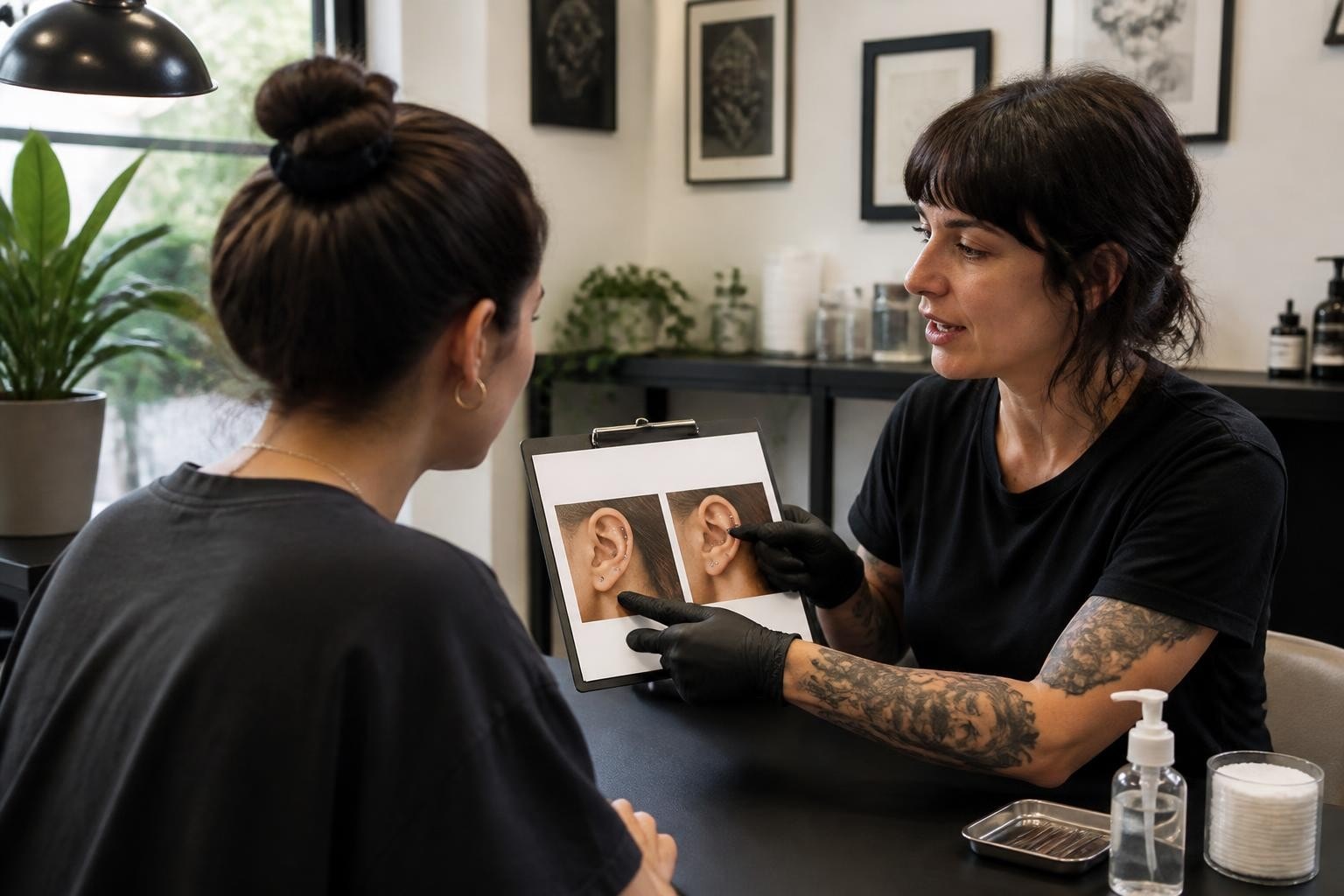
Professional piercing aftercare instructions represent one of your most critical liability safeguards and client retention tools. When clients walk out of your studio, the healing responsibility shifts partially to them, but your reputation remains on the line for the next 3-12 months. Every infection report, keloid complaint, or migration issue traces back to your shop's name, regardless of whether the client followed your guidance. Implementing comprehensive, documented aftercare protocols protects your business while ensuring optimal healing outcomes that generate referrals and positive reviews.
Legal Documentation and Client Education Requirements
Your piercing aftercare instructions must exist in documented, signed format before any client leaves your studio. Health department inspectors in most US jurisdictions expect written aftercare protocols that clients acknowledge receiving. This documentation serves dual purposes: it demonstrates compliance during inspections and provides legal protection if clients claim they received inadequate guidance.
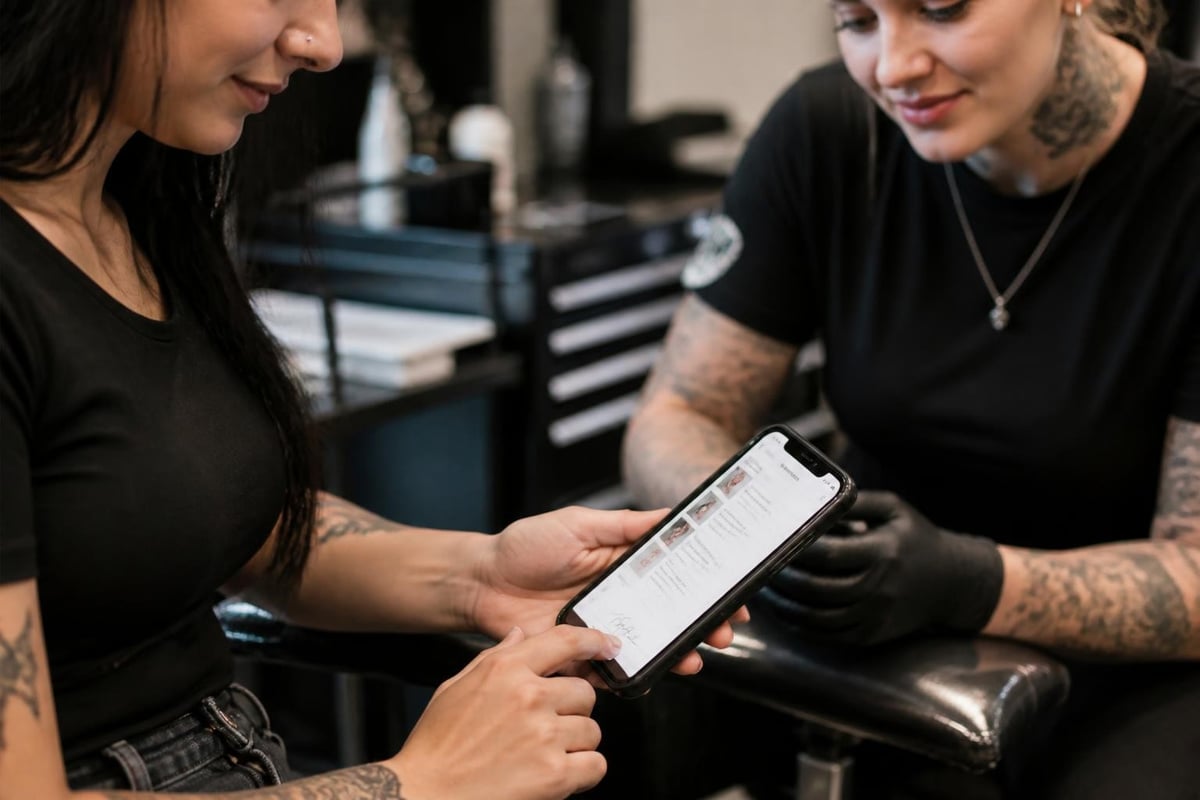
Digital consent forms streamline this process by bundling aftercare instructions with liability waivers, medical history intake, and photo consent in one mobile-friendly package. Clients review comprehensive healing protocols on their phones during the consultation phase, ensuring they understand expectations before the procedure begins.
Documentation Elements Every Studio Needs
Required components for legally compliant aftercare instructions:
- Cleaning frequency and technique specifications
- Product recommendations with specific brand names
- Prohibited substances and activities during healing
- Normal healing timeline for each piercing placement
- Warning signs requiring professional evaluation
- Studio contact information for follow-up questions
- Client signature acknowledging receipt and understanding
The signature requirement proves essential during disputes. When clients claim they developed complications because you failed to provide guidance, timestamped digital records showing they received and acknowledged detailed instructions on a specific date protect your business from liability exposure.
Core Cleaning Protocol Standards
Proper piercing aftercare instructions center on consistent, gentle cleaning that removes debris without traumatizing healing tissue. Your protocol should emphasize simplicity over complexity because clients abandon complicated routines within the first week.
Standard Cleaning Procedure
- Wash hands thoroughly with antibacterial soap for minimum 20 seconds
- Saturate sterile gauze with sterile saline solution (0.9% sodium chloride)
- Gently press saturated gauze against piercing front and back
- Hold for 30-60 seconds to soften crusty discharge
- Gently wipe away softened debris with fresh gauze
- Pat completely dry with clean paper towel
- Repeat twice daily (morning and night)
This standardized approach works across all piercing placements from lobes to industrial bars to nostril studs. Consistency in your messaging prevents client confusion when they research contradictory advice online.
| Piercing Type | Healing Duration | Daily Cleaning Frequency | Downsizing Timeline |
|---|---|---|---|
| Earlobe | 6-8 weeks | 2x daily | 4-6 weeks |
| Helix/Cartilage | 3-6 months | 2x daily | 8-12 weeks |
| Nostril | 2-4 months | 2x daily | 6-8 weeks |
| Septum | 2-3 months | 2x daily | 6-8 weeks |
| Navel | 6-9 months | 2x daily | 8-12 weeks |
| Nipple | 6-12 months | 2x daily | 8-12 weeks |
Product Recommendations and Restrictions
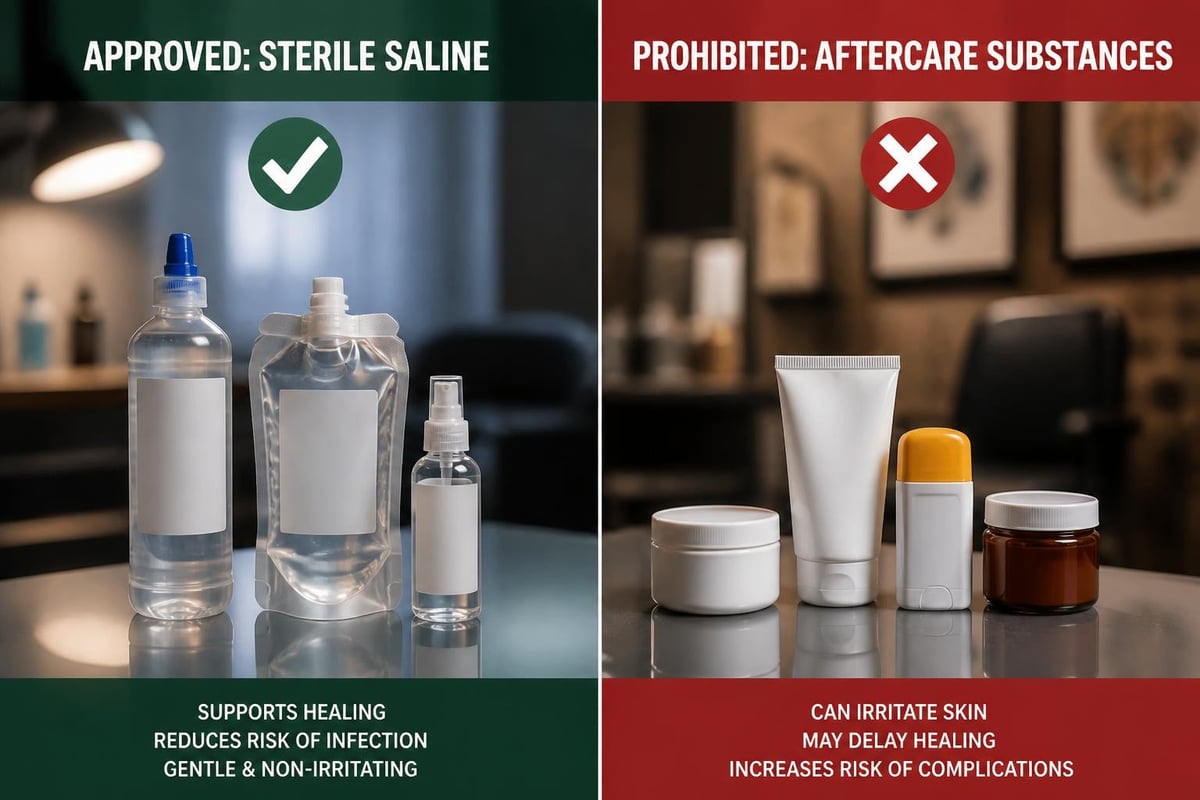
Your piercing aftercare instructions must specify approved products by brand name to prevent clients from purchasing unsuitable alternatives. Generic recommendations like "saline solution" lead clients to contact lens saline containing preservatives that irritate piercings.
Recommended products for optimal healing:
- NeilMed Piercing Aftercare spray (sterile saline, no additives)
- H2Ocean Piercing Aftercare Spray (sea salt solution)
- Wound Wash Saline (generic pharmacy brand, verify 0.9% sodium chloride only)
- Sterile gauze pads (non-woven preferred)
- Paper towels for drying (never cloth towels that harbor bacteria)
Prohibited Substances That Damage Healing Tissue
Clients arrive with outdated advice from friends recommending harsh products that delay healing. Your aftercare protocols should explicitly prohibit these substances and explain why they cause harm.
Never use these products on healing piercings:
- Rubbing alcohol (destroys healthy tissue, extends healing time)
- Hydrogen peroxide (kills new cells forming during healing)
- Betadine or iodine solutions (too harsh for daily use)
- Neosporin or antibiotic ointments (trap bacteria, cause reactions)
- Tea tree oil (concentration too strong, causes chemical burns)
- Homemade salt solutions (contamination risk, incorrect concentration)
These restrictions protect both client health and your professional reputation. When infections occur because clients used inappropriate products despite your guidance, documented instructions showing you specifically prohibited those substances demonstrate you met professional standards.
Lifestyle Modifications During Healing
Comprehensive piercing aftercare instructions address daily activities that impact healing beyond cleaning routines. Clients underestimate how their habits affect new piercings until complications develop.
Personal Hygiene Adjustments
Showering protocol for fresh piercings:
- Clean piercings at end of shower to prevent recontamination
- Avoid direct water pressure on new piercings
- Prevent shampoo and conditioner contact with piercing site
- Rinse thoroughly if hair products touch area
- Pat completely dry immediately after shower
Swimming represents one of the highest infection risks during early healing. Your instructions should prohibit all submersion activities for minimum 4-6 weeks depending on placement. This includes pools, hot tubs, lakes, oceans, and bathtubs. Chlorinated pools don't protect against infection; the chemicals actually irritate healing tissue while waterborne bacteria enter the wound.
Sleep Position and Physical Activity
Pressure on healing piercings causes migration, prolonged inflammation, and embedding issues. Clients with new ear piercings need specific guidance about sleep positions, particularly for cartilage work that requires 3-6 months healing.
For industrial bars, helixes, and tragus piercings, recommend travel pillows with center holes that eliminate pressure while sleeping. Clients who sleep on fresh cartilage piercings develop persistent irritation bumps that blame on your piercing technique rather than their behavior.
Contact sports, gym equipment, and clothing friction all warrant specific restrictions in your aftercare documentation. A nostril piercing requires avoiding helmets and face masks that create pressure points. Navel piercings demand high-waisted pants during healing to prevent waistband irritation.
Downsizing Timeline and Follow-Up Care
Professional piercing care guidance includes mandatory downsizing appointments to prevent complications from improper jewelry length. Initial piercing jewelry uses extra length to accommodate swelling during the first 2-8 weeks. Once swelling subsides, that excess length allows the jewelry to catch on objects, rotate excessively, and collect debris that prolongs healing.
Your aftercare instructions should specify the exact timeframe for downsizing based on piercing placement. Schedule these appointments proactively rather than waiting for clients to request them. Most clients don't understand why downsizing matters until they develop irritation bumps or snag their jewelry.
| Placement | Initial Jewelry Length | Downsizing Timeline | Final Jewelry Size |
|---|---|---|---|
| Nostril | 18g x 1/4" | 6-8 weeks | 18g x 3/16" |
| Helix | 16g x 3/8" | 8-12 weeks | 16g x 1/4" |
| Industrial | 14g x 1.5" | 10-12 weeks | 14g x custom |
| Navel | 14g x 7/16" | 8-12 weeks | 14g x 3/8" |
Recognizing Normal Healing Versus Complications
Educating clients about expected healing symptoms prevents unnecessary panic and reduces after-hours calls to your studio. Your piercing aftercare instructions should detail normal healing signs so clients can distinguish them from infection symptoms requiring professional evaluation.
Normal healing characteristics:
- Light clear or pale yellow discharge (lymph fluid)
- Slight tenderness when touched
- Mild warmth around piercing site
- Small firm bumps near piercing holes
- Crusty buildup on jewelry (dried lymph)
- Slight redness immediately surrounding jewelry
Infection warning signs requiring immediate attention:
- Thick green or dark yellow pus
- Increasing pain after first week
- Excessive heat radiating from piercing
- Red streaks extending from piercing site
- Swelling that worsens after 48 hours
- Fever above 100.4°F
Specify that clients should contact your studio immediately if they experience warning signs rather than waiting for symptoms to worsen. Provide multiple contact methods including phone, text, and email so clients can reach you regardless of business hours. This accessibility demonstrates professional responsibility and often prevents minor issues from escalating into serious complications.
Irritation Bump Management
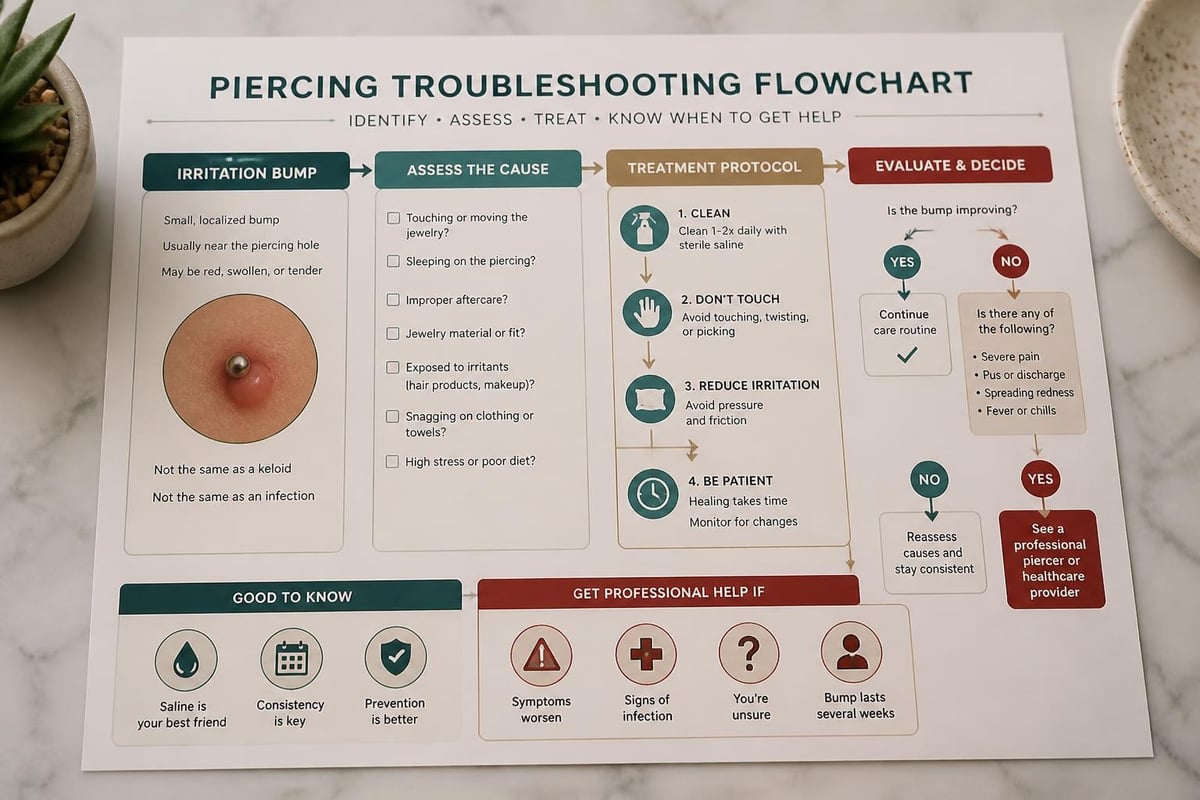
Irritation bumps represent the most common healing complication clients encounter, typically appearing 4-8 weeks into the healing process. These firm, red bumps develop from trauma, pressure, or cleaning product reactions rather than infection. Your aftercare guidance should address bump management because clients panic when they appear.
Primary causes of irritation bumps:
- Sleeping on fresh piercings
- Snagging jewelry on clothing or towels
- Using harsh cleaning products
- Touching or rotating jewelry
- Swimming or submerging piercings
- Jewelry quality issues (nickel content)
Most irritation bumps resolve within 2-4 weeks when clients eliminate the irritation source and maintain gentle cleaning. Recommend warm saline compresses twice daily (5-10 minutes each) to reduce inflammation. Explicitly prohibit tea tree oil, aspirin paste, and other internet remedies that cause chemical burns.
Jewelry Quality Standards and Material Safety
Your piercing aftercare instructions must address jewelry quality because many healing complications trace to improper materials rather than care failures. Clients don't understand metallurgy, so they purchase cheap jewelry from mall kiosks containing nickel that causes persistent reactions.
Specify that initial piercing jewelry must remain in place for the entire healing period. Clients who change jewelry prematurely restart the healing process and introduce contamination risk. This restriction should appear prominently in your documentation with clear explanations about why it matters.
Approved initial piercing materials:
- Implant-grade titanium (ASTM F136)
- 14k or 18k solid gold (nickel-free)
- Niobium (for metal-sensitive clients)
- Solid platinum
Generic "surgical steel" contains varying nickel percentages that cause reactions in approximately 15% of clients. Your professional reputation benefits from using exclusively high-quality materials and documenting those specifications in your aftercare instructions.
Minor Client Protocols and Parental Responsibilities
When piercing minors, your aftercare instructions must address both the client and their parent or guardian. Minors lack the consistency and judgment to maintain proper cleaning routines without parental supervision. Your piercing consent documentation should explicitly assign aftercare responsibility to the guardian who signed consent.
Specify that parents must supervise twice-daily cleaning for clients under 16. For adolescents aged 16-17, recommend parental monitoring rather than direct supervision. These distinctions demonstrate you understand developmental capabilities while protecting your business from liability when young clients neglect their piercings.
School and Activity Restrictions
Minor clients require additional guidance about school-related complications. Sports participation, physical education requirements, and dress code policies all impact healing piercings. Your instructions should advise parents to obtain written permission from school nurses before piercing students, particularly for facial piercings that some institutions prohibit.
Swimming restrictions create particular challenges for student athletes. When parents understand their child cannot participate in swim team for 6-8 weeks post-piercing, they often delay the procedure until off-season. This conversation should occur during the consultation phase, documented in your consent forms, and reinforced in written aftercare instructions.
Temperature Exposure and Seasonal Considerations
Healing piercings react poorly to extreme temperatures that clients may not consider without specific guidance. Your piercing aftercare instructions should address seasonal activities based on when clients receive their piercings.
Winter precautions for ear and facial piercings:
- Avoid wool hats that snag jewelry
- Protect from extreme cold (below 20°F)
- Prevent frostbite on cartilage piercings
- Use silk or satin-lined winter hats
Summer complications requiring warnings:
- Sunscreen contact causes irritation
- Increased sweating introduces bacteria
- Swimming temptation increases infection risk
- Clothing friction from tank tops and shorts
Navel piercings done in spring face challenges when summer arrives and clients want to wear bikinis and go swimming. Setting realistic expectations during consultation prevents disappointment when you reinforce activity restrictions in your aftercare documentation.
Studio Follow-Up Systems and Client Retention
Professional piercing aftercare instructions should include your studio's follow-up schedule and encourage clients to maintain contact throughout healing. Implementing systematic check-ins at 2 weeks, 6 weeks, and 3 months demonstrates professional commitment while identifying complications early.
Effective follow-up communication includes:
- Automated text reminders for downsizing appointments
- Email check-ins at healing milestones
- Invitation to contact studio with questions
- Photo submission option for remote troubleshooting
- Discount incentives for completing follow-up visits
These touchpoints generate repeat visits, build long-term client relationships, and provide opportunities to address complications before they escalate. Clients appreciate the ongoing support and remember studios that demonstrate genuine concern for healing outcomes.
Your aftercare documentation serves dual purposes: ensuring optimal healing and protecting your business from liability. Modern digital systems that integrate consent forms with aftercare instructions streamline this process while creating timestamped records proving clients received comprehensive guidance. When health inspectors audit your procedures or clients dispute their care, these records demonstrate you met professional standards.
Aftercare Instruction Delivery Methods
How you deliver piercing aftercare instructions impacts client compliance rates significantly. Handing clients a photocopied sheet as they leave results in poor retention because they're processing pain, adrenaline, and excitement about their new piercing. Multi-format delivery ensures information reaches clients when they can actually absorb it.
Effective aftercare instruction delivery strategies:
- Verbal review during consultation (before piercing)
- Digital instructions sent to client email (reference copy)
- Printed handout provided at checkout (immediate reference)
- Follow-up text with care summary (24-hour reminder)
- Studio website resources (ongoing access)
Explaining care procedures before the piercing allows clients to ask questions while calm and focused. Reviewing the same information afterward reinforces key points while providing a reference document. Digital consent platforms allow clients to access their specific aftercare instructions from any device, eliminating the "I lost the paper" excuse when complications develop.
Language Accessibility and Comprehension
Your client base includes diverse populations with varying English proficiency levels and educational backgrounds. Piercing aftercare instructions written at college reading levels fail to serve clients who need simple, clear guidance.
Structure your written materials at 6th-8th grade reading level using short sentences, common words, and active voice. Avoid medical jargon unless you immediately define terms. "Lymph fluid" means nothing to most clients, but "clear liquid that helps healing" communicates effectively.
For studios serving significant non-English speaking populations, translated aftercare instructions demonstrate professional commitment and reduce miscommunication risks. Spanish, Mandarin, and Vietnamese translations serve large demographic groups in many US markets.
Product Sales and Client Convenience
Offering aftercare products at your studio increases compliance while generating auxiliary revenue. Clients who purchase sterile saline spray during checkout use appropriate products rather than improvising with household alternatives that damage healing tissue.
Recommended retail aftercare inventory:
- Sterile saline spray (multiple brands, price points)
- Travel pillows with center holes (for cartilage piercings)
- Antimicrobial soap (for body piercings)
- Paper towel rolls (convenience item)
- High-quality replacement jewelry (for completed healing)
Price these items competitively with online retailers to encourage immediate purchase. The convenience of walking out with proper supplies outweighs small price differences for most clients. Your markup covers inventory costs while ensuring clients have exactly what they need.
Avoiding Medical Claims and Legal Risks
Your piercing aftercare instructions must avoid making medical claims that could create liability exposure or violate FDA regulations. Recommending specific products as "infection prevention" or claiming they "heal piercings faster" crosses into medical territory requiring substantiation.
Use careful language like "supports healthy healing" or "recommended for optimal results" rather than medicinal claims. This distinction protects your business while still providing clear product guidance. Reference professional aftercare resources that explain care protocols without making therapeutic claims.
When clients ask about using antibacterial ointments, explain that piercings need to breathe rather than claiming the products cause harm. Frame recommendations positively (what works) rather than creating fear about what doesn't. This approach maintains professional credibility while guiding clients toward appropriate care.
Health Department Compliance and Inspection Readiness
Your piercing aftercare instructions play crucial roles during health department inspections by demonstrating you educate clients about proper healing procedures. Inspectors expect documented protocols showing you meet infection control standards extending beyond the piercing procedure itself.
Maintain physical copies of your standard aftercare instructions in your procedure room and front desk for inspector review. Digital versions should be immediately accessible on your consent form platform or studio management system. Inspectors may request to see how clients receive this information and verify the content meets current best practices.
Inspection-ready aftercare documentation includes:
- Current revision date (update annually minimum)
- Studio contact information for questions
- Specific cleaning instructions with product names
- Healing timelines by piercing placement
- Warning signs requiring professional care
- Your signature or credential information
Different states and municipalities maintain varying requirements for aftercare documentation. Consult your local health department about specific mandates before finalizing your protocols. Some jurisdictions require clients sign statements confirming they received and understood aftercare instructions, while others accept implicit acknowledgment through consent form signatures.
Insurance Requirements and Risk Management
Professional liability insurance for piercing studios increasingly requires documented aftercare protocols as condition of coverage. Insurance carriers understand that comprehensive client education reduces complication rates and subsequent claims. Your policy may mandate specific aftercare instruction elements or delivery methods.
Review your insurance requirements annually when renewing coverage and update aftercare protocols accordingly. If your carrier requires clients acknowledge receiving written instructions, ensure your consent forms explicitly document this acknowledgment. Digital consent systems simplify this compliance by automatically collecting signatures and storing timestamped records that insurance companies accept during claims investigations.
When clients develop complications and threaten legal action, your aftercare documentation provides primary defense evidence. Attorneys examining potential medical malpractice cases evaluate whether you met professional standards for client education. Comprehensive, signed aftercare instructions showing you warned clients about specific risks and provided detailed care protocols often prevent lawsuits from proceeding.
Professional piercing aftercare instructions protect both client health and your studio's reputation while demonstrating compliance with health regulations and insurance requirements. By implementing comprehensive, documented protocols that clients receive in multiple formats, you reduce infection rates, prevent complications, and build long-term client relationships that generate referrals. Modern piercing studios benefit from streamlining consent and aftercare documentation through platforms like InkWaiver, which allow clients to review detailed healing protocols on their phones, sign acknowledgments digitally, and access their specific instructions anytime during the healing process. The two-minute setup eliminates paper form management while creating legally compliant records that protect your business during inspections and client disputes.