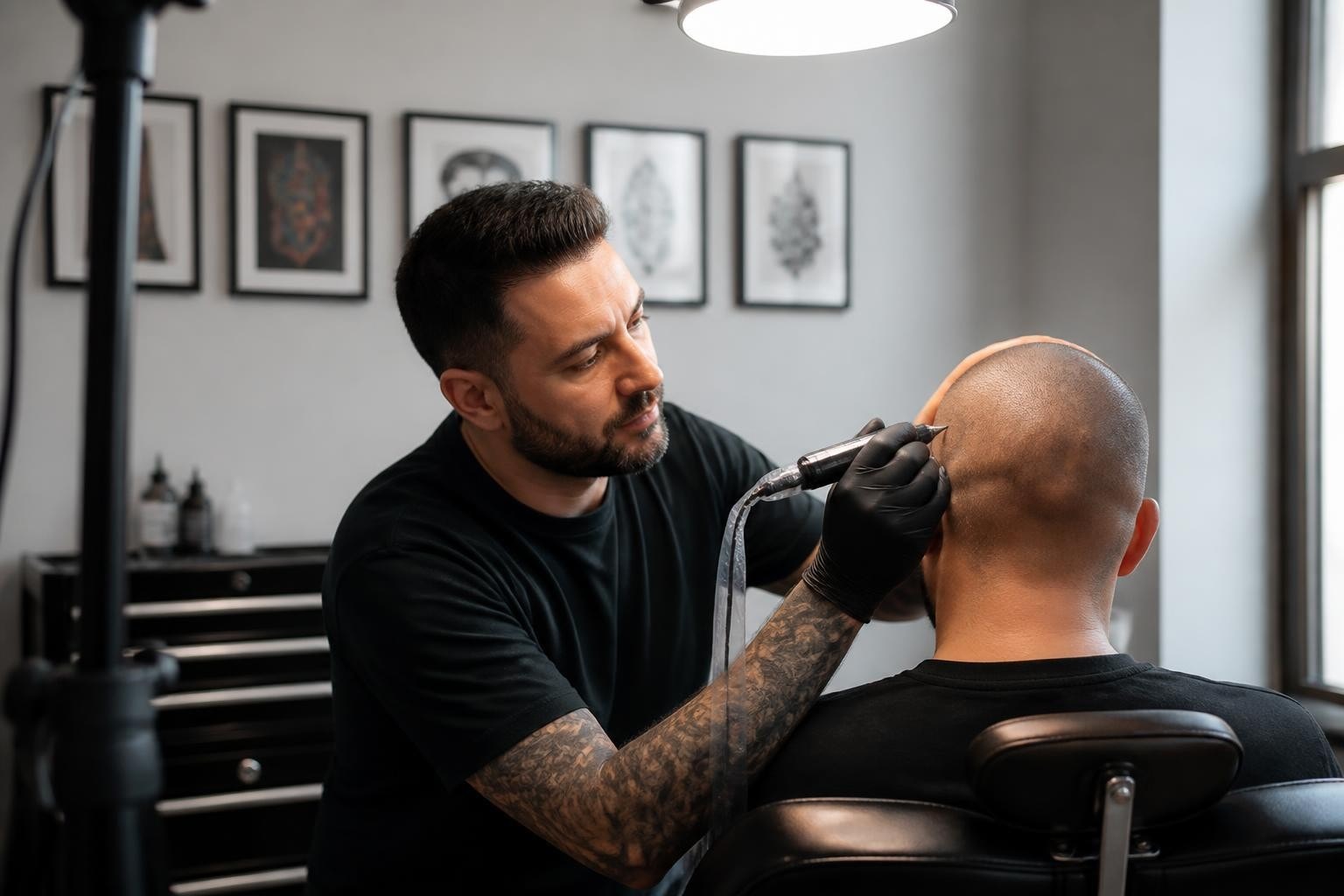
When clients search for "scalp micropigmentation near me," they're looking for skilled practitioners who can deliver natural-looking results for hair loss concerns. For tattoo shop owners, this search trend represents a significant business opportunity. Scalp micropigmentation (SMP) shares technical foundations with traditional tattooing but requires specialized knowledge, equipment, and compliance protocols. This guide walks you through the operational considerations for adding SMP services to your existing studio or launching a dedicated SMP practice in 2026.
Understanding the Scalp Micropigmentation Market
The scalp micropigmentation industry has experienced substantial growth as more individuals seek non-surgical solutions for hair loss and thinning. Unlike traditional tattooing techniques, SMP uses smaller needles, different pigments, and specific depth protocols to create the appearance of hair follicles on the scalp.
Your existing tattooing expertise provides a strong foundation for this procedure. You already understand needle configurations, depth control, skin tension, and pigment behavior. However, SMP requires additional certification and training specific to scalp anatomy, hairline design, and the unique fading patterns of scalp tissue.
Market Demographics and Client Expectations
SMP clients differ from traditional tattoo customers in several key ways:
- Age range: Primarily 30-65 years old, with male clients comprising approximately 70% of the market
- Medical concerns: Many clients have alopecia, scarring from transplants, or medical hair loss conditions
- Consultation requirements: Expect longer initial consultations averaging 45-60 minutes
- Price sensitivity: SMP treatments range from $1,500-$4,000+ depending on coverage area and session requirements
- Referral patterns: Strong emphasis on before/after portfolios and medical professional referrals
When potential clients search "scalp micropigmentation near me," they evaluate studios based on specialized SMP portfolios, not general tattoo work. Your flash sheets and traditional pieces won't convert these prospects.
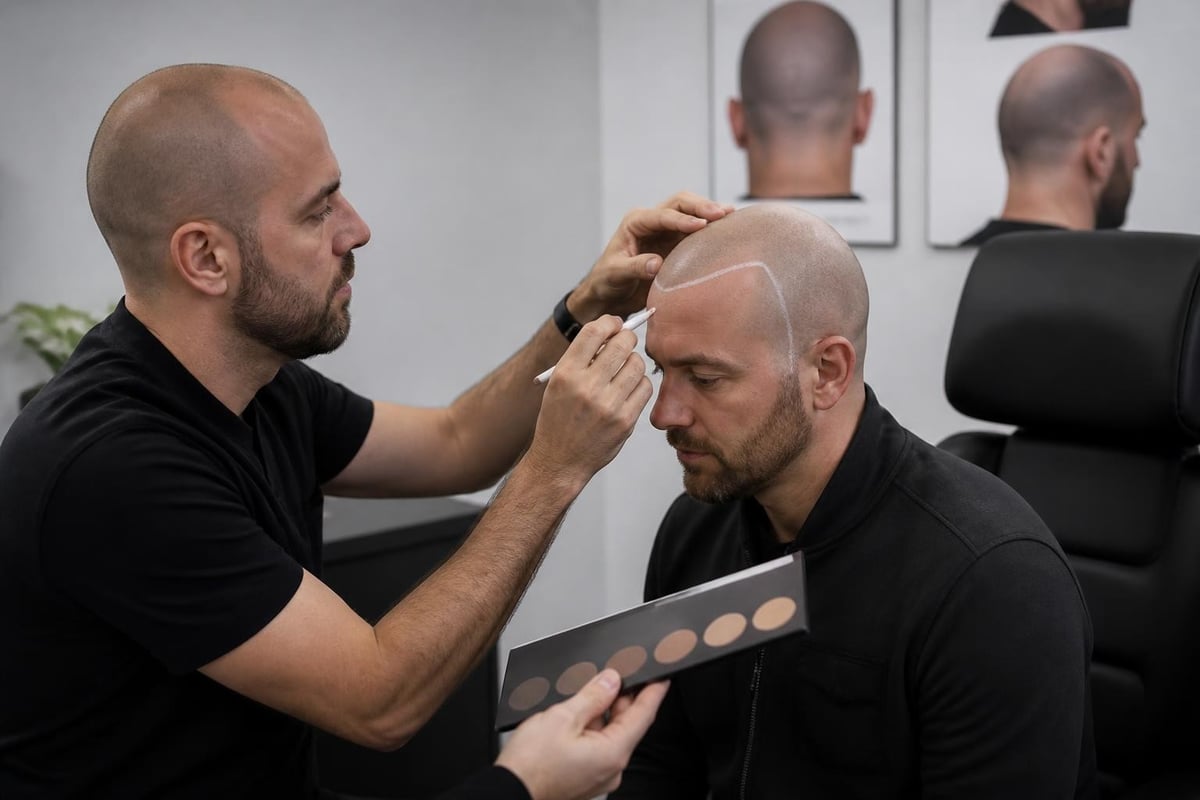
Licensing and Regulatory Compliance for SMP Services
Adding scalp micropigmentation to your service menu triggers specific regulatory requirements that vary by jurisdiction. In most US states, SMP falls under body art practitioner licenses, but some classify it as a cosmetic procedure requiring different credentials.
State-Specific Requirements
California: Requires a Body Art Practitioner license through the local Environmental Health Department. SMP practitioners must complete bloodborne pathogens training and maintain facility permits identical to tattoo shops.
Texas: The Texas Department of State Health Services regulates SMP under the same framework as tattooing. You'll need a body art facility license and individual practitioner permits for each artist performing SMP.
Florida: Treats SMP as tattooing, requiring registration with the Department of Health and compliance with bloodborne pathogens protocols specific to body art establishments.
New York: SMP practitioners must hold a tattoo license and operate in licensed establishments. Additional requirements apply in New York City through the Department of Health and Mental Hygiene.
If you operate in the EU, regulations vary significantly by member state. The UK requires compliance with local council licensing for special treatments, which may classify SMP separately from traditional tattooing.
Insurance Considerations
Your existing tattoo shop liability insurance may not cover SMP procedures. Contact your carrier to discuss:
- Professional liability coverage for SMP-specific claims
- Medical malpractice components if clients allege adverse reactions
- Product liability for pigments and specialized equipment
- Increased coverage limits reflecting higher SMP service prices
Most carriers require documented SMP training certification before extending coverage. Budget $800-$2,500 annually for enhanced policy provisions.
Equipment and Supply Specifications
Scalp micropigmentation requires different tools than traditional tattooing. While you can't use your standard machines, understanding the equipment differences helps you make informed purchasing decisions.
Essential SMP Equipment
| Equipment Category | Specifications | Approximate Cost |
|---|---|---|
| SMP Machine | Rotary-style, adjustable speed 80-120 Hz | $400-$1,200 |
| Needle Cartridges | 1-3 micro-needle configurations | $2-$5 per cartridge |
| Pigment Sets | Carbon-based, scalp-specific formulations | $150-$400 per set |
| Adjustable Chair | Medical-grade with headrest positioning | $800-$2,000 |
| Magnification Equipment | Loupes or adjustable magnifying lamp | $200-$600 |
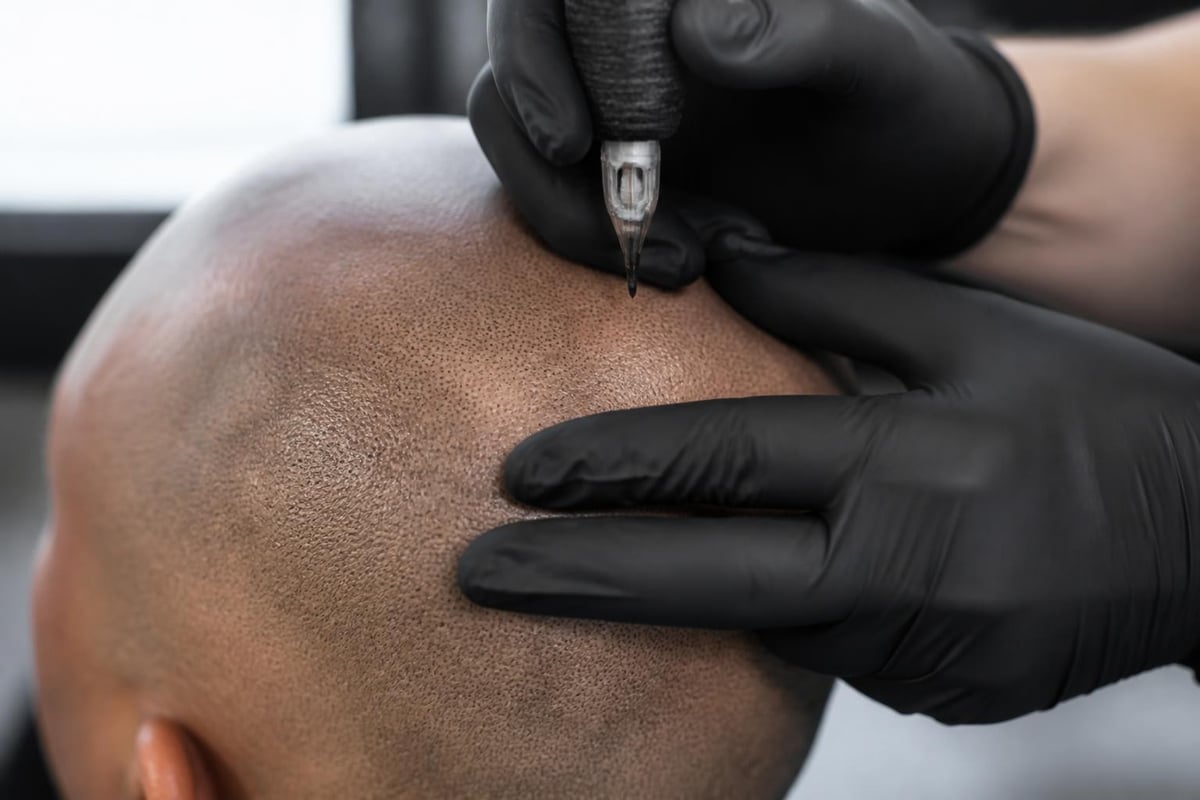
The scalp micropigmentation process demands precision at depths of 0.5-1.0mm, shallower than traditional tattoos. This shallow placement prevents pigment migration and maintains the crisp appearance essential for replicating hair follicles.
Pigment Selection and Management
SMP pigments differ chemically from tattoo inks. They're designed to fade gradually to lighter shades rather than turning green or blue. Reputable suppliers include Scalp Aesthetics, Tina Davies, and Folicule pigments.
Stock multiple shade families:
- Cool undertones for clients with dark brown to black hair
- Warm undertones for auburn and lighter brown hair
- Neutral bases for blending and custom matching
- Dilution solutions for creating gradient effects
Pigment inventory typically costs $600-$1,500 for initial setup, with monthly replenishment averaging $150-$300 depending on client volume.
Training and Certification Pathways
When clients search for scalp micropigmentation near me, they expect practitioners with verified training credentials. Your tattooing experience accelerates learning but doesn't replace SMP-specific education.
Recognized Training Programs
Scalp Micro USA: Offers 3-day intensive courses covering theory, live model practice, and business setup. Tuition runs $3,500-$5,000 including starter kit. Located in multiple US cities with rotating schedules.
Scalp Aesthetics Academy: UK-based with international locations. 4-day comprehensive training includes advanced hairline design and scar camouflage techniques. Investment: £3,000-£4,500.
HIS Hair Clinic: Provides technician certification through their Birmingham, UK facility. Known for stringent practical assessment requirements. Cost: £4,000+ including accommodation packages.
Consider programs that provide:
- Minimum 20 hours hands-on practice with live models
- Post-training support and mentorship access
- Portfolio development guidance
- Marketing templates and client consultation frameworks
- Continuing education opportunities for advanced techniques
Budget 4-7 days away from your shop for initial training, plus travel and accommodation expenses. Plan training during typically slow periods to minimize revenue disruption.
Studio Setup and Workspace Modifications
Adding SMP services to your existing tattoo shop requires minimal physical modifications if you already maintain health department compliance. However, optimal client experience demands some strategic adjustments.
Dedicated SMP Station Requirements
Create a separate treatment area that differs visually from your traditional tattoo stations:
- Adjustable medical-grade chair with full recline capability and headrest
- Overhead LED lighting with 5000K color temperature for accurate pigment matching
- Clean, clinical aesthetic that reassures clients concerned about medical-grade cleanliness
- Privacy screening since many clients feel self-conscious about hair loss
- Magnification lighting mounted on adjustable arms
Your autoclave and cross-contamination protocols already meet SMP sanitation requirements. Single-use needle cartridges eliminate sterilization concerns for SMP-specific tools.
Client Consultation Area
SMP consultations demand more privacy and professionalism than typical tattoo consultations. Allocate space for:
- Portfolio display showing exclusively SMP before/after results
- Lighting conditions that allow accurate scalp examination
- Reference materials demonstrating hairline styles and density options
- Mirror setup for collaborative hairline design discussion
According to research on scalp micropigmentation outcomes, client satisfaction correlates strongly with realistic expectation-setting during consultations. Your consultation space should facilitate detailed technical discussions.
Legal Documentation and Consent Protocols
Scalp micropigmentation carries different liability exposure than traditional tattooing. Clients may claim medical complications, unsatisfactory results, or misrepresentation of outcomes. Comprehensive consent documentation protects your business.
SMP-Specific Consent Form Elements
Your standard tattoo consent form doesn't address SMP-specific risks. Required documentation includes:
- Medical history questionnaire covering scalp conditions, autoimmune disorders, blood thinners, and keloid tendencies
- Photographic consent for before/after documentation essential to your portfolio
- Pigment fading disclosure explaining that SMP requires touch-ups every 3-5 years
- Result variability acknowledgment noting that skin type affects pigment retention
- Multi-session requirement confirmation since most SMP treatments need 2-4 sessions
Many SMP practitioners have adopted digital consent forms that clients complete on their phones before appointments. This approach eliminates lost paperwork, ensures cloud storage of signed documents, and maintains GDPR compliance for international clients. InkWaiver specifically designs these digital forms for permanent makeup and SMP procedures, allowing setup in under two minutes while meeting legal requirements.
Managing Walk-Ins and Booking Flow
SMP services don't accommodate walk-ins effectively. Unlike flash sheet selections, each treatment requires:
- Initial consultation (45-60 minutes, often complimentary or $50-$100 deposit)
- Custom hairline design (completed during consultation)
- Pre-treatment preparation instructions (no alcohol, blood thinners, or excessive sun exposure)
- Multi-session scheduling (typically 2-4 sessions spaced 10-20 days apart)
Implement booking protocols that separate SMP clients from traditional tattoo scheduling. Many studios use dedicated SMP booking days to batch similar procedures and maintain workflow efficiency.
Pricing Strategy and Revenue Modeling
Studies on scalp micropigmentation as a hair restoration method show that the procedure's medical positioning justifies premium pricing compared to decorative tattooing. Your pricing structure should reflect specialized training, equipment investment, and treatment complexity.
Market-Rate Pricing Framework
| Treatment Area | Session Count | Price Range |
|---|---|---|
| Hairline restoration | 2-3 sessions | $1,500-$2,500 |
| Crown/vertex coverage | 3-4 sessions | $2,000-$3,500 |
| Full scalp (complete baldness) | 3-4 sessions | $2,500-$4,500 |
| Scar camouflage (transplant scars) | 1-3 sessions | $500-$2,000 |
| Density addition (thinning areas) | 2-3 sessions | $1,800-$3,000 |
Price per session rather than hourly rates. Sessions typically run 2-4 hours depending on coverage area, but clients respond better to package pricing.
Revenue Projections and Capacity Planning
A single SMP artist working three days weekly can realistically complete:
- 6-8 sessions per week at conservative scheduling
- Average revenue per session: $800-$1,200
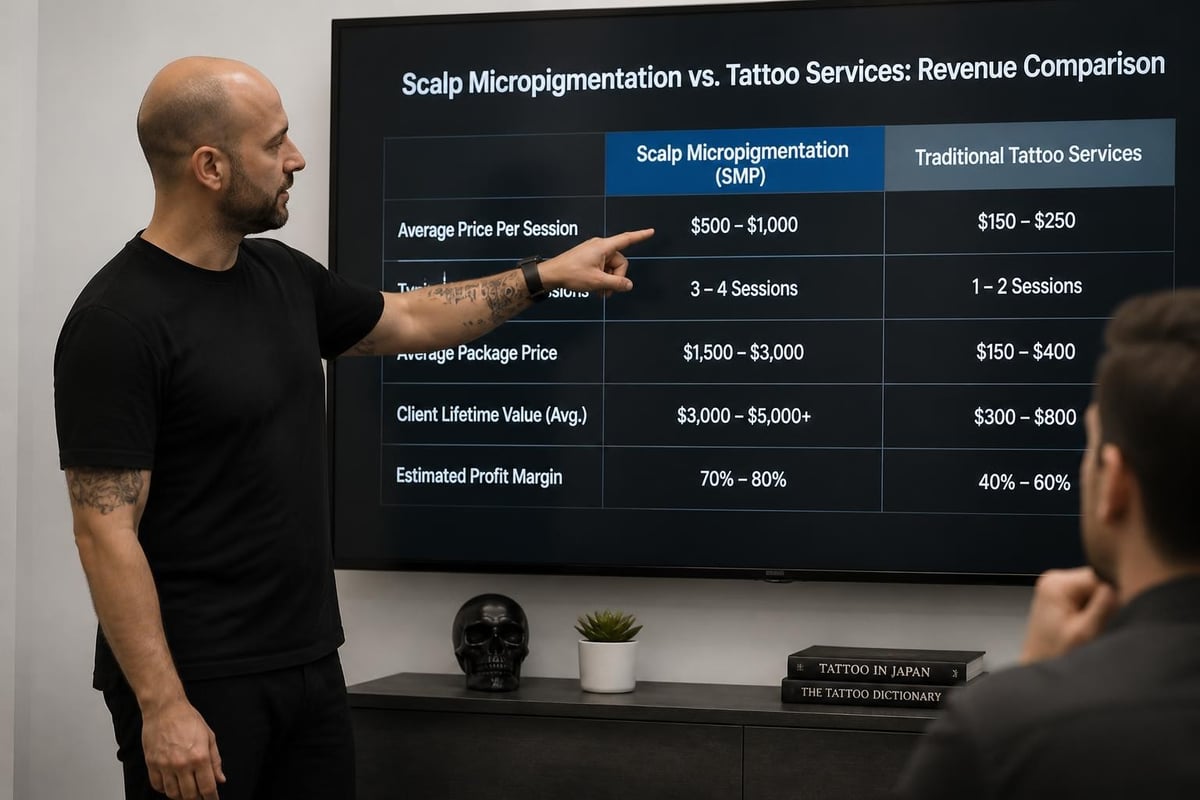
- Monthly revenue potential: $19,200-$38,400
- After supplies and overhead: 65-75% profit margin
Compare this to traditional tattooing where hourly rates of $100-$200 generate similar revenue but require continuous client acquisition. SMP clients typically commit to multi-session packages upfront, improving cash flow predictability.
Marketing Your SMP Services Locally
When potential clients search "scalp micropigmentation near me," they're conducting local research with high purchase intent. Your marketing must capture these qualified leads through location-specific strategies.
Local SEO Optimization
Google Business Profile: Create a separate GBP listing for SMP services if regulations permit, or add SMP as a primary service category. Upload 20+ before/after photos tagged with location data.
Keyword targeting: Focus on "scalp micropigmentation [your city]," "SMP near me," and "hair loss tattoo [neighborhood]" rather than generic tattoo keywords.
Schema markup: Implement local business schema on your website specifying SMP as a medical/cosmetic service, distinct from general tattooing.
Building Referral Networks
The natural results of scalp micropigmentation depend significantly on practitioner skill, making referrals from medical professionals particularly valuable:
- Dermatologists who treat alopecia patients
- Hair transplant surgeons needing scar camouflage referral partners
- Oncology centers with cancer survivors experiencing hair loss
- Men's health clinics addressing aesthetic concerns
Develop a referral presentation highlighting your credentials, sterilization protocols, and before/after portfolio. Offer complimentary consultations for referred patients to build these professional relationships.
Portfolio Development Strategy
SMP success stories drive conversions more effectively than any advertising. Prioritize portfolio building:
- Offer discounted rates for first 10-15 clients willing to provide detailed testimonials and photos
- Document progression with photos after each session, not just final results
- Obtain video testimonials discussing the client's decision process and experience
- Showcase variety including different skin tones, hair colors, and coverage patterns
- Address common concerns with specific case studies (scar coverage, frontal recession, crown thinning)
Your traditional tattoo portfolio won't convert SMP prospects. Maintain separate galleries and testimonial collections.
Managing Client Expectations and Results
Information from WebMD on scalp micropigmentation emphasizes that realistic expectations directly correlate with client satisfaction. Your consultation process must address common misconceptions.
Common Client Misconceptions to Address
"It's permanent like a tattoo": SMP fades over 3-5 years and requires maintenance sessions. Explain this during consultation and include touch-up pricing in your service menu.
"I'll have hair-like texture": SMP creates visual density through pigment, not physical hair. Set expectations that the result is cosmetic, not tactile.
"One session completes the treatment": Most clients need 2-4 sessions for optimal results. Explain the layering process that builds natural-looking density.
"Any tattoo artist can do this": Emphasize your specialized training and SMP-specific certification. Show how needle depth, angle, and pigment selection differ from body tattooing.
Managing Touch-Ups and Long-Term Relationships
SMP creates ongoing client relationships extending years beyond initial treatment:
- Schedule annual check-ins to monitor fading and address concerns
- Offer touch-up packages at reduced rates (typically 40-50% of initial session pricing)
- Maintain detailed treatment records documenting pigment formulations, needle configurations, and coverage patterns
- Photograph results at 6-month and annual intervals to track fading patterns
This maintenance model generates recurring revenue while building client loyalty. A satisfied SMP client represents $3,000-$6,000 lifetime value including initial treatment and 5-10 years of touch-ups.
Expanding Services: Scar Camouflage and Medical Applications
Once you've established core SMP capabilities, advanced applications significantly expand your addressable market. Research on SMP for scalp deformities demonstrates effectiveness for various medical conditions.
Scar Camouflage Specialization
Hair transplant procedures often leave linear or dotted scarring that SMP effectively conceals:
- FUT procedure scars (linear strip scars) requiring specialized pigment blending
- FUE extraction sites needing individual dot camouflage
- Accident or surgery scars on the scalp where hair doesn't grow
- Burn scar coverage requiring custom pigment formulation
Partner with local hair restoration surgeons to become their preferred post-operative scar treatment provider. These referrals generate consistent business from an established patient base.
Alopecia and Medical Hair Loss
Clients with alopecia areata, totalis, or universalis represent a specialized market segment:
- Requires sensitivity training in communicating with clients experiencing medical conditions
- May need collaboration with treating dermatologists for optimal timing
- Often involves larger coverage areas than cosmetic hairline restoration
- Creates powerful testimonials that resonate with similar prospective clients
Medical hair loss clients frequently find SMP life-changing, producing enthusiastic referrals and detailed testimonials that strengthen your reputation.
Operational Integration and Staff Training
If you operate a multi-artist studio, integrating SMP services requires strategic decisions about specialization versus cross-training.
Dedicated SMP Specialist vs. Cross-Training
Dedicated specialist approach:
- Hire or designate one artist exclusively for SMP
- Builds deep expertise and portfolio quickly
- Creates scheduling efficiency with batched SMP days
- Requires sufficient market demand to justify full-time specialization
Cross-training existing artists:
- Provides service flexibility and backup coverage
- Requires multiple training investments ($3,500+ per artist)
- May dilute portfolio development across multiple practitioners
- Works well in smaller markets with moderate SMP demand
Most successful studios start with one dedicated SMP specialist, then cross-train a second artist once monthly sessions exceed 20-25.
Guest Spot and Apprentice Considerations
SMP doesn't typically work well for guest spots due to multi-session requirements and client relationship continuity. However, apprenticeship models can accelerate your SMP program growth:
- Apprentices assist with consultations, photography, and treatment documentation
- Supervised practice on models under your direct oversight
- Graduated responsibility from scar work to full scalp treatments
- Revenue sharing as apprentice builds independent client base
Structure apprenticeships with clear progression milestones and documentation requirements to maintain quality standards.
Health Department Inspections and Compliance
Your existing health department relationship extends to SMP services, but inspectors may scrutinize certain elements more closely given the medical positioning of the procedure.
Inspection Focus Areas for SMP
Pigment storage and labeling: Inspectors verify that SMP pigments include manufacturer documentation, expiration dates, and MSDS sheets. Unlike tattoo inks, some jurisdictions require batch number tracking for SMP pigments.
Sharps disposal protocols: Single-use cartridge systems generate higher sharps waste volume than traditional tattooing. Ensure adequate biohazard container capacity and documented disposal frequency.
Consultation documentation: Some health departments require medical history documentation for procedures marketed as addressing medical conditions. Maintain organized client files with signed consent forms and medical questionnaires.
Before/after photography compliance: If you advertise results, HIPAA considerations may apply depending on how you structure client agreements. Obtain explicit photographic consent and storage protocols.
Preparing for SMP-Specific Compliance Reviews
Schedule a pre-inspection consultation with your local health department before launching SMP services. Bring:
- Training certificates demonstrating SMP-specific education
- Sample consent forms for review and feedback
- Equipment specifications showing single-use cartridge systems
- Pigment documentation with manufacturer safety data
- Facility layout showing dedicated SMP treatment area
Proactive compliance demonstrates professionalism and prevents costly retrofits after violations.
Adding scalp micropigmentation services positions your tattoo studio to capture a growing market of clients seeking professional hair loss solutions. The investment in training, equipment, and specialized protocols pays dividends through premium pricing and ongoing client relationships that extend years beyond initial treatments. For studios ready to modernize operations, InkWaiver provides digital consent forms specifically designed for SMP and permanent makeup procedures, eliminating paper form hassles while ensuring legally compliant documentation that protects your business. Get started with a free 14-day trial and streamline your client intake process today.